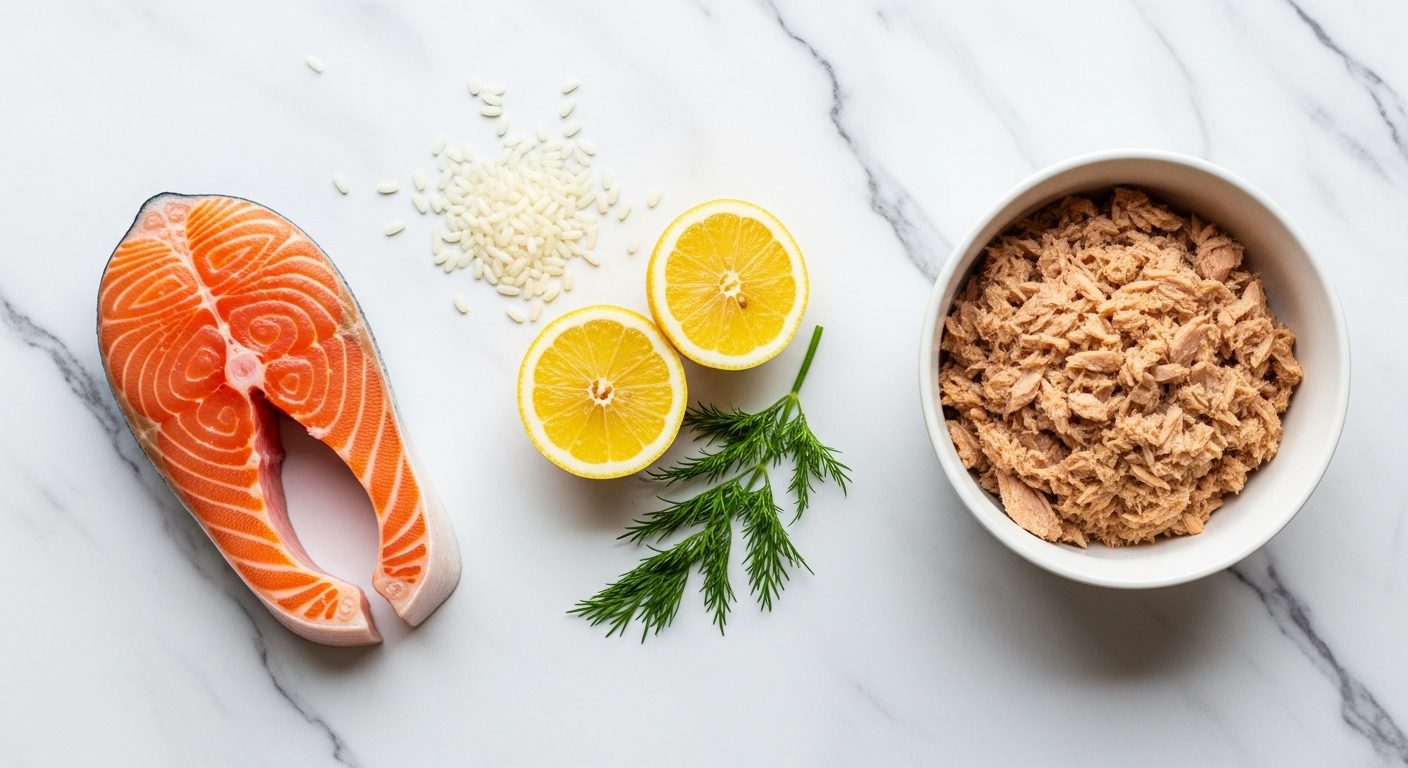

Meals · High Protein
Spicy Tuna Rice Bowl with Avocado and Edamame | 34g Protein (34g Protein)
This deconstructed spicy tuna roll delivers 34g protein and 542 calories per serving. Sushi-grade ahi tuna is diced and dressed in a sriracha mayo, then layered over seasoned sushi rice with avocado, edamame, cucumber, and nori. Ready in 25 minutes including rice cooking, or 10 minutes with pre-cooked rice and canned tuna.
Nutrition per serving
- Protein
- 34 g
- Calories
- 542
- Carbs
- 47 g
- Fat
- 26 g
Nutritional values are estimates based on standard ingredient data and may vary by brand or preparation method. This information is for general reference only and is not a substitute for professional dietary advice. Consult a healthcare provider or registered dietitian for personalized nutrition guidance.
Ingredients
- 6 oz sushi-grade ahi tuna (yellowfin) — diced into 3/4-inch cubes; see FAQ for canned tuna swap
- 1 cup cooked white rice cooked — from 1/2 cup dry short-grain; cooked, cooled slightly
- 1 1/2 tbsp rice vinegar — for seasoning rice
- 1 tsp sugar — for sushi rice seasoning
- 2 tbsp mayonnaise — for spicy mayo base
- 1 tbsp sriracha sauce — adjust to taste
- 1 tsp sesame oil — adds depth to spicy mayo
- 1/2 medium avocado avocado raw — about 75g, sliced
- 1 cup sliced cucumber raw — about 120g, thinly sliced or julienned
- 2/3 cup shelled edamame cooked — about 130g shelled, thawed if frozen
- 1 tbsp sesame seeds — white or mixed, for topping
- 3 stalks green onions — thinly sliced on the bias
- 2 sheets nori sheets — for topping, tear into strips or crumble
- pinch salt — for sushi rice seasoning
- 1 tbsp pickled ginger (gari) — optional, for serving
- 2 tsp soy sauce — for spicy mayo; use low-sodium if preferred
Steps
- Cook rice using your preferred method (stovetop or rice cooker). While rice is still warm, combine rice vinegar, sugar, and a pinch of salt in a small bowl; microwave 20 seconds to dissolve sugar. Fold gently into rice with a wooden spoon. Fan to cool slightly, about 5 minutes.
- Mix spicy mayo: Whisk together mayonnaise, sriracha, sesame oil, and soy sauce in a small bowl until smooth. Taste and add more sriracha for extra heat.
- Pat tuna dry with paper towels. Dice into 3/4-inch cubes. Add to a bowl with 2 tablespoons of the spicy mayo and toss gently to coat. Reserve remaining spicy mayo for drizzling.
- Divide seasoned rice between 2 bowls (about 1/2 cup per bowl). Arrange tuna, avocado slices, cucumber, and edamame in sections over the rice.
- Tear nori sheets into strips or crumble over each bowl. Drizzle reserved spicy mayo over the top. Finish with sesame seeds, sliced green onion, and pickled ginger on the side if using.
- Serve immediately. If meal prepping, store rice and toppings separately; dress tuna just before eating.
Why This Works
Ahi tuna (yellowfin, raw) contains 24.4g protein per 100g at just 109 calories per 100g (USDA #175159), making it one of the highest protein-to-calorie ratios of any protein source. Dicing into cubes rather than thin slices gives each bite a firm, sashimi-like texture that holds up to the spicy mayo without becoming mushy. The mayo-sriracha dressing works on two levels: fat from mayo carries fat-soluble capsaicin compounds from sriracha across the palate, and the acidity cuts the richness of avocado. Edamame adds 11.9g protein per 100g (USDA #11450) plus 5.2g fiber, which is why this bowl reaches 34g protein per serving despite using no additional protein. Compared to ordering a spicy tuna roll at a restaurant (typically 18-22g protein, 400-600 calories for 8 pieces), this bowl provides 50% more protein at a comparable calorie count.
Building the Bowl
Section placement matters for temperature and texture. Put warm rice in first. Cold tuna goes on one side, room-temperature edamame opposite, with avocado and cucumber filling the gaps. This keeps the tuna from warming on the rice. Drizzle spicy mayo in a thin zigzag rather than pooling it in the center - more even coverage, and each bite gets some heat. Nori strips placed last stay crisp longer; they soften quickly on warm rice, so if you want crunch, add them at the table.
Fresh Tuna vs. Canned Tuna
Fresh sushi-grade ahi tuna gives a silky, firm texture that closely mimics a spicy tuna roll. Canned tuna in water (USDA #15121, 25.5g/100g protein, 116 cal/100g) delivers comparable protein - 34.6g per serving using the same 170g weight - at a fraction of the cost. For the canned version: drain thoroughly, pat dry, and flake into roughly 1/2-inch pieces rather than cubes. The texture is looser but the flavor profile is nearly identical once dressed in spicy mayo. Both versions work equally well for meal prep. Cost comparison: fresh ahi roughly $3-5 per serving vs. canned tuna under $1 per serving.
Variations
Poke-style shoyu bowl: Substitute the spicy mayo for a marinade of 2 tbsp soy sauce, 1 tsp sesame oil, 1 tsp honey, and 1/4 tsp red pepper flakes per serving. Toss diced tuna in marinade for 5 minutes before assembling. Add 1 tbsp diced sweet onion and a pinch of Hawaiian sea salt. California roll bowl: Replace tuna with 5 oz (142g) imitation crab (15.3g protein per serving), add 2 tbsp cream cheese in small dollops, and use regular mayo (no sriracha) as the sauce. Salmon version: Swap tuna for 6 oz (170g) sushi-grade salmon fillet, raw (USDA salmon: 20.4g/100g, 208 cal/100g), diced. Per serving: 27g protein, 598 cal. Korean gochujang tuna: Replace sriracha with 1 tbsp gochujang paste and add 1 tsp rice vinegar to the sauce. Swap sesame rice for plain cooked rice. Add 1/2 cup sliced kimchi alongside.
Sources Research-Backed
Frequently Asked Questions
Can I use canned tuna instead of fresh sushi-grade tuna?
Yes. One 6-oz can (170g drained) of tuna in water provides 34.6g protein per serving versus 33.7g from fresh ahi - nearly identical nutrition. The texture is looser and flakier rather than cubed and silky, but the flavor is very similar once dressed in spicy mayo. Drain thoroughly and pat dry before mixing with the sauce. The prep time drops to about 10 minutes since there is no tuna to dice.
Is sushi-grade tuna safe to eat raw?
Sushi-grade is a market designation, not a USDA classification. Look for yellowfin or bigeye tuna labeled 'sushi-grade' or 'sashimi-grade' from a reputable fishmonger or Japanese grocery. These fish are typically blast-frozen at -31°F (-35°C) for 15 hours, which kills parasites per FDA guidelines. Ask your fishmonger for the freezing history. Avoid using regular supermarket tuna fillets not labeled for raw consumption. Pregnant individuals, young children, and immunocompromised people should avoid raw fish - the canned tuna version is a safe alternative. Yellowfin tuna is classified as a 'Good Choice' by FDA/EPA, meaning up to 1 serving per week is recommended due to moderate mercury levels (0.354 ppm).
How do I make proper sushi rice?
Use short-grain Japanese white rice (Koshihikari or similar). Rinse the dry rice 3-4 times until water runs mostly clear, which removes surface starch that causes gluey texture. Cook with slightly less water than the package suggests (ratio of 1 cup rice to 1 cup water). While hot, fold in a mixture of 1 1/2 tbsp rice vinegar, 1 tsp sugar, and 1/2 tsp salt per cup of dry rice. Use a wooden paddle or spatula and fold with slicing motions rather than stirring, which breaks the grains. Fan while folding to cool quickly. The rice should be glossy and slightly sticky - not wet, not dry.
Can I meal prep this bowl?
Partially. Cook rice up to 3 days ahead and refrigerate; reheat with a splash of water in the microwave. Pre-mix spicy mayo and refrigerate up to 5 days. Prep cucumber, edamame, and green onion ahead. Dice fresh tuna no more than 4 hours ahead - store separately without the mayo, then dress immediately before eating. Avocado should be sliced and dressed with a squeeze of lemon juice at assembly to prevent browning. The fully assembled bowl is best eaten immediately.