Does Cooking Fish Destroy Omega-3? Retention by Method, With Numbers
Heat doesn't destroy much omega-3, but cooking still costs you some — about a third of it with gentle methods, more with grilling and deep-frying, almost all of it leaving with fat and moisture rather than breaking down. Here's the retention-by-method table, recalculated from the primary data.
Part of The Protein Atlas — your complete guide to protein.
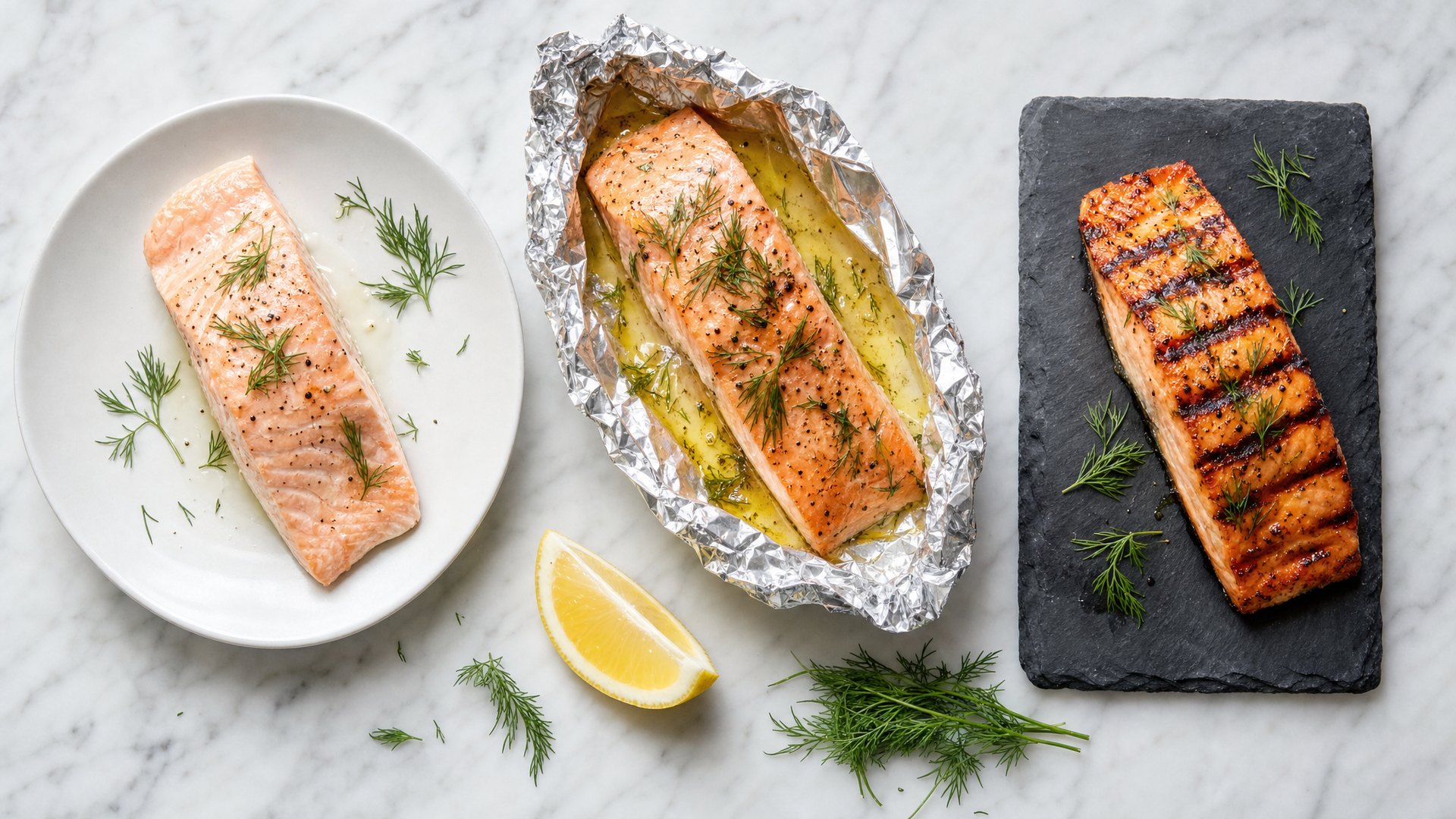
Destroyed, no. Diminished, yes. Heat is not what takes omega-3 out of a fish; fat and moisture leaving the fillet are. Steam or foil-bake a salmon fillet and roughly two-thirds of its EPA and DHA — the two long-chain omega-3 fatty acids you eat fish for — reach your plate. Grill it and you’re closer to a third. Deep-fry it and closer to a quarter. That is a real cost, and bigger than most articles on this question admit. It still rarely changes whether you hit your target, because one salmon portion clears the daily figure many times over however you cook it.
Cooking costs more omega-3 than the usual “it barely matters” answer suggests. Measured properly — as true retention, adjusted for the weight the fillet loses — steaming keeps about 65–70% of salmon’s EPA and DHA, foil-baking 60–65%, grilling 35–40%, and deep-frying 25–30%. Almost none of that is heat breaking the omega-3 down; it is fat rendering out and carrying the EPA and DHA with it. The practical upshot is unchanged: a 140–170 g cooked salmon portion carries roughly 3,000–3,650 mg of EPA+DHA, about 12–15 times the 250 mg/day the FAO and WHO associate with reduced cardiac risk — so even the worst method on this list clears the bar comfortably. Cook gently if it’s easy, and don’t pour off the pan juices.
Does cooking fish actually destroy omega-3?
Barely any of it is destroyed. But a meaningful share is lost — it leaves the pan with the rendered fat and the moisture. Those are different things, and almost every page on this question blurs them.
First, the trap that skews the numbers you’ll find elsewhere. Studies report omega-3 three incompatible ways: as a percent of the fish’s total fat, as milligrams per 100 g of cooked fish, and as true retention (the share of the raw fillet’s EPA and DHA that actually survives to your plate, adjusted for the weight lost in cooking). Only true retention answers “did cooking take it away.” The same experiment can make a fish look like it gained omega-3 (per 100 g, as water cooks off and concentrates what remains) or lost nearly all of it (as a percent of fat, once frying oil is added to the denominator).
That distinction does real work below, so the table separates the two kinds of evidence rather than listing them side by side as if they were comparable.
| Method | EPA+DHA retained | What the figure is | Grounding study |
|---|---|---|---|
| Steaming | ~65–70% | True retention, salmon | Choo et al. 2018 |
| Baking in foil | ~60–65% | True retention, salmon | Choo 2018 |
| Grilling | ~35–40% | True retention, salmon | Choo 2018 |
| Deep-frying | ~25–30% | True retention, salmon | Choo 2018 |
| Boiling / poaching | No significant drop per 100 g | Concentration basis — flatters, see below | Leung 2018; Gladyshev 2006 |
| Microwaving | No significant change per 100 g | Concentration basis | Bastías 2017 |
| Pan-frying (little/no oil) | No significant drop per 100 g | Concentration basis; oxidation markers rise most | Leung 2018 |
| Canning | Well retained | Concentration basis | Bastías 2017 |
The four true-retention rows are calculated by this site from Choo et al. 2018 (Table 5 plus the cooking yields in Fig. 1) — they are not printed as percentages in the paper, and the yields are read off a graph, so treat them as approximate. They describe farmed salmon; retention has been measured mostly in salmon and a few other species, so read this as “fatty fish, mostly salmon,” not “every fish.”
The bottom four rows are not directly comparable to the top four. “No significant drop per 100 g” is a concentration comparison, and concentration flatters cooking: a fillet that loses a quarter of its weight as water will test the same per 100 g while carrying a quarter less omega-3 in total. Those studies genuinely found no collapse, but they cannot tell you what a whole portion retains. Read them as “nothing dramatic happened,” not as evidence of near-total retention.
How much omega-3 survives each cooking method?
Choo’s group steamed, foil-baked, grilled, and deep-fried the same salmon, and — crucially — also weighed the fillets before and after. True retention needs both halves:
true retention = (EPA+DHA per 100 g cooked ÷ EPA+DHA per 100 g raw) × cooking yieldRaw salmon in that study carried 67.83 mg of EPA+DHA per 100 g. The cooked figures and the weight each method left behind:
| Method | Cooked (mg/100 g) | ÷ raw | × cooking yield | True retention |
|---|---|---|---|---|
| Steaming | 52.61 | 77.6% | ~87% | ~68% |
| Baking in foil | 50.89 | 75.0% | ~85% | ~64% |
| Grilling | 36.90 | 54.4% | ~69% | ~37% |
| Deep-frying | 30.32 | 44.7% | ~61% | ~27% |
Skipping that second column is how this question usually goes wrong. Judged on concentration alone, deep-fried salmon looks like it kept 45% of its omega-3; it kept about 27%, because the fillet also lost nearly 40% of its weight. Steaming and foil-baking are close enough to call a tie. Grilling and deep-frying are not close, and no amount of careful framing makes them so.
Boiling and microwaving showed no statistically significant reduction per 100 g (Leung 2018; Bastías 2017) — reassuring, but on the flattering basis. Bastías found just 25 g of steamed or 41 g of oven-baked salmon covered the 500 mg daily figure that study used. A foil or sheet-pan bake stays near the top of the table — try the Garlic Butter Salmon and Asparagus Sheet Pan (52g protein, 742 cal) or oven-baked Miso Glazed Salmon Rice Bowls (37g protein, 532 cal).
Why do grilling and deep-frying lose the most — is it the heat?
Not mainly, no. What leaves is fat, and the EPA and DHA are dissolved in it. On a grill the rendered fat drips into the flames; in a fryer it renders into the oil. Either way the omega-3 goes with it — that is a transfer, not a breakdown, but it is a genuine loss to you, and it is why these two methods sit at the bottom of the table.
Oxidation is the smaller, real third effect. Leung ranked it raw < boiled < oven-baked < pan-fried, and frying was the only method to significantly raise reactive-aldehyde markers — breakdown compounds oxidation leaves behind — like 4-HHE (from omega-3) and 4-HNE (from omega-6). Those rose even where total EPA+DHA didn’t significantly fall, so some omega-3 converts to oxidized derivatives rather than vanishing. Their health meaning is unsettled.
Frying oil adds a third thing that is not a loss at all: dilution. Absorbed oil enlarges the fillet’s total fat without adding EPA or DHA, so omega-3’s share of the fat collapses even when the milligrams don’t. This is where the scariest headline numbers come from, and it is worth separating carefully, because it is a measurement artifact rather than something happening to your dinner.
Red mullet is the clearest case: a lean fish (~2.1% fat) whose EPA+DHA fell from 25.5% to 4.99% of total fat on frying (Biandolino et al. 2023) — a reading that looks like an 80% wipeout. It wasn’t. Measured as milligrams per 100 g, that study found EPA+DHA significantly increased with frying (from 371 mg/100 g raw), because absorbed oil and lost moisture both raised the total lipid the measurement sits in. The share collapsed; the amount did not. Note the asymmetry, though — a per-100-g increase in a fillet that shed weight is still not proof of good true retention. It is a warning about the basis, not a reassurance about the fish.
Oil choice matters too: fish fried in canola or corn oil lost none of its own omega-3 in one study cited within Leung 2018, while others fared worse. That is a single narrow comparison, so treat it as a reason to prefer those oils, not a rule.
Deep-frying’s famous “80% omega-3 loss” is a percentage-of-fat number — the fish absorbing frying oil, not the omega-3 being destroyed. The real cost, measured properly, is closer to 70%, and it leaves with the rendered fat.
What temperature and time actually damage omega-3?
Thermal destruction needs both high heat and long time, and normal cooking has neither. In one temperature-time series (Candela et al. 1998, as reported in a King Salmon study by Larsen and colleagues), 100 °C for a full hour cut DHA about 20%; 160 °C for 15 minutes about 45%; 160 °C for a full hour about 70%. EPA held up better than DHA every time — DHA is the more heat-fragile of the two. (Secondary citation, so treat as directional.)
A real dinner sits well below that regime: baking 15–20 min at 180–200 °C, steamed fish reaching about 85 °C at the centre, pan-cooked fish whose centre rarely passes 100 °C even when the pan surface is far hotter. This is the part of the popular answer that holds up — it’s the reason the losses above are mostly relocation of fat rather than destruction of it.
Does cooked salmon have less omega-3 than raw?
Per 100 g, cooked salmon tests higher. USDA FoodData Central lists raw farmed Atlantic salmon at 1,966 mg of EPA+DHA per 100 g (862 EPA + 1,104 DHA) and cooked, dry heat at 2,147 mg (690 EPA + 1,457 DHA).
That is not cooking creating omega-3. These are two independent reference samples rather than one fish measured before and after — the giveaway is that EPA falls while DHA rises, which pure concentration cannot do. So read them only as composition anchors: farmed salmon runs roughly 1,950–2,150 mg per 100 g, raw or cooked. They are not a retention experiment, and nothing about the gap between them should be taken as measuring what cooking did. For that, use the true-retention table above, which says cooking costs a real share.
How do you keep the most omega-3 when you cook fish?
Here is what makes the worry mostly moot in practice. A 140–170 g cooked salmon portion carries roughly 3,000–3,650 mg of EPA+DHA (2,147 mg per 100 g × 1.4 to × 1.7) — about 12–15 times the 250 mg/day of EPA+DHA the FAO and WHO associate with reduced risk of fatal coronary heart disease. (Their acceptable range runs from 250 mg up to 2 g/day; the 500 mg figure you’ll see elsewhere comes from other bodies, not from them.)
That is a cooked-weight portion, so cooking losses are already baked into the number — there is no second discount to apply. Even deep-frying, the steepest loss in the table, leaves a portion several times clear of 250 mg. The portion size is a stated assumption rather than a weighed serving, so read the milligrams as a ballpark.
So the honest summary is: how you cook salmon meaningfully changes how much omega-3 you get, and almost never changes whether you get enough. The guidance is short:
- Favor gentle methods — steaming, foil or parchment baking, poaching. They retain the most and carry the protein too: a Salmon, Rice and Broccoli Meal Prep bowl is 44g protein (722 cal), a Teriyaki Salmon Sheet Pan 42g (485 cal).
- Keep the juices — the rendered fat carries the EPA and DHA, which is precisely why grilling and frying rank lowest. Cook in foil or parchment, or spoon the pan liquid back over the fish.
- If you fry, choose the oil — canola or corn over sunflower or peanut on the available evidence, and skip the deep-fryer when omega-3 is the point.
- Canned salmon counts — a 213 g can of wild pink salmon (about $5 in Canadian supermarkets, 2026 pricing) keeps its fatty-acid profile well and is genuinely cheap.
It isn’t only salmon, either — Arctic Char with Dijon-Dill Sauce (32.4g protein, 498 cal) carries omega-3 too — though salmon is the easy default, whether that’s a Mediterranean Citrus Salmon Bowl (39.4g protein, 646 cal) or a sheet-pan bake. (For choosing between species, see Tuna vs Salmon.)
The Bottom Line
Cook fatty fish two or three times this week, and cook it gently — a sheet-pan bake in foil, a steam, or a quick poach. Those keep roughly two-thirds of the omega-3, against about a third on the grill and a quarter in the deep-fryer. Even so, one portion hands you several times the 250 mg/day figure whichever way you cook it, so pick the method you’ll actually use — and don’t pour the pan juices down the drain, because that is where a good share of the loss goes.
Frequently Asked Questions
Does frying fish destroy omega-3? It doesn’t destroy much, but deep-frying does lose the most of any common method — salmon retains roughly 25–30% of the raw fillet’s EPA and DHA (calculated from Choo et al. 2018). Very little of that is heat breaking the omega-3 down: the fish’s fat renders out into the oil and carries the EPA and DHA with it. Separately, absorbed frying oil dilutes the fillet’s fatty-acid profile, which is where the alarming “80% loss” figures come from — that part is a measurement artifact, not a loss from your dinner.
Is baked or steamed salmon better for omega-3? Effectively tied. Calculated as true retention from Choo et al. 2018, steaming keeps about 65–70% of the raw fillet’s EPA and DHA and foil-baking about 60–65% — within the uncertainty of each other. Bastías et al. 2017 likewise found no significant difference from raw salmon for oven-baking. Pick whichever fits your kitchen.
Does cooked salmon have less omega-3 than raw? In total, yes — cooking costs a real share, from roughly a third with gentle methods to about three-quarters in a deep-fryer. Per 100 g it tests higher (USDA lists 2,147 mg of EPA+DHA cooked versus 1,966 mg raw), but those are two independent reference samples rather than one fish before and after, so the gap between them does not measure what cooking did. True retention is the figure that answers the question.
Do fish oil supplements beat cooked fish for omega-3? For EPA and DHA alone, a capsule is simply a smaller dose: a 140–170 g cooked salmon portion delivers roughly 3,000–3,650 mg (USDA cooked figures) against a typical softgel’s 300–1,000 mg, so it takes several capsules to match one dinner. Whole fish also brings protein, selenium, and vitamin D. Which is better for you depends on your diet and your doctor’s advice — supplements are a reasonable way to cover days you don’t eat fish. (Don’t stop a supplement your doctor prescribed on the strength of a blog post.)
Does microwaving fish ruin the omega-3? No. Microwaving showed no significant change in salmon’s fatty-acid profile per 100 g (Bastías et al. 2017) and is among the gentler options. That measurement is on a concentration basis rather than true retention, so read it as “nothing dramatic happened” rather than as proof of near-total retention.
Should I throw away the liquid that cooks out of salmon? No — the rendered juices carry EPA and DHA, and that dripped fat is most of why grilling and frying retain so much less than steaming or foil-baking. Spoon the pan liquid back over the fish, or cook in foil or parchment so it stays with the fillet.
Featured Recipes
All 6 recipes from this article, ready to cook
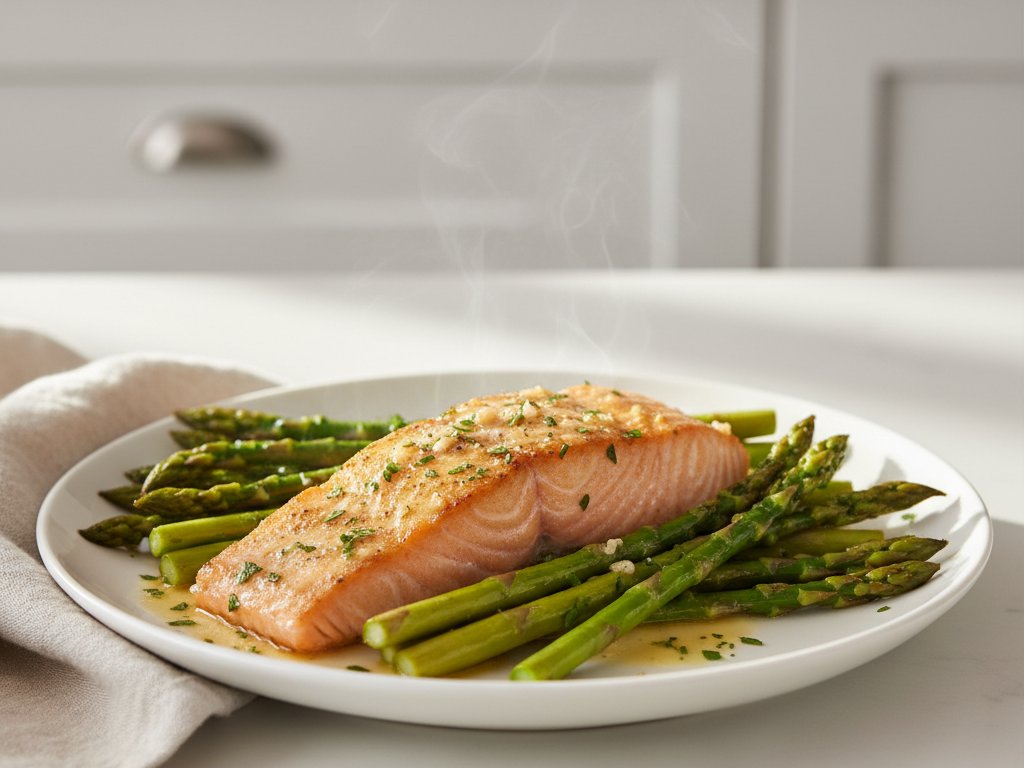
1. Garlic Butter Salmon and Asparagus Sheet Pan Meal
Buttery garlic-lemon glaze coats flaky salmon and tender asparagus. 52g protein, 742 cal. One pan, minimal cleanup, maximum omega-3s.
View Recipe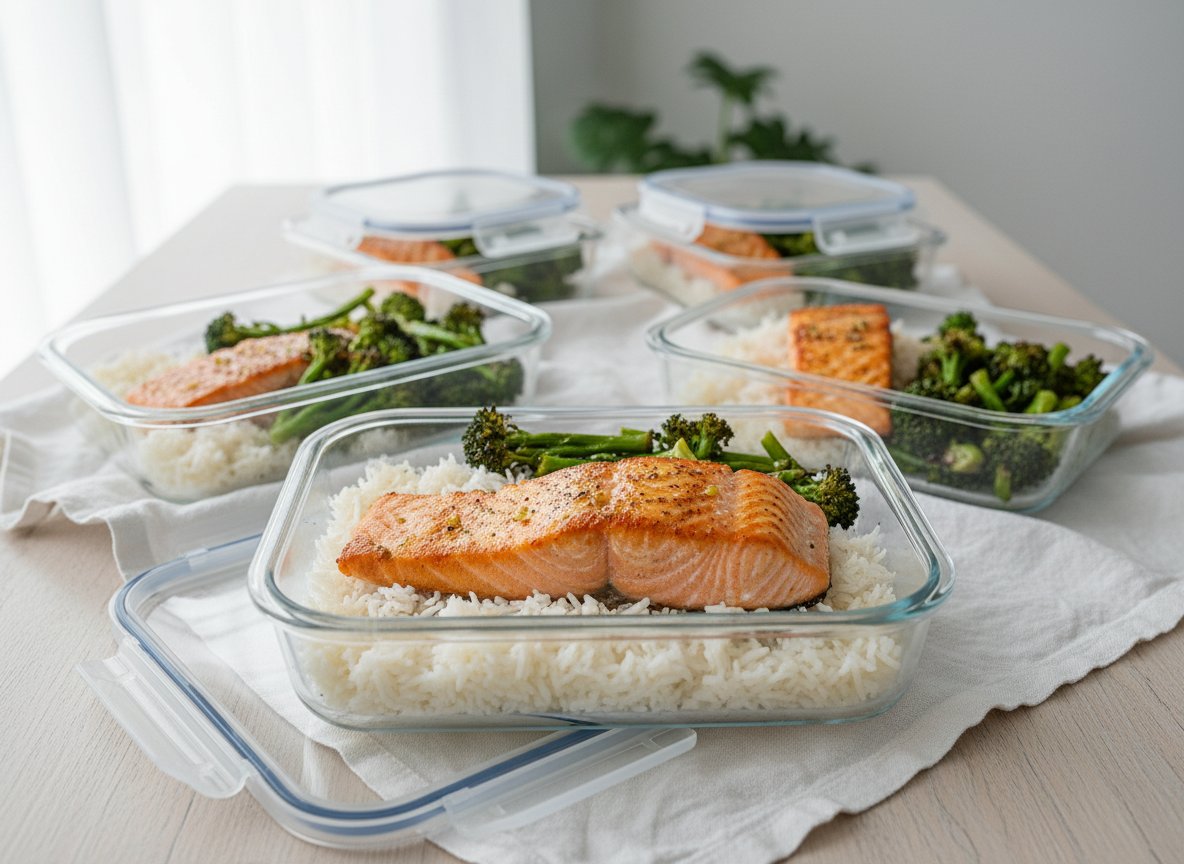
2. Salmon Rice and Broccoli Meal Prep - 44g Protein per Bowl
4 baked salmon bowls with jasmine rice and broccoli. 44g protein, 722 calories each. 30-minute prep with USDA-verified nutrition and 4 flavor variations.
View Recipe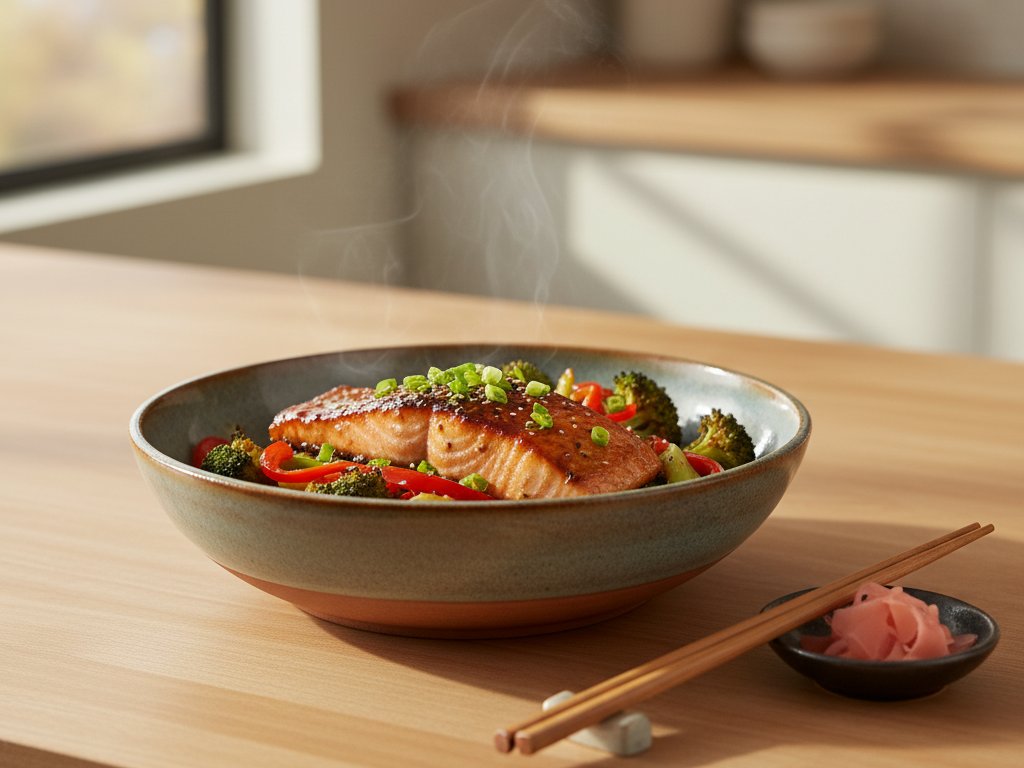
3. Teriyaki Salmon Sheet Pan
Glazed salmon roasts with broccoli and snap peas in sticky-sweet teriyaki sauce. 42g protein, 485 cal, meal prep ready.
View Recipe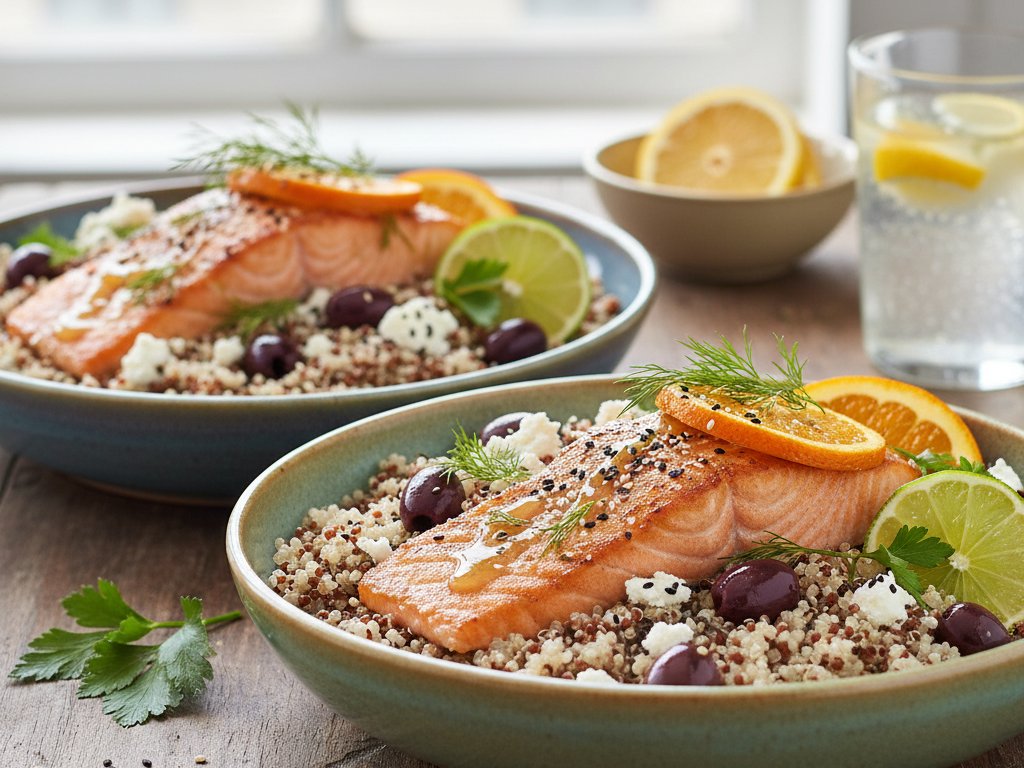
4. Mediterranean Citrus Salmon Bowls
Flaky roasted salmon and burst tomatoes over herbed quinoa with bright lemon dressing. 39g protein, 646 cal, 45 min. Mediterranean sunshine.
View Recipe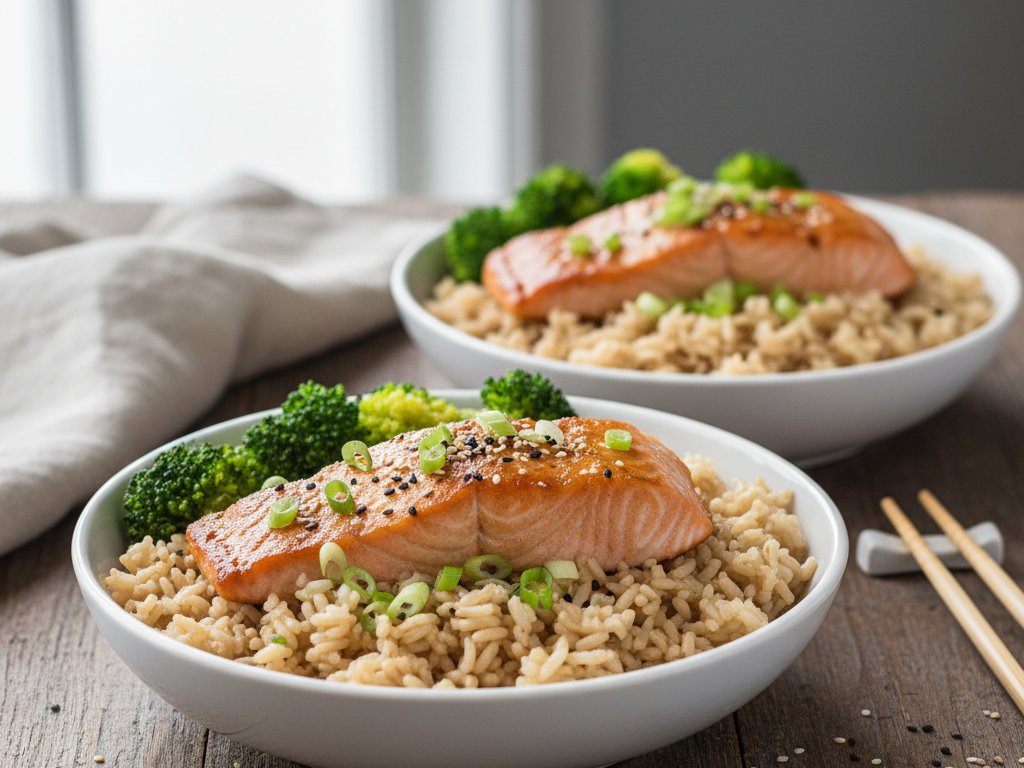
5. Miso Glazed Salmon Rice Bowls
Salmon miso bowl with caramelized glaze, roasted broccoli, and brown rice. 37g protein, 532 cal. Easy sheet-pan method — glaze, roast, and serve in 45 min.
View Recipe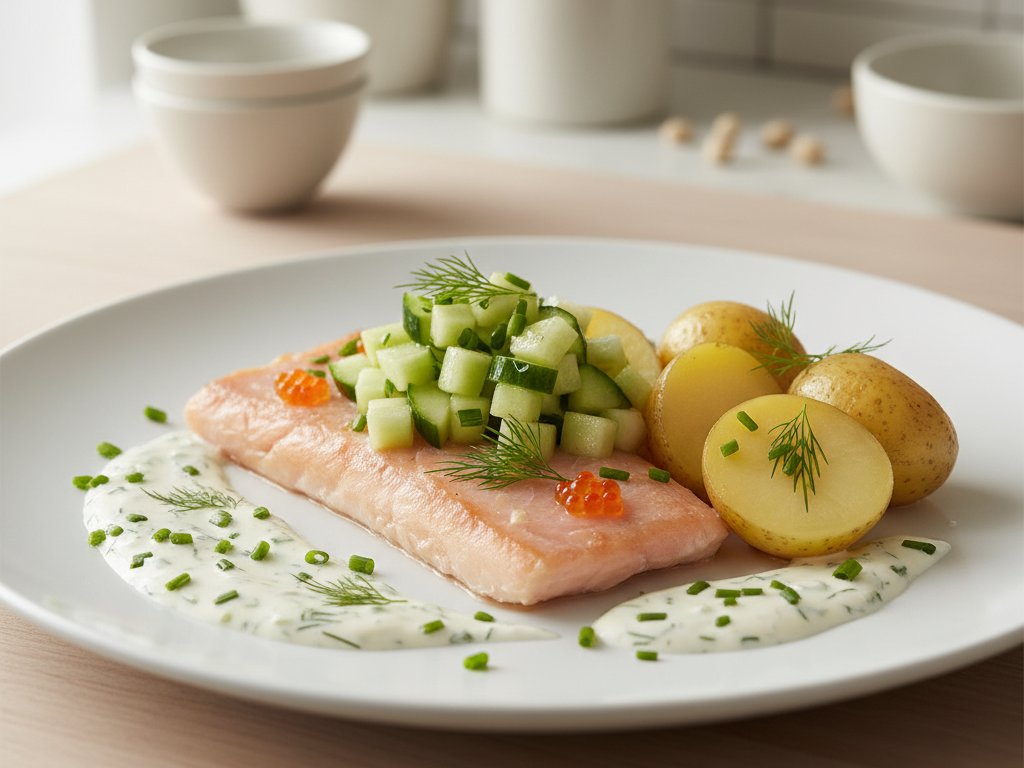
6. Arctic Char with Dijon-Dill Sauce
Silky slow-baked arctic char draped in cool Dijon-dill cream. 32g protein, 498 cal, 55 min. Swedish-inspired elegance without the heavy butter sauce.
View Recipe