
Eggs vs Egg Whites: Protein Per Egg, Calorie, and Dollar
A large egg has 6.3 g of protein in 72 calories; an egg white has 3.6 g in 17. Egg whites win per calorie (~2.4x), whole eggs win per dollar CAD (~2x).
Part of The Protein Atlas — your complete guide to protein.
A large whole egg has 6.3 g of protein in 72 calories. A large egg white has 3.6 g in 17. The white holds 57% of the egg’s protein but only 24% of its calories — which is why egg whites win the per-calorie contest by about 2.4x, while whole eggs win the per-dollar contest by about 2x.
Pull the yolk and you throw away 76% of the calories but only 43% of the protein. Every other number in this comparison follows from that one.
Default to whole eggs. Add a carton of liquid egg whites when calories are the constraint.
- Per egg: a whole large egg has 6.3 g protein / 72 kcal; a large egg white has 3.6 g / 17 kcal. About 2 whites match 1 whole egg’s protein.
- Per calorie: whites win — 21–22 g protein per 100 kcal vs 8.8 for whole eggs (~2.4x). But that’s the math, not a nutritional finding: the yolk holds 95% of the fat.
- Per dollar (CAD): whole eggs win — roughly 19 g of protein per dollar vs 9 for carton whites (~2x), at July 2026 Ontario shelf prices.
- The yolk also carries most of the egg’s choline (147 mg), B12 (0.45 µg), and vitamin D (40 IU). Whites bring almost none of those.
Search “eggs vs egg whites” and you get the same essay a hundred times: the yolk was unfairly demonized, eat the whole egg. Fine — but that essay never answers what the person in the dairy aisle wants to know: how much protein each option buys, per calorie and per dollar. Those are arithmetic questions, so we did the arithmetic — nutrient values from the U.S. Department of Agriculture’s (USDA) FoodData Central database (SR Legacy release; the specific FDC entry numbers are cited inline so you can look up any figure), Canadian retail prices checked July 12, 2026, Statistics Canada as the reference series, and the math shown wherever a number is derived.
Whole Eggs vs Egg Whites: Which Has More Protein?
Per 100 g, whole egg and egg white are closer than most people expect: 12.56 g of protein per 100 g for whole egg vs 10.9 g for raw egg white (USDA FDC entries 171287 and 172183). The white is mostly water; the yolk is actually the more protein-dense part at 15.86 g per 100 g (FDC 172184).
But nobody eats 100 g of egg white with a scale out. The useful unit is one egg. USDA’s portion data puts a large whole egg at 50 g and its white at 33 g, leaving 17 g of yolk. Scale the per-100-g values down and you get the numbers that matter:
| Per large egg (50 g) | Whole egg | Egg white (33 g) | The yolk you’d discard (17 g) |
|---|---|---|---|
| Protein | 6.28 g | 3.60 g | 2.70 g |
| Calories | 71.5 kcal | 17.2 kcal | 54.7 kcal |
| Fat | 4.76 g | 0.06 g | 4.51 g |
Derived from USDA per-100-g values × portion weight (e.g. whole egg: 12.56 × 0.50 = 6.28 g protein). Sanity check: white + yolk = 3.60 + 2.70 = 6.30 g protein and 17.2 + 54.7 = 71.9 kcal, matching the whole egg within rounding.
Three facts fall out of that table and drive everything else here:
- That 57/24 split is the whole comparison in miniature — the white’s share of the egg’s protein (3.60 / 6.28 = 57%) is more than double its share of the calories (17.2 / 71.5 = 24%).
- The yolk holds 95% of the egg’s fat (4.51 / 4.76 g) — and since fat is 9 kcal per gram, fat alone accounts for about 60% of a whole egg’s calories.
- It takes about 2 egg whites to replace 1 whole egg’s protein (6.28 / 3.60 ≈ 1.7 — call it two).
So “which has more protein” depends on the unit: per egg, the whole egg wins by the yolk’s extra 2.7 g; per calorie, the white wins — the next section shows by how much. To see whole eggs at work in a dish, Gyeran-jjim, the Korean steamed egg custard gets to 27.0 g of protein in a 354-calorie serving, in 20 minutes.
How Much Protein Per Calorie Do Egg Whites Have vs Whole Eggs?
Honesty first: egg whites win this one by definition, not by discovery. The yolk holds 95% of the egg’s fat, and fat carries more calories per gram than anything else you eat, so removing the yolk strips calories much faster than protein — arithmetic, not nutrition. What the definition doesn’t tell you is the magnitude, which few pages actually put in a table:
| Food | Math | Protein per 100 kcal |
|---|---|---|
| Whole egg | 12.56 g / 143 kcal × 100 | 8.8 g |
| Egg white (fresh, USDA) | 10.9 g / 52 kcal × 100 | 21.0 g |
| Liquid egg whites (carton, label) | 10 g / 45 kcal × 100 | 22.2 g |
USDA per-100-g values for whole egg and fresh white; carton row uses the manufacturer’s label for Burnbrae Naturegg Simply Egg Whites (10 g protein, 45 kcal per 100 g). The carton label reads slightly lower in protein than USDA’s fresh egg white (10 vs 10.9 g per 100 g) — it’s a rounded label value for a pasteurized (heat-treated for safety) product, so we use each number for its own product rather than mixing them.
Egg whites deliver about 2.4x the protein per calorie of whole eggs (21.0 / 8.8). That gap is the difference between “decent” for a calorie-capped diet and one of the leanest protein sources in the store (see our protein-per-calorie ranking).
One caution about extrapolating that ratio to real meals: recipes add other ingredients. Our Mediterranean spinach feta egg white frittata lands at 39.0 g of protein in a 278-calorie serving — an excellent ratio, but the feta and spinach are doing part of that work, not the egg whites alone.
Are Whole Eggs or Liquid Egg Whites Cheaper Per Gram of Protein?
This is where the comparison flips: the dozen in your cart holds half again as much protein as a 500 g carton of whites, and usually costs less at the till.
A dozen large eggs holds 12 × 6.28 = 75.4 g of protein. A 500 g carton of liquid egg whites holds 500 × 10% = 50 g of protein (using the label’s 10 g per 100 g). Divide by what each costs at the cheap end and the typical end of the Canadian market:
| Scenario | Whole eggs | Carton whites |
|---|---|---|
| Cheap anchor | $3.93/dozen (Walmart Great Value) → 75.4 / 3.93 = 19.2 g protein/$ | $5.47/500 g (Naturegg Simply, Walmart) → 50 / 5.47 = 9.1 g protein/$ |
| Typical anchor | $5.00/dozen (StatCan Ontario average) → 75.4 / 5.00 = 15.1 g protein/$ | $5.99/500 g (Metro) → 50 / 5.99 = 8.3 g protein/$ |
Retailer prices checked 2026-07-12 (walmart.ca, metro.ca); StatCan average from table 18-10-0245-01, reference month May 2026. Egg prices are volatile — StatCan’s Canada-average dozen moved from $4.77 to $4.85 just between March and May 2026 — so treat these as a dated snapshot and check your own shelf. The relative gap is far more stable than the absolute numbers.
Whole eggs buy you roughly twice the protein per dollar — 2.1x at the cheap anchor, 1.8x at the typical anchor. The gap held across every retailer we checked: carton whites ran $5.47–$6.49 per 500 g (Walmart, Real Canadian Superstore, Metro, Voilà), or about $1.10–$1.30 per 100 g; even the 1 kg tub ($11.29 at Voilà, $1.13 per 100 g) doesn’t undercut Walmart’s 500 g carton at $1.09 per 100 g.
If the cheapest possible protein is the actual goal, eggs of either kind are mid-tier — in our cheapest-protein-per-gram ranking, beans undercut every animal source.
What’s in the Yolk You’d Be Throwing Away?
The per-dollar loss is only half of what you give up with a whites-only carton. The yolk is where almost all of the egg’s vitamins and other non-protein nutrients live. Per large egg, from the same USDA entries:
| Nutrient (per large egg) | Whole egg | Egg white | Where it lives |
|---|---|---|---|
| Choline | 146.9 mg | 0.36 mg | Yolk (139.4 mg) |
| Vitamin B12 | 0.45 µg | 0.03 µg | Yolk (0.33 µg) |
| Vitamin D | 1.0 µg (40 IU) | 0 | Yolk (0.92 µg / 37 IU) |
| Fat | 4.76 g | 0.06 g | Yolk (4.51 g — 95%) |
Derived from USDA FDC 171287 (whole), 172183 (white), 172184 (yolk) × portion weights. Whole egg, white, and yolk are three separate USDA entries, so the parts don’t sum to the whole exactly — the small gaps (most visible in B12, where white + yolk = 0.36 µg vs 0.45 for the whole egg) are measurement differences between entries, not missing nutrients. IU = international units, the dosing unit for vitamin D; 1 µg = 40 IU.
Choline — a nutrient used to build cell membranes and the signalling molecule acetylcholine — is the standout: the white contains functionally zero, and the same goes for B12 and vitamin D. These are intrinsic differences you can’t season back in.
The myth runs the other way too, because the yolk-cheerleading era overcorrected. You’ll read that the yolk is where the leucine is — the amino acid that acts as the main trigger for muscle-building. Per gram of protein, that’s backwards: egg white carries 0.093 g of leucine per gram of protein (1.016 / 10.9), slightly more than whole egg’s 0.086 (1.086 / 12.56) — USDA FDC 172183 and 171287. Per whole egg the totals are 0.54 g (whole) vs 0.34 g (white), simply because a whole egg has more protein overall. The yolk’s real advantages are the nutrients above, not leucine.
Per gram of protein, egg whites actually carry slightly more leucine than whole eggs. The yolk’s edge is everything else.
Do Whole Eggs Build More Muscle Than Egg Whites?
Two studies have tested this head-to-head, and both lean the same way — toward the whole egg — though neither is a knockout.
The acute study (2017). Van Vliet and colleagues (American Journal of Clinical Nutrition, PMID 28978542) fed 10 resistance-trained young men whole eggs or egg whites right after a leg workout, both matched at 18 g of protein (about 3 large eggs’ worth). Whole eggs produced significantly greater myofibrillar protein synthesis — the rate of building new muscle protein — over the next 5 hours (P = 0.04; a pass under the conventional 0.05 cutoff, not a landslide). Caveats: n = 10, measured on a single day, and the whole-egg meal also carried 17 g of fat the whites didn’t (protein matched, not calories). A few hours of synthesis is a signal, not proven long-term growth.
The 12-week trial (2021). The longer test came from Bagheri and colleagues (PMID 33306586): 30 resistance-trained men ate 3 whole eggs or 6 egg whites (again ~20 g of protein) after training for 12 weeks. Muscle mass gains were statistically similar between the groups — so on pure size, the whites kept pace. But the whole-egg group gained significantly more strength (knee-extension and grip), raised testosterone more, and lost more body fat; the authors concluded whole eggs are the better choice when strength and body composition are the goal.
The fair summary: for muscle size, a protein-matched serving of egg whites keeps up. For strength, hormones, and leanness over three months — and for the acute synthesis signal — the whole egg has the edge, from two small studies that agree in direction. If you train, that’s a real point for the whole egg. The likely reason is the yolk’s fat and micronutrients, not leucine — whites actually carry marginally more of that per gram (previous section).
Whole-egg dishes make an 18 g dose easy: Turkish menemen reaches 25.2 g of protein in a 383-calorie serving; veggie-loaded egg muffins deliver 34.3 g per 462-calorie serving of grab-and-go meal prep.
When Do Egg Whites Actually Win?
After all that, the egg whites vs whole eggs verdict might seem settled in the yolk’s favour. It isn’t — egg whites have a genuine use case, just a narrower one than the whites-only era claimed, and current articles have swung so hard toward yolk redemption that they barely state it.
Egg whites win when calories are the hard limit. If you’re trying to hold a high protein target — say, in the neighbourhood of 140 g or more per day — inside a calorie cap, egg whites at 21–22 g of protein per 100 kcal let you add protein almost without touching your calorie budget: an extra 100 g of carton whites in a scramble adds 10 g of protein for 45 calories. The same protein from whole eggs costs about 114 calories (10 / 8.8 × 100). Our protein-for-weight-loss guide covers why protein targets usually go up, not down, in a calorie deficit.
They also win in a few specific situations:
- Cholesterol-restricted diets. If your doctor has told you to limit dietary cholesterol, whites keep eggs in the rotation — whether you need to is a conversation for your doctor, not a food blog.
- Fat-free protein for cooking. Whites disappear into baking, shakes, and oatmeal in a way whole eggs can’t. For no-cook uses like shakes, use pasteurized carton whites rather than raw whites you separate yourself from fresh eggs — raw egg white carries a small salmonella risk that cooking normally eliminates, and a no-cook shake skips that step.
- Volume eating. For the same calories, you get a much bigger plate of whites. The flip side: the yolk’s fat is part of what makes a whole-egg breakfast hold you until lunch, so some people find whites less filling per sitting. Which effect dominates is personal — test it on yourself.
The practical move is usually a hybrid: crack one or two whole eggs for flavour and the yolk’s nutrients, then extend with carton whites for cheap-calorie protein. Two recipes that lean whites-forward: the egg white and veggie stir-fry (32.0 g protein, 339 kcal, 18 minutes) and the cottage cheese egg white bites — 24.3 g of protein for just 124 calories, in 5 minutes. (Fair disclosure on both, as with the frittata earlier: the cottage cheese and vegetables contribute protein too. These six featured recipes were chosen to span whole-egg and egg-white cooking, not as a random sample.)
The Bottom Line: Which Should You Buy?
Buy whole eggs by default. They deliver about twice the protein per dollar (~19 vs ~9 g/$ at July 2026 Canadian prices), carry the choline, B12, and vitamin D that whites almost entirely lack, and the two head-to-head muscle studies — small, but agreeing — leaned their way (whole eggs led on strength and post-workout synthesis; muscle-mass gains were a tie). Add a carton of liquid egg whites only when calories are the constraint: at 21–22 g of protein per 100 kcal against the whole egg’s 8.8, whites are the tool for pushing protein up while holding calories down. The exchange rate: about 2 whites per whole egg’s protein — and of the three scoreboards here (per egg, per calorie, per dollar), per calorie is the only one whites win.
This week’s version of that advice:
- Buying protein on a budget? A dozen large eggs, cheapest you can find. At $3.93–$5.00 a dozen you’re getting 15–19 g of protein per dollar; the carton delivers roughly half that.
- Cutting, with a high protein target? One dozen whole eggs plus one 500 g carton of whites. Whole eggs anchor meals; whites top up scrambles and bakes for 45 kcal per 10 g of protein.
- Neither? Whole eggs. The carton solves a problem you don’t have, at twice the price per gram.
Before optimizing sources, make sure the target itself is right: how much protein do you actually need?
Frequently Asked Questions
How much protein is in one egg vs one egg white?
A large whole egg has 6.28 g of protein in about 72 calories; a large egg white has 3.60 g in about 17 calories (USDA values for a 50 g egg and 33 g white). The white holds 57% of the egg’s protein but only 24% of its calories — the yolk contributes the other 2.70 g of protein along with most of the calories.
How many egg whites equal one whole egg’s protein?
About two. A whole egg has 6.28 g of protein and one white has 3.60 g, so 6.28 / 3.60 ≈ 1.7 whites — in practice, two whites slightly exceed one whole egg’s protein, for about half the calories.
Are egg whites healthier than whole eggs?
Neither is “healthier” outright — they solve different problems. Egg whites give you more protein per calorie (21–22 g vs 8.8 g per 100 kcal) with almost zero fat. Whole eggs keep the yolk, which carries 43% of the egg’s protein plus most of its choline (147 mg per egg), B12 (0.45 µg), and vitamin D (40 IU). If calories aren’t your constraint, the whole egg is the more nutritious food; if they are, whites earn their place.
Is it cheaper to buy whole eggs or liquid egg whites?
Whole eggs, by roughly 2x per gram of protein. At July 2026 Canadian prices, a dozen large eggs delivered about 15–19 g of protein per dollar ($3.93–$5.00 per dozen) versus about 8–9 g per dollar for 500 g cartons of liquid egg whites ($5.47–$5.99). Egg prices move around, but the roughly 2x advantage showed up at Walmart, Superstore, Metro, and Voilà alike.
Do bodybuilders eat whole eggs or egg whites?
Typically both. Two head-to-head studies lean toward whole eggs: a 2017 acute study found greater post-exercise muscle protein synthesis (P = 0.04), and a 2021 12-week trial found whole eggs built more strength and cut more body fat, though muscle-mass gains were similar. But whites let you keep adding protein under a calorie cap, which is why bodybuilders cutting weight still lean on them. The common pattern is whole eggs as the base, carton whites to scale the protein.
Why do egg whites have more protein per calorie than whole eggs?
Because the fat lives in the yolk. The yolk holds 95% of a whole egg’s fat, and at 9 calories per gram, that fat accounts for about 60% of the egg’s calories. Remove the yolk and you remove 76% of the calories while keeping 57% of the protein — so the per-calorie ratio jumps from 8.8 to 21–22 g of protein per 100 kcal, about 2.4x. It’s subtraction, not a special property of the white.
- The Cheapest Protein Per Gram: 52 Foods Ranked — where eggs sit in the full cost ranking.
- Protein Per Calorie, Ranked — the lean-efficiency leaderboard egg whites compete on.
- How Much Protein Do You Actually Need? — set the target before optimizing the source.
Featured Recipes
All 6 recipes from this article, ready to cook
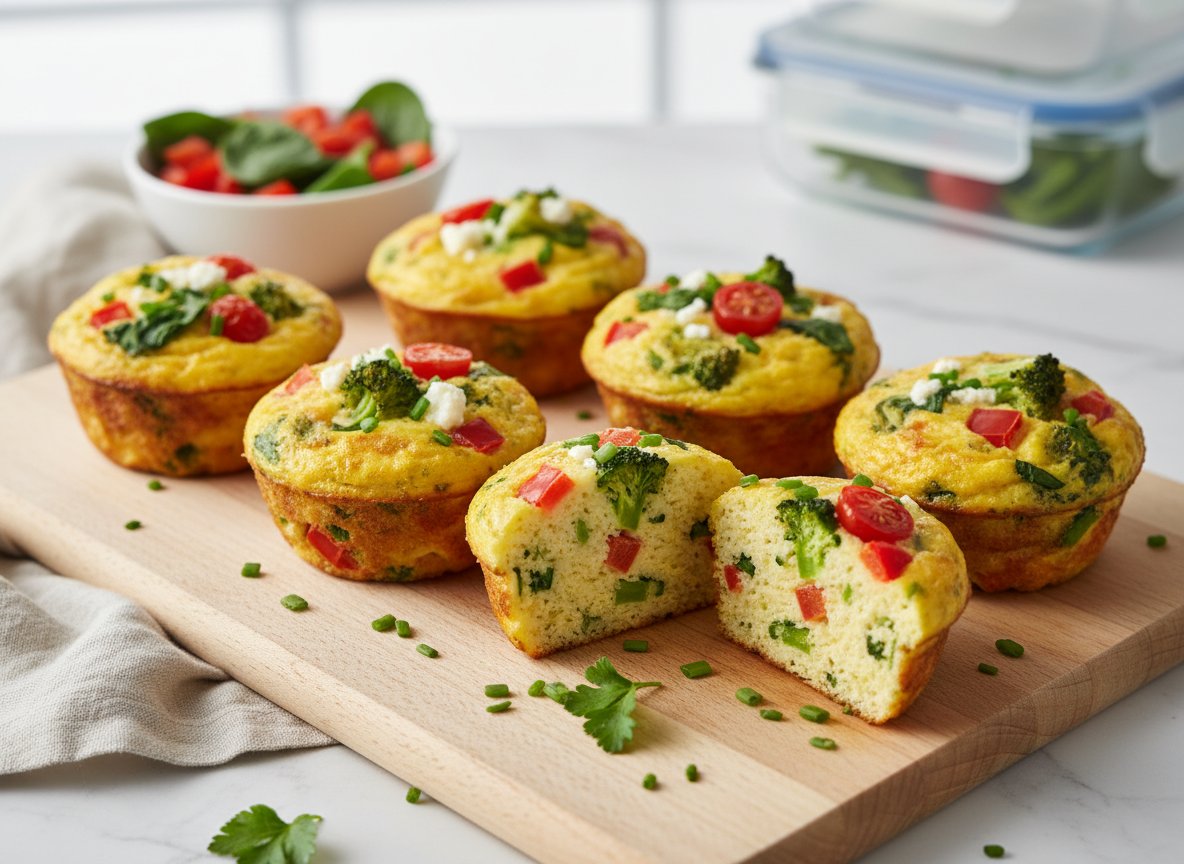
1. Veggie-Loaded Egg Muffins
Cheesy egg muffins packed with sauteed vegetables, baked for easy grab-and-go breakfasts. 34g protein, 462 cal per serving.
View Recipe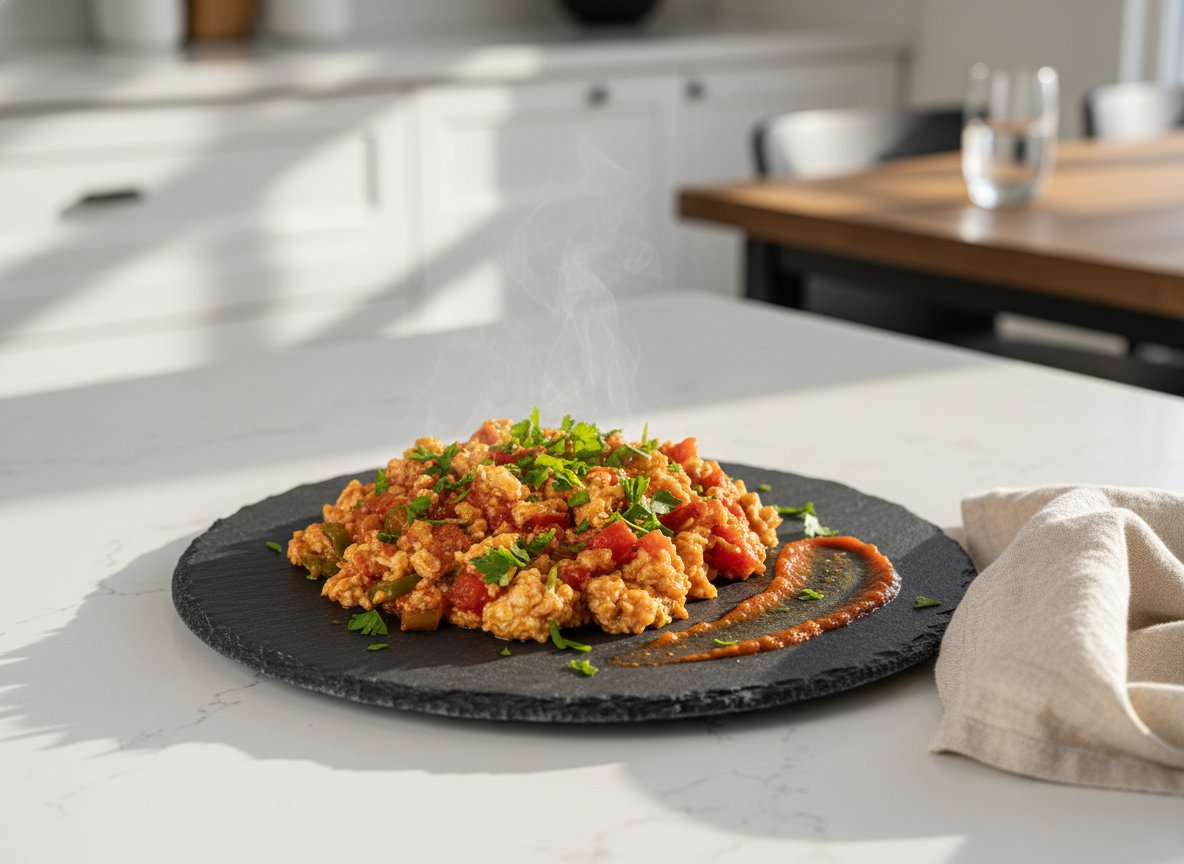
2. Turkish Menemen (Scrambled Eggs in Tomato Sauce)
Soft-scrambled eggs nestled in a smoky tomato-pepper sauce. 25g protein, 383 cal in 25 min. A one-pan Turkish breakfast with cumin-kissed warmth.
View Recipe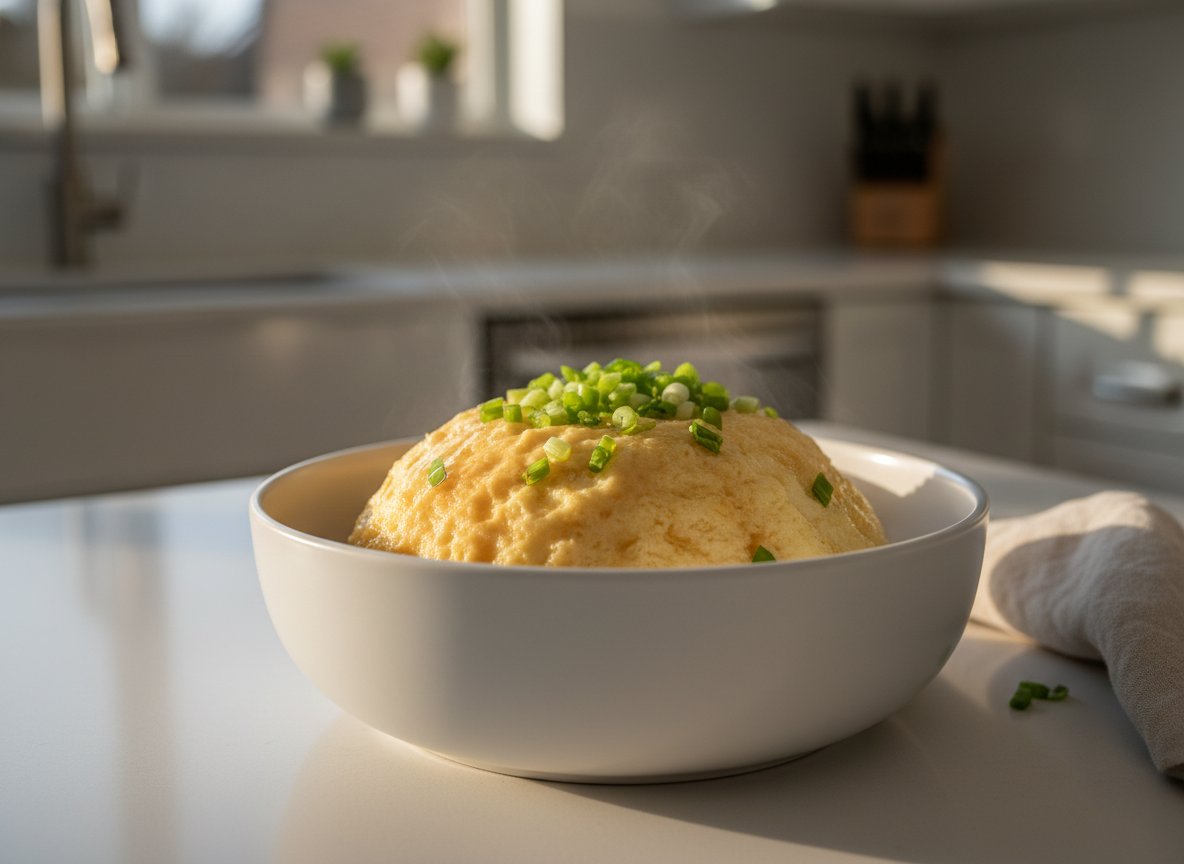
3. Gyeran-jjim (Korean Steamed Egg Custard)
Puffed, souffle-like egg custard steamed to silky perfection. 27g protein, 354 cal in just 20 min. Light yet satisfying morning protein.
View Recipe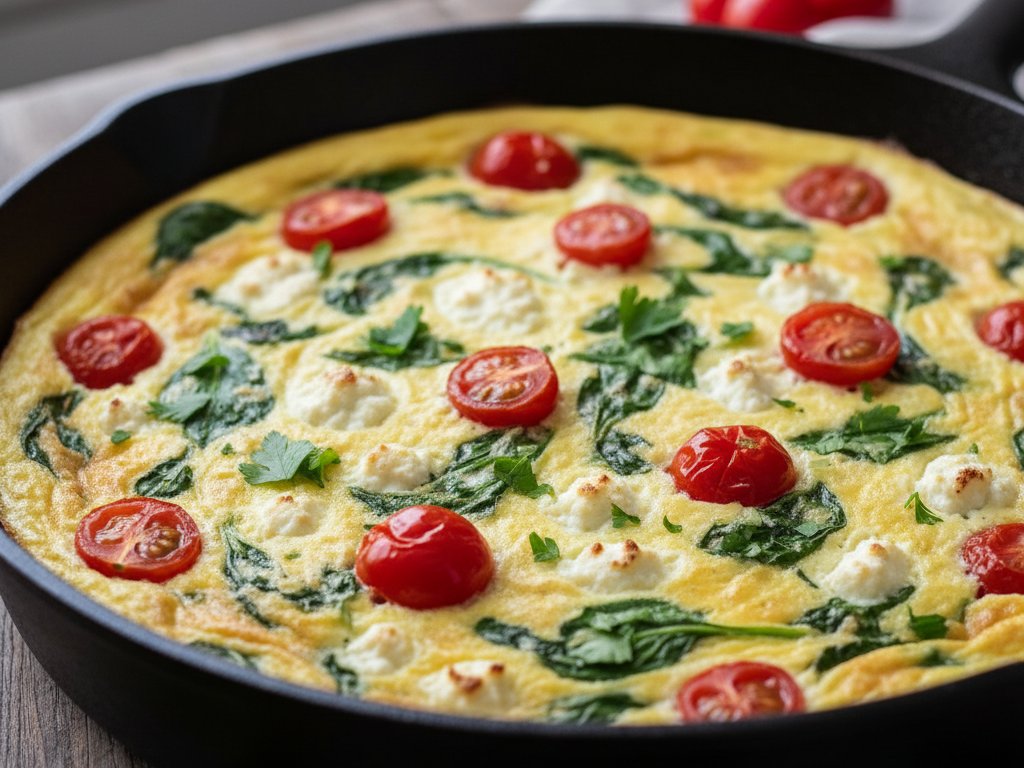
4. Mediterranean Spinach Feta Egg White Frittata
Airy egg whites baked with fresh spinach and tangy feta. 39g protein, 278 cal, 50 min. Mediterranean flavors in a meal-prep friendly frittata.
View Recipe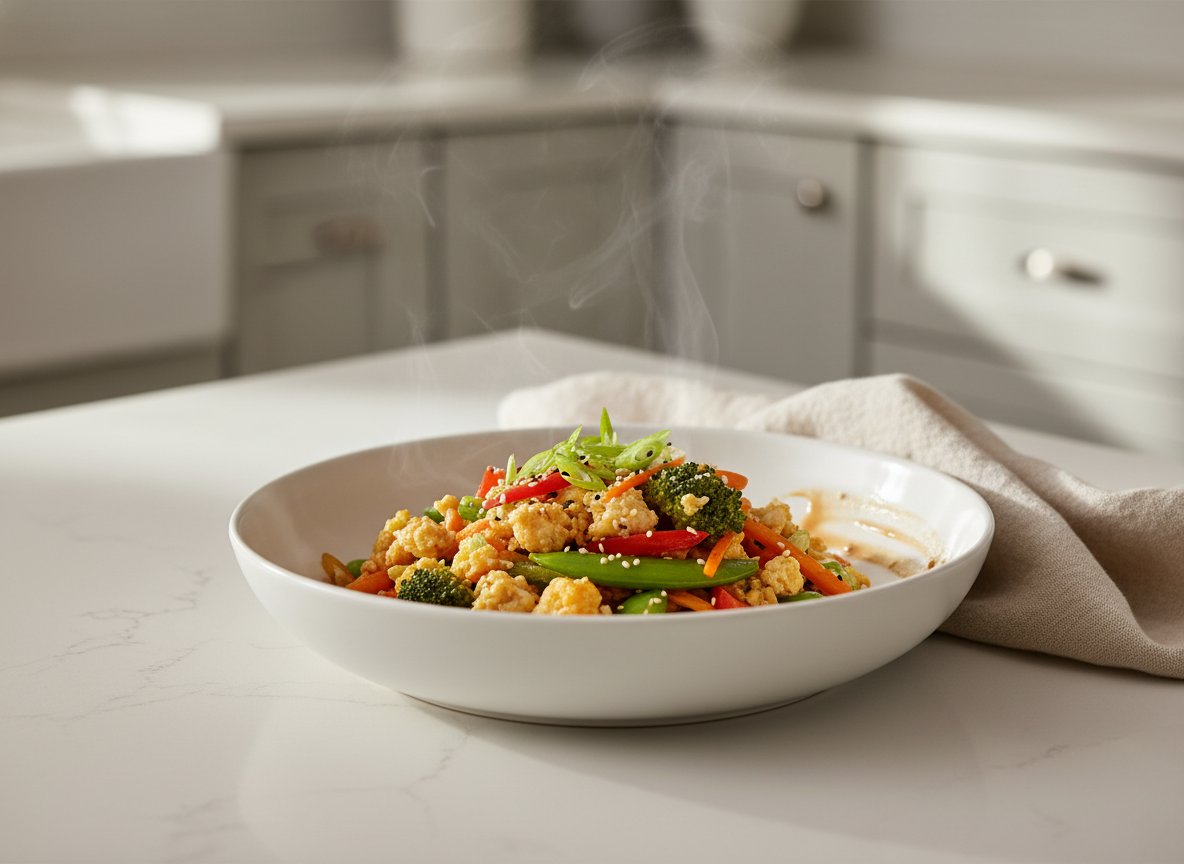
5. Egg White and Veggie Stir-Fry
10.4g protein per 100 calories—our most efficient egg dish. 30g total, 339 cal, 18 min. Fluffy egg whites with crisp broccoli and snap peas.
View Recipe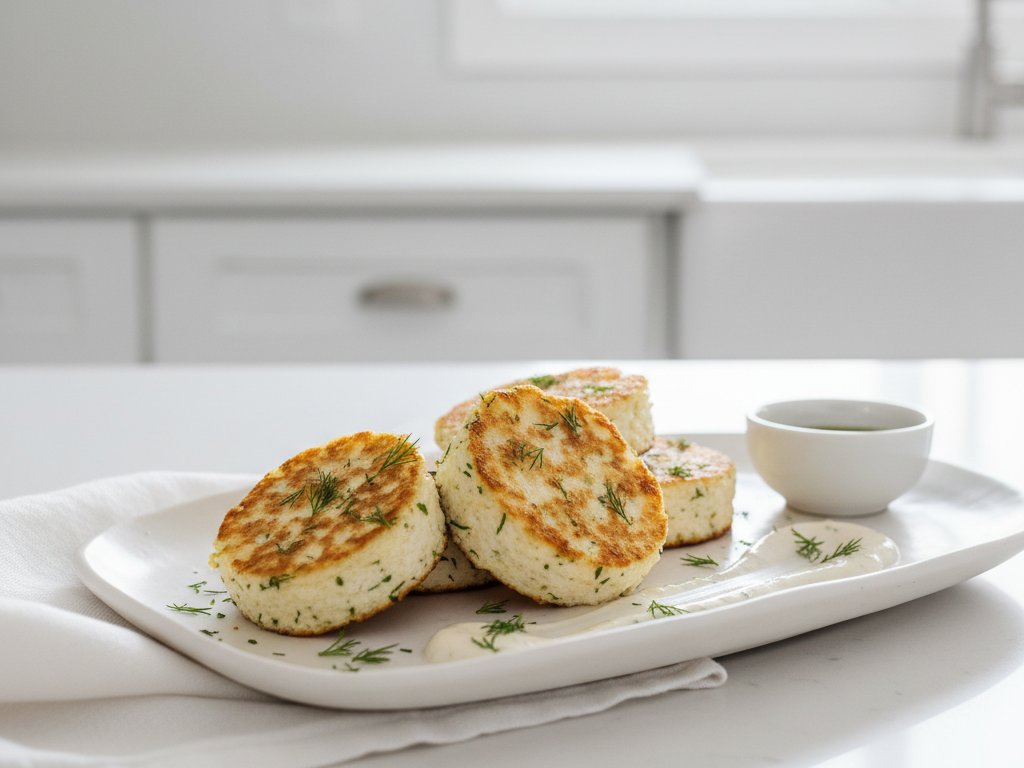
6. Easy Cottage Cheese Egg White Bites
Fresh dill tops seasoned cottage cheese on tender egg whites. 24g protein, just 124 cal, no cooking needed. The ultimate high-protein quick bite.
View Recipe