Greek Yogurt vs Greek-Style Yogurt: What's the Real Difference?
Greek yogurt is strained. Greek-style often isn't — it's thickened. The cost is protein, not safety. Here's how to read the label and what to actually buy.
Part of The Protein Atlas — your complete guide to protein.
Strained Greek yogurt runs about 10g of protein per 100g; a thickened “Greek-style” tub is often 4–7g. The difference is one production step: straining. Real Greek yogurt is strained to remove the watery whey, which concentrates the protein. Greek-style yogurt is often not strained at all — it’s thickened with starch, pectin, gelatin, or added dairy protein to mimic the texture.
The cost of that shortcut is protein per spoonful, not safety. The thickeners are ordinary, well-tested food ingredients. But a thickened “Greek-style” tub can deliver as little as half the protein of a strained one — often at similar or higher calories — and the word “style” on the label won’t tell you which one you’re holding. The protein line will.
“Greek-style” is a texture claim, not a protein claim. Read the protein line, not the name.
I learned this the annoying way: I grabbed a “Greek-style” tub on sale, assumed 17g of protein per serving like my usual strained Greek, and found 9g on the back. Same fridge shelf, same creamy look, nearly half the protein. Now I check the number before the brand.
Here’s how to tell them apart in five seconds.
Choose real (strained) Greek yogurt if: you’re buying it for protein — meal prep, post-workout, a high-protein breakfast. Strained delivers ~10g protein per 100g (~17g per serving) with a short ingredient list: milk and cultures.
Greek-style is fine if: the label macros are close to strained and the price is lower, OR you want it for texture/cooking rather than protein. Some “Greek-style” tubs are genuinely strained (just not made in Greece) and are excellent. Others are thickened imitations at half the protein. The protein number decides, not the word.
Flip the tub over and read two things: protein per 100g and the ingredient list. Real strained Greek yogurt is ~10g protein per 100g with two or three ingredients (milk, cultures, maybe salt). Greek-style yogurt that’s been thickened instead of strained often lands at 4–7g per 100g and lists starch, pectin, gelatin, or milk protein concentrate. If the protein is high and the ingredients are short, the name on the front doesn’t matter. If the protein is low, “Greek-style” is doing marketing work the yogurt can’t back up.
What Is the Difference Between Greek and Greek-Style Yogurt?
It comes down to one production step: straining.
Real Greek yogurt is regular yogurt with the liquid whey strained out. Removing that water concentrates everything left behind — protein roughly doubles versus the regular, unstrained yogurt it started from, and the texture turns thick and spoon-coating. The ingredient list is short because nothing needs to be added: milk, live cultures, sometimes a little cream or salt.
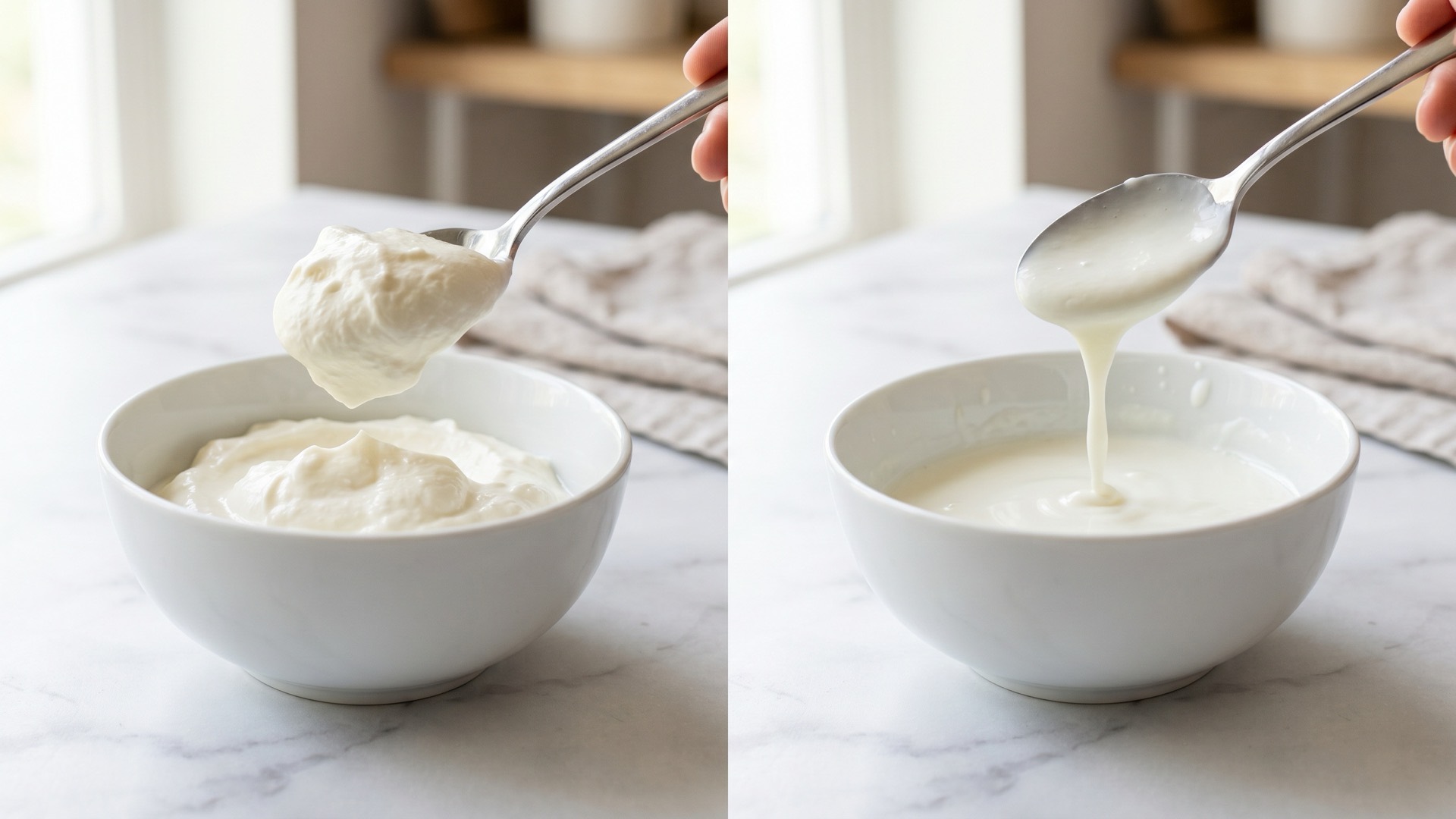
Greek-style yogurt is the texture without (necessarily) the straining. To get thick yogurt without losing volume to straining, manufacturers add texture thickeners — modified corn starch, pectin, guar gum, or gelatin — or boost it with added dairy protein like milk protein concentrate. The result looks and spoons like Greek yogurt but, unless it was strained or fortified with dairy protein, carries the protein of ordinary yogurt: often half as much.
Straining removes water and keeps protein. Thickening keeps water and adds texture. Only one of those concentrates the protein.
Here’s the wrinkle most articles miss: “Greek-style” doesn’t always mean thickened-and-weak. In the UK, there’s a legal reason the words exist at all. In FAGE UK v Chobani UK (Court of Appeal, 2013–2014), a passing-off case, British courts found that on a UK label “Greek yoghurt” had come to mean yogurt actually made in Greece, and blocked Chobani from marketing its US-made yogurt that way. Chobani’s product was genuinely strained and high-protein — it just wasn’t made in Greece, so “Greek-style” became the practical alternative. The ruling was about geography and labeling, not a claim that “Greek-style” means lower quality.
So “Greek-style” covers two very different things:
- A genuinely strained yogurt that just wasn’t made in Greece (high protein, short ingredient list).
- An unstrained yogurt thickened with additives to fake the texture (lower protein, longer ingredient list).
You can’t tell which one you’ve got from the word “style.” You can tell instantly from the protein number and the ingredients. That’s the whole game.
How Much Protein Is in Greek vs Greek-Style Yogurt?
This is where the gap shows up. Representative values, plain, per 100g:
| Per 100g | Real Strained Greek (0%) | Greek-Style, thickened (full-fat) | Greek-Style, strained (0%) |
|---|---|---|---|
| Protein | ~10g | ~4–7g | ~9–10g |
| Calories | ~59 | ~120–150 | ~60 |
| Sugar (natural) | ~3.5g | ~4–6g | ~4g |
| Typical ingredients | Milk, cultures | Milk, starch/pectin/gelatin | Milk, cultures |
Source: USDA FoodData Central for strained nonfat Greek yogurt (~10.2g protein/100g, FDC #170894); brand nutrition panels for the Greek-style ranges, which vary widely by product and fat level. The “thickened” column describes a full-fat, unstrained style tub; a fortified or strained Greek-style can land much closer to column one. Always check the panel on the tub in your hand.
The takeaway in one line: a strained yogurt gives you about 10g of protein per 100g, while an unstrained “Greek-style” tub thickened with starch can give you half that at higher calories. Per typical serving (about 170g), that’s the difference between ~17g of protein and ~8–10g — one meaningful protein hit versus a snack that’s mostly texture.
The two “Greek-style” columns above are the key point: the strained Greek-style (column three) matches real Greek almost exactly, because it was strained — it just wasn’t made in Greece. The thickened Greek-style (column two) is the one to watch for.
Same shelf, same creamy look, sometimes half the protein. The only honest comparison is per-serving protein, read off the back.
How Can You Tell Greek Yogurt From Greek-Style Yogurt?
Two checks, five seconds, no nutrition degree required.
1. Read the protein line per 100g. This is the number that actually matters, because it tells you the protein you’re buying — texture can’t fake it.
- ~9–10g+ per 100g → a genuine protein food, whether the front says “Greek” or “Greek-style.” (Usually that means strained; occasionally it’s fortified with added dairy protein. Either way, you get the protein.)
- ~4–7g per 100g → thickened for texture, not concentrated for protein. Fine as a creamy snack, weak as a protein source.
Use per-100g, not per-serving, when comparing tubs — serving sizes differ between brands and hide the comparison.
2. Scan the ingredient list. A short list usually means strained; a long one means thickened — but let the protein number be the tiebreaker, since a short-ingredient whole-milk tub can still be low-protein if it was never strained.
- Strained: milk, live cultures, maybe cream or salt. Two to four items.
- Thickened: look for modified corn starch, modified starch, pectin, gelatin, guar gum, or milk protein concentrate. These are the texture shortcuts that replace straining.
One nuance on milk protein concentrate (MPC): some high-protein yogurts add it on top of straining to push protein even higher. So MPC isn’t automatically a red flag — but if you see MPC or starch and the protein is only 4–7g/100g, you’re looking at thickening standing in for protein, not boosting it.
Is Greek-Style Yogurt as Healthy as Greek Yogurt?
It’s just as safe — this is where a lot of online content gets alarmist — but often less protein-dense. The honest answer is that the thickeners are fine; the real cost is dilution, not danger.
The common thickeners in Greek-style yogurt — modified corn starch, pectin, guar gum, gelatin, and added dairy protein like milk protein concentrate — are all FDA-permitted food ingredients used across the food supply for decades (most are GRAS-listed; modified food starch is a permitted additive under 21 CFR 172.892). Pectin is the gelling agent in jam. Gelatin sets dessert. Guar gum is a routine stabilizer. For most people, at the amounts in a yogurt tub, none of these are a safety concern — though milk protein concentrate is a dairy allergen and gelatin is animal-derived, worth noting if either matters to you.
The problem with thickened Greek-style yogurt isn’t that it’s harmful. It’s that you’re paying protein prices for a texture trick.
So if a “Greek-style” yogurt tastes good and the price is right, there’s nothing wrong with eating it. The only thing to be clear-eyed about: if you bought it for the protein, a thickened version under-delivers. That’s a macro problem, not a safety problem. Buy it as a snack, not as your protein source, and it’s fine.
The one thing genuinely worth checking on flavored Greek-style tubs is sugar — not because of the “style,” but because flavored yogurts (Greek or Greek-style) often carry 10–15g of total sugar per serving, much of it added (how much varies by brand). Plain is the cleaner buy either way.
Should You Buy Greek Yogurt or Greek-Style Yogurt?
Match the tub to the job.
| If you want it for… | Buy | Why |
|---|---|---|
| Hitting a protein target | Real strained Greek (or strained Greek-style), plain, 0% or 2% | ~10g protein/100g, short ingredient list |
| A creamy snack on a budget | Thickened Greek-style (check macros) | Cheaper; fine if you’re not counting on the protein |
| A marinade (tandoori, shawarma) | Either — any fat level | Lactic acid tenderizes; protein content is irrelevant here |
| Smoothies and overnight oats | Strained, for the protein density | Lower-protein Greek-style adds fewer macros |
| Dips and sauces (tzatziki, raita) | Either; full-fat for richness | Texture is the point; pick on taste and price |
| Lowest sugar | Plain, either type | Avoid flavored tubs (often 10–15g total sugar) |
The pattern: when you’re buying yogurt for protein, strained wins and the price premium is usually worth it when protein density is the goal. When you’re buying it for texture or flavor — a dip, a marinade, a dessert base — a cheaper Greek-style tub does the job, because the protein isn’t what you’re after anyway.
To put strained Greek yogurt’s protein to work, here are recipes built around it:
- Greek Yogurt Berry Smoothie Bowl — 53g protein, 536 cal. Thick enough to eat with a spoon, which works best with strained yogurt.
- Greek Yogurt Parfait with Berries and Granola — 38g protein, 526 cal. The classic layered breakfast; the protein comes from the yogurt, so straining matters.
- Greek Yogurt Overnight Oats — 36g protein, 522 cal. Strained yogurt keeps it thick overnight instead of soupy.
- Chia & Greek Yogurt Breakfast Pudding — 40g protein, 394 cal. A make-ahead pudding that leans on the yogurt’s density.
And where the protein content matters less and texture or acidity is the job:
- Greek Yogurt Herb Dip with Fresh Veggies — 23g protein, 155 cal. A dip where either style works; pick on taste and price.
- Tandoori-Style Chicken with Lentil Pilaf — 47.2g protein, 561 cal. The yogurt is a marinade here — its lactic acid tenderizes the chicken, so even a thinner Greek-style tub does the job.
The Bottom Line
Flip the tub over. If protein is ~9–10g per 100g and the ingredients are milk and cultures, it’s a real protein food — whether the front says “Greek” or “Greek-style.” If protein is 4–7g per 100g and you see starch, pectin, or gelatin, it’s a thickened texture food. Both are safe to eat. Only one earns its place in your protein math.
Buy the strained tub for breakfast and meal prep. If a Greek-style is cheaper and you want it for a dip, a marinade, or a snack, grab it — just don’t count on protein it doesn’t have.
Frequently Asked Questions
Is Greek-style yogurt as healthy as Greek yogurt?
It’s just as safe, but often less protein-dense. Real Greek yogurt is strained, giving it about 10g of protein per 100g from milk and cultures alone. Greek-style yogurt is frequently thickened with starch, pectin, gelatin, or milk protein concentrate instead of being strained, which can leave it at 4–7g of protein per 100g at higher calories. The additives themselves are recognized as safe — the difference is nutritional value (protein per calorie), not health risk. Some Greek-style tubs are genuinely strained and match real Greek yogurt; check the protein line and ingredient list to know which you have.
Why is it called Greek-style instead of Greek yogurt?
Two reasons. First, regulation: in the UK, a 2013–2014 court ruling (FAGE v Chobani) decided that “Greek yoghurt” on a label means yogurt actually made in Greece by straining, so strained yogurt made elsewhere must be sold as “Greek-style.” Second, manufacturing: many “Greek-style” yogurts aren’t strained at all and use thickeners to mimic the texture, so “style” signals “thick like Greek yogurt” rather than “made the Greek way.” The word alone doesn’t tell you which case you’re looking at — only the protein number and ingredients do.
Does Greek-style yogurt have less protein than Greek yogurt?
Often, yes. Strained Greek yogurt runs about 10g of protein per 100g (roughly 17g per 170g serving). Greek-style yogurt that’s thickened rather than strained frequently lands at 4–7g per 100g — sometimes half the protein at the same or higher calories. But not always: a Greek-style yogurt that was strained (just not made in Greece) can match real Greek yogurt closely. Compare protein per 100g between tubs rather than trusting the front-label name.
What are the thickeners in Greek-style yogurt, and are they safe?
Common thickeners are modified corn starch, pectin, guar gum, gelatin, and (for protein) milk protein concentrate. All are FDA-permitted food ingredients used across the food supply for decades — most are GRAS-listed, and modified food starch is a permitted additive under 21 CFR 172.892. Pectin gels jam, gelatin sets dessert, guar gum stabilizes countless products. For most people they aren’t a health concern at the amounts in yogurt (milk protein concentrate is a dairy allergen and gelatin is animal-derived, worth noting if that applies to you). The only practical downside is that thickeners replace the straining that would otherwise concentrate protein, so a heavily thickened Greek-style yogurt delivers less protein per spoonful.
How can I tell if a yogurt is really strained?
Check two things. First, protein per 100g: about 9–10g or more signals a strained, protein-dense yogurt; 4–7g signals an unstrained, thickened one. Second, the ingredient list: strained yogurt is short (milk, live cultures, maybe cream or salt), while thickened yogurt lists starch, pectin, gelatin, guar gum, or milk protein concentrate. A short ingredient list plus high protein means strained — no matter whether the label says “Greek” or “Greek-style.”
Tonight, do the shelf check on whatever’s in your fridge. Then put a strained tub to work: Greek Yogurt Berry Smoothie Bowl for breakfast, or a Greek Yogurt Herb Dip for the afternoon.
- Greek Yogurt vs Cottage Cheese: Which Has More Protein? — The next question once you’ve sorted your yogurt: which high-protein dairy to reach for, and when.
- How Much Protein Do You Actually Need? — Before optimizing sources, make sure you’re hitting the baseline.
- Why High-Protein Meals Aren’t Always High-Calorie — How protein density (the whole point of straining) actually works.
Featured Recipes
All 6 recipes from this article, ready to cook
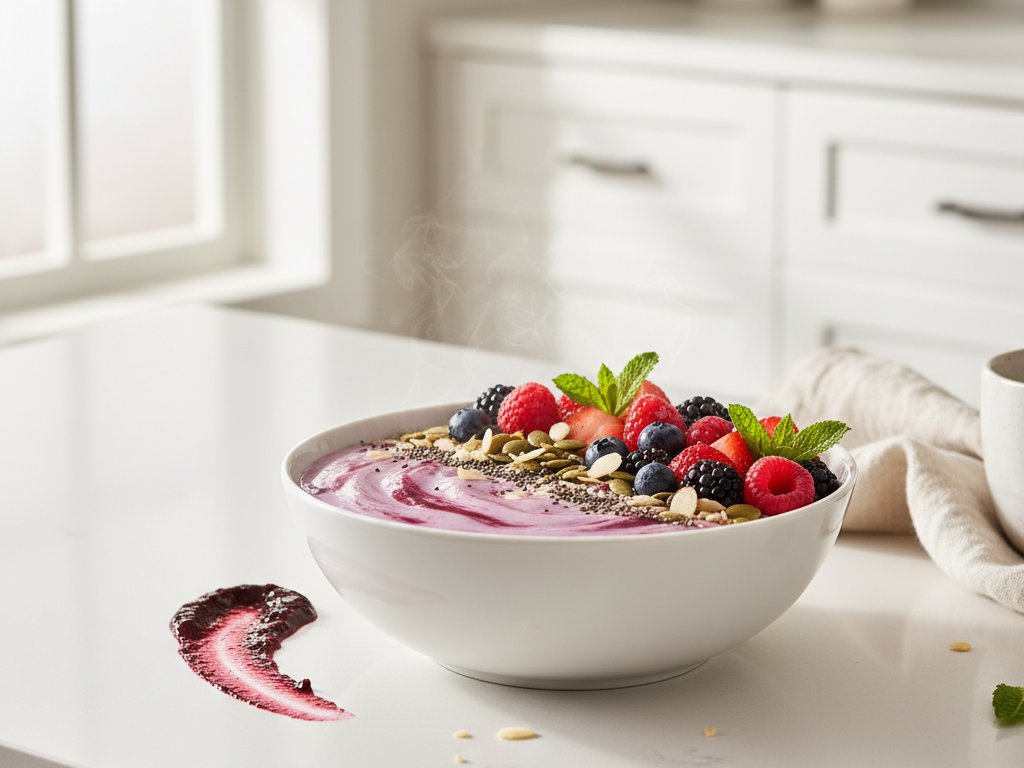
1. Greek Yogurt Berry Smoothie Bowl
Thick, spoonable berry smoothie bowl bursting with frozen fruit and creamy Greek yogurt. 53g protein, 536 cal in just 5 minutes flat.
View Recipe
2. Greek Yogurt Parfait with Berries and Granola
Velvet Greek yogurt topped with toasted granola, fresh berries, and nutty almonds. 38g protein, 526 cal. Breakfast ready in under 5 min.
View Recipe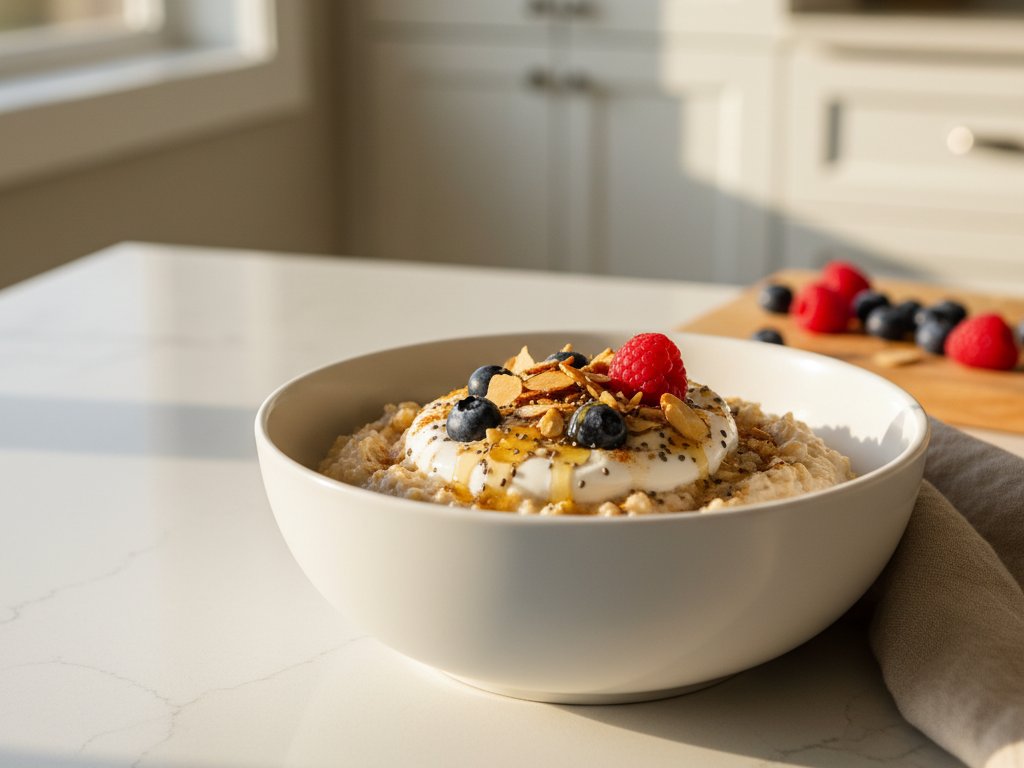
3. Greek Yogurt Overnight Oats
Creamy oats soaked with tangy Greek yogurt and chia seeds overnight. 36g protein, 522 cal. Just 10 min prep for grab-and-go mornings.
View Recipe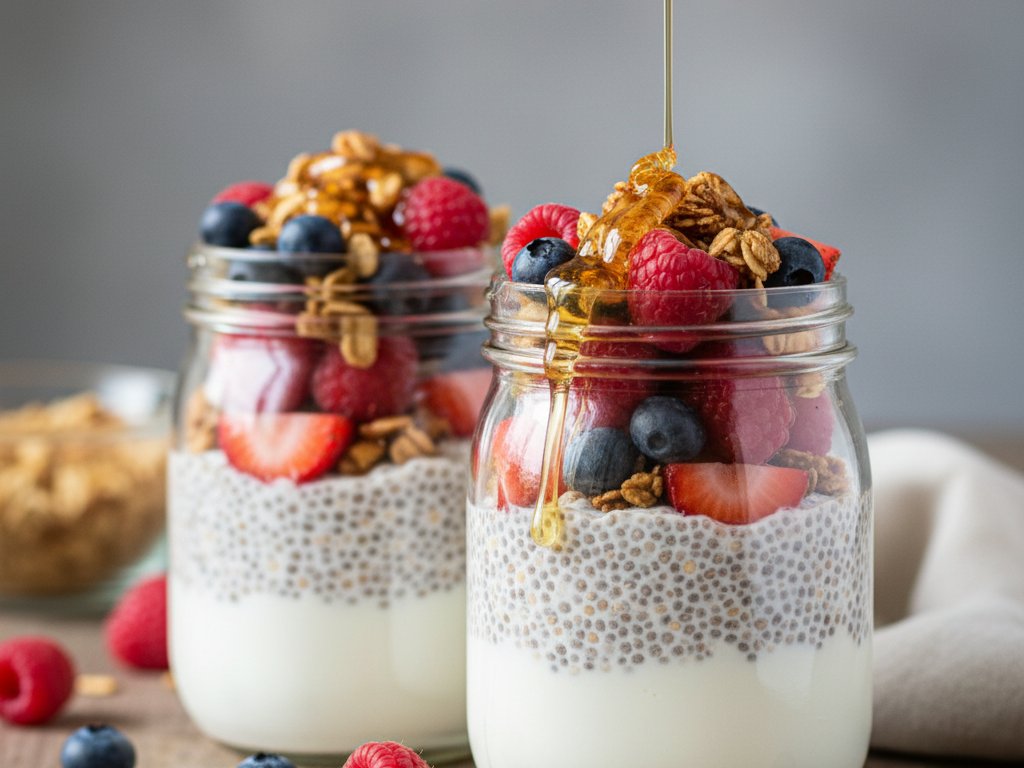
4. Chia & Greek Yogurt Breakfast Pudding
Thick, creamy Greek yogurt swirled with chia seeds, ready when you are. 40g protein, 394 cal, 10 min prep. Zero cooking, maximum morning satisfaction.
View Recipe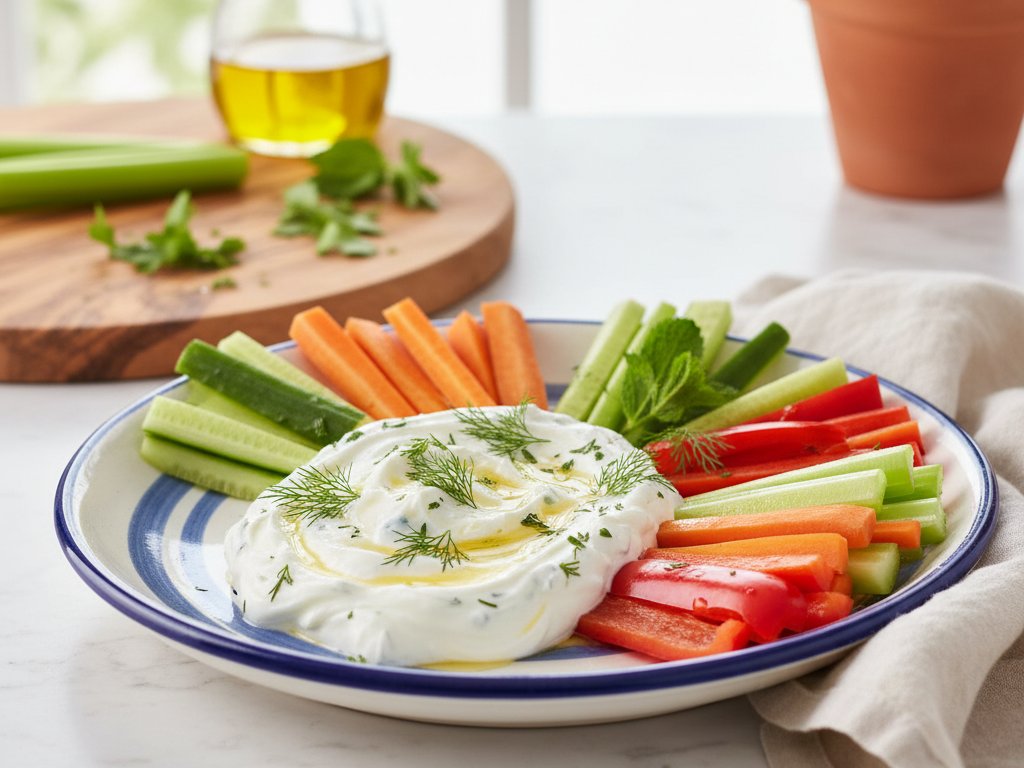
5. Greek Yogurt Herb Dip with Fresh Veggies
Zesty lemon-garlic dip with fresh dill in creamy Greek yogurt. 23g protein, 155 cal, 5 min prep. Served with crisp cucumber and sweet cherry tomatoes.
View Recipe
6. Yogurt-Marinated Tandoori-Style Chicken with Lentil Pilaf
Aromatic yogurt-marinated chicken roasted with warm spices, served over earthy lentil pilaf. 47g protein, 561 cal in 50 min.
View Recipe