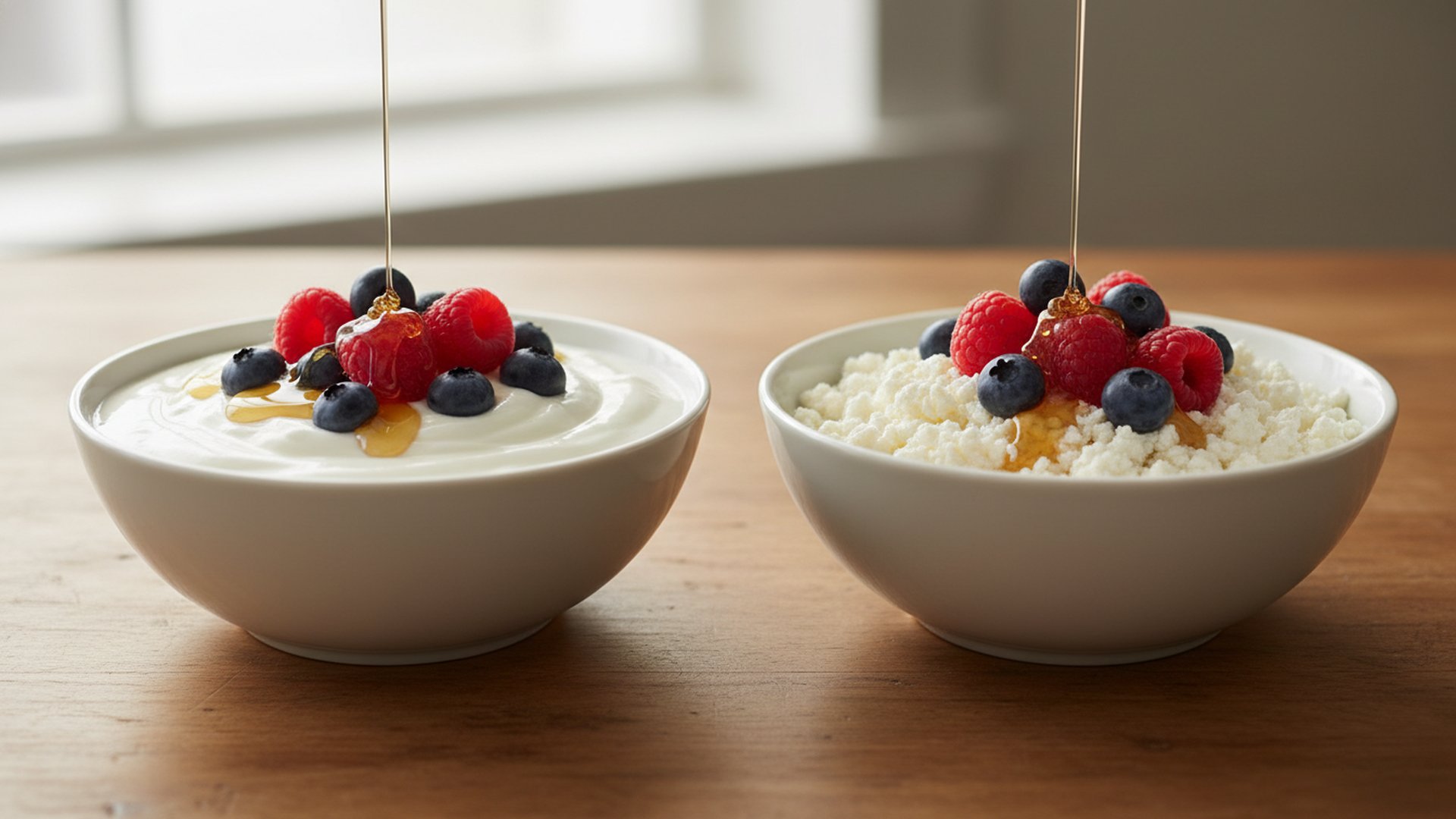
Greek Yogurt vs Cottage Cheese: Which Has More Protein?
Cottage cheese has more protein per gram. Yogurt has less sodium and more versatility. Here's when to use each — with recipes for both.
Part of The Protein Atlas — your complete guide to protein.
Low-fat (1%) cottage cheese: 12.4g protein per 100g. Nonfat Greek yogurt: 10.2g. Per gram, cottage cheese wins.
Cottage cheese has roughly 10x the sodium (406mg vs 36mg per 100g, USDA). Greek yogurt wins on calcium against the standard 1% cottage tub (110mg vs 61mg per 100g). Yogurt’s lactic acid makes it the better marinade; cottage cheese’s structure makes it the better scramble, pancake, and baked-good binder. And then there’s the texture: cottage cheese curds you tolerate or hate. Smooth Greek yogurt avoids the question entirely.
Cottage cheese is a weekday tool. Yogurt is a Friday night ingredient. You need both.
I used to grab whichever was on sale. Now I buy both and use them for completely different things. Tuesday meal prep gets cottage cheese. Friday dinner with friends gets full-fat yogurt. Post-gym snack gets whatever’s closest.
Here’s why.
Choose cottage cheese if: you eat protein 3+ times a day, want overnight satiety (denser, slower to eat), tolerate the curd texture, or use it in scrambles, pancakes, and baked goods.
Choose Greek yogurt if: sodium matters (hypertension, heart concerns), you want a smooth base for smoothies, marinades, or dips, or you bake with cultured dairy. Under 65mg sodium per serving makes it the safer everyday default.
Buy both. Cottage cheese for scrambles, pancakes, satiety, and before bed (12.4g protein/100g for the 1% tub, but roughly 10x the sodium). Yogurt for marinades, smoothies, dips, and anything that needs to stay smooth (less sodium, better for cooking at high heat). The protein difference is real but small — when comparing cottage cheese vs yogurt, the cooking, texture, and sodium differences are what actually change your week.
How Much Protein Is in Greek Yogurt vs Cottage Cheese?
The comparison everyone’s looking for — nonfat Greek yogurt against the low-fat (1%) cottage cheese that dominates retail shelves:
| Per 100g | Greek Yogurt (0%) | Cottage Cheese (1%) |
|---|---|---|
| Protein | 10.2g | 12.4g |
| Calories | 59 | 72 |
| Sodium | 36mg | 406mg |
| Calcium | 110mg | 61mg |
| Protein per 100 cal | 17.3g | 17.2g |
Source: USDA FoodData Central (FDC 170894 and 173417; values re-checked against live entries July 11, 2026). Values are representative; specific brands vary.
Cottage cheese has more protein per gram. Per calorie, it’s a dead heat — 17.3g vs 17.2g per 100 calories. If you’re eating a serving of either, you’re getting 14-17g of protein.
The numbers shift when you change fat level or go high-protein:
| Variant | Protein/100g | Calories | Sodium |
|---|---|---|---|
| Greek Yogurt | |||
| Nonfat (0%) | 10.2g | 59 | 36mg |
| Whole milk | 9.0g | 97 | 35mg |
| High Protein (Oikos) | 10.9g | 57 | 43mg |
| Cottage Cheese | |||
| Low fat (1%) | 12.4g | 72 | 406mg |
| Low fat (2%) | 10.4g | 81 | 308mg |
| Full fat (4%) | 11.1g | 98 | 315mg |
(USDA also lists a “nonfat” cottage cheese at 10.3g protein per 100g — but that entry is dry-curd, a product you’ll rarely find at retail, so we anchor on the 1% tub instead.)
Two things jump out. First, cottage cheese protein doesn’t track fat level — the 1% tub is actually the protein peak at 12.4g, with 2% and 4% both landing lower. Second, sodium is high across every cottage cheese variant (roughly 300-400mg per 100g) and low across every yogurt variant.
But the numbers only tell you what’s in the container. They don’t tell you what to do with it.
When Should You Use Cottage Cheese vs Yogurt?
Yogurt is stronger when you need smooth, cold, or acidic.
Marinades are the clearest win. Yogurt tenderizes meat — the lactic acid breaks down surface proteins, which is why tandoori and shawarma marinades use it. Any fat level works. For a recipe that shows this: Tandoori-Style Chicken with Lentil Pilaf (47.2g protein, 561 cal).
Smoothies depend on what you’re optimizing for. Hitting protein targets on a Tuesday? Nonfat or high-protein yogurt. Making a weekend smoothie bowl where texture and richness matter? Full-fat yogurt or skyr gives you that thick, creamy base — like this Greek Yogurt Berry Smoothie Bowl (53g protein, 536 cal).
Dips and sauces split the same way. Tzatziki for Friday dinner guests? Full-fat yogurt. The richness is the point and nobody’s counting macros at the table. Tzatziki as a weekday meal prep condiment? Nonfat works fine. It’s slightly thinner but the flavor holds on top of a grain bowl.
Cottage cheese is stronger when you need structure or heat.
It holds up when cooked. Scrambled eggs with cottage cheese stay fluffy and moist instead of going rubbery. In bowls (sweet or savory), it’s a base that doesn’t melt into nothing. And it takes bold seasoning well: everything-bagel spice, hot sauce, za’atar — the same flavor-bomb instinct behind most of the viral TikTok cottage cheese recipes we ran through USDA math, not all of which held up. Try it in Easy Cottage Cheese Egg White Bites — 24g protein, 124 cal. Make 12 on Sunday, eat them all week.
The heat difference is the practical divider. Yogurt curdles above 80°C. Cottage cheese doesn’t. If your recipe involves a pan or an oven, cottage cheese is the safer bet.
Texture is the real dividing line. Cottage cheese is polarizing — the lumps, the curds, the wet-dry thing in the same spoonful. Two fixes: blend it (close to ricotta in pancakes, dips, and sauces) or lean into it (the curds in a savory bowl with everything-bagel seasoning are part of the appeal). Yogurt is smooth, consistent, predictable — which matters when cooking for other people or feeding kids who reject anything that looks “weird.” But if texture isn’t an issue, cottage cheese vs greek yogurt comes down to heat tolerance and what macros you need for that meal.
If you blend cottage cheese into pancake batter, nobody at the table will know it’s there. The texture objection disappears.
See for yourself: Fluffy Cottage Cheese Pancakes — 27g protein, 403 cal. Blended smooth, zero lumps.
| Use Case | Optimizing for Macros | Optimizing for Flavor/Texture |
|---|---|---|
| Marinade (tandoori, shawarma) | Yogurt, any fat level (acid does the work) | |
| Smoothie | High-protein or nonfat yogurt | Full-fat yogurt or skyr |
| Dip or sauce (tzatziki, raita) | Nonfat yogurt | Full-fat yogurt |
| Scrambles or egg bites | Cottage cheese (holds heat, either fat level) | |
| Protein pancakes | Blended cottage cheese (fluffy, holds structure) | |
| Savory bowl | 0% cottage cheese | 2-4% cottage cheese |
| Sweet bowl (berries, honey, nuts) | 0% of either | Full-fat of either (texture preference) |
| Overnight oats or parfait | Either product, either fat level — personal preference | |
The pattern: yogurt when it’s cold or acidic. Cottage cheese when it’s heated or structural. Sweet dishes go either way. Fat level follows your intent for that meal, not a blanket rule.
For a dip that demonstrates the blending trick: Blended Cottage Cheese Mediterranean Dip — 23g protein, 188 cal per serving. Silky smooth, closer to labneh than to cottage cheese.
Does Cottage Cheese Keep You Fuller Than Yogurt?
Yes — and the reason isn’t what most fitness content tells you.
The popular explanation is that cottage cheese is “casein protein” (slow-digesting) while yogurt is “whey protein” (fast-digesting). That’s not quite right. Both are roughly 80% casein, 20% whey — dairy protein is dairy protein. The ratio is nearly identical.
The internet says cottage cheese is casein and yogurt is whey. Both are 80% casein. The real difference is density, not protein type.
So why does cottage cheese keep you fuller?
Density and texture. Cottage cheese is thicker and heavier per spoonful. You eat it slower. The curds require chewing. Slower eating consistently correlates with greater satiety in controlled feeding studies (Robinson et al., American Journal of Clinical Nutrition, 2014).
Intact protein structure. Cottage cheese is made by separating curds from liquid whey. Those curds are tightly packed casein that hasn’t been broken down by fermentation. Yogurt’s casein has been partially broken down during the fermentation process, which may speed up digestion slightly.
Fat amplifies fullness. Full-fat versions of both keep you satisfied longer, but cottage cheese’s density drives most of the satiety even at lower fat levels. A bowl of cottage cheese with berries before bed is substantial enough to last through the night — that’s why it’s been a bodybuilding before-bed staple for decades. Not because of a magical protein ratio, but because it’s a dense, filling food that works at 10 PM. Either 2% or 4% works; 4% is creamier, 2% has better macros.
A before-bed version you can make in 2 minutes: Cottage Cheese Berry Night Bowl — 25g protein, 249 cal.
Does Cottage Cheese Have More Sodium Than Yogurt?
This is the biggest practical difference between the two products, and the one most people don’t know about.
Cottage cheese has roughly 8-11x more sodium than plain Greek yogurt by USDA entries (308-406mg vs 35-36mg per 100g). The gap holds across every variant and, brand to brand, stays large. Salt is added during production to control moisture and extend shelf life.
One 125g serving of cottage cheese has 385-508mg of sodium depending on the variant. Two servings a day — a breakfast bowl and an evening snack — puts you at 770-1,015mg from dairy alone, up to 44% of the 2,300mg daily limit. And that’s before you’ve seasoned a single meal.
Yogurt barely registers at roughly 60mg per 170g serving.
Calcium depends heavily on which cottage cheese you buy. Greek yogurt sits at about 100-110mg calcium per 100g; cottage cheese ranges from 61mg (the 1% tub) through 83mg (4%) up to 111mg (2%). Against the retail-standard 1% tub, Greek yogurt has nearly twice the calcium; against 2%, they’re even. If calcium is a priority, regular (non-Greek) yogurt is the standout source at ~200mg/100g — Greek straining removes some of it, but Greek still never drops as low as the 1% cottage tub.
The protein debate is close. The sodium gap is 4-to-1. That’s the number worth paying attention to.
If you’re managing blood pressure or eating dairy multiple times a day, the sodium math is worth knowing.
Beyond sodium, there’s the question of what you’re actually buying — because not all yogurt is the same product anymore.
Is High-Protein Yogurt Worth It, and Which Is Cheaper?
High-protein yogurts like Oikos Pro are a different product from traditional Greek yogurt. Regular Greek yogurt gets its protein from straining — as few as two ingredients, milk and cultures. High-protein yogurts use ultra-filtered milk and add whey protein concentrate to push the numbers higher. More protein per calorie, more ingredients on the label.
Cottage cheese gets its protein the simplest way: the manufacturing process concentrates it naturally. Even the 0% version is typically just milk, cultures, and salt.
| Product | Protein/100 cal | Ingredients | Best For |
|---|---|---|---|
| Oikos High Protein | 19.1g | 10+ (ultra-filtered, whey concentrate) | Maximum protein per calorie |
A note on reading labels: Oikos High Protein containers display “19g protein” prominently — that’s per 175g serving. Our table above shows protein per 100 calories, which happens to land at a nearly identical 19.1g by coincidence. Different metrics, similar number. If you’re comparing at the shelf, check the per-100g column on the nutrition panel (10.9g) to compare across brands. | Regular Greek yogurt (0%) | 17.3g | As few as 2 (milk, cultures) | Cooking, marinades, shortest label | | Cottage cheese (1%) | 17.2g | 3 (milk, cultures, salt) | Satiety, heated dishes, filling snacks |
On cost: cottage cheese generally delivers more protein per dollar. At typical grocery prices, nonfat cottage cheese runs 20-40% cheaper per gram of protein than nonfat Greek yogurt depending on brand and store. Sales and store brands can close the gap, but at regular price, cottage cheese is the better deal for anyone buying on protein.
Which Should You Buy This Week?
Here’s the decision table:
| Situation | Choose | Why |
|---|---|---|
| Weekday meal prep | 1% cottage cheese | Highest protein per gram, holds up reheated |
| Post-workout snack | High-protein yogurt | Convenient, easy to eat fast, high protein per calorie |
| Before bed | Cottage cheese (any fat%) | Dense, filling, substantial enough to last overnight |
| Marinade | Yogurt, any fat level | Lactic acid tenderizes meat |
| Scrambles, egg bites, pancakes | Cottage cheese | Holds structure when heated (yogurt curdles) |
| Smoothie | Nonfat or high-protein yogurt | Blends smooth, best protein per calorie |
| Watching sodium | Yogurt | 8-11x less sodium per serving |
| Cooking for others | Yogurt | Smooth, predictable, no texture objections |
Most weeks, I use both. Yogurt in smoothies and as a condiment. Cottage cheese in scrambles and before bed. They’re not competing — they’re covering different parts of the day.
The Bottom Line
One tub of low-fat (1%) cottage cheese. One container of nonfat Greek yogurt. Use the cottage cheese for anything heated (scrambles, pancakes, egg bites) and before bed. Use the yogurt for anything cold or acidic (smoothies, marinades, dips).
After one week of using both, you’ll stop asking which has more protein. You’ll know which one you reach for at 7 AM and which one you want at 10 PM.
Frequently Asked Questions
Does cottage cheese have more protein than Greek yogurt?
Per gram, yes — low-fat (1%) cottage cheese delivers 12.4g protein per 100g vs 10.2g for nonfat Greek yogurt. Per calorie it’s a dead heat: 17.2g vs 17.3g protein per 100 calories. Practically: a serving of nonfat Greek yogurt (170g) gives you 17.3g protein for ~100 calories, while a serving of 1% cottage cheese (½ cup, ~113g) gives you 14g for ~80 calories — so a standard yogurt container actually delivers more total protein than a standard cottage scoop. The differences are small enough that cooking use and satiety should drive the choice.
Can I substitute cottage cheese for Greek yogurt in recipes?
Sometimes. In smoothies, blended cottage cheese works but produces a slightly thicker texture. In baking, cottage cheese adds more structure while yogurt adds more moisture. For marinades, yogurt is better — the lactic acid is doing the work. For scrambles, pancakes, and anything heated, cottage cheese is better — it holds structure and doesn’t curdle. They’re not 1:1 swaps. (I learned that the hard way with a curdled yogurt scramble.) Use each where it’s strongest.
Which has more protein per calorie?
High-protein yogurt (like Oikos Pro) leads at 19g protein per 100 calories. Regular nonfat Greek yogurt (17.3g) and 1% cottage cheese (17.2g) are effectively tied just behind. The differences are small enough that cooking use, satiety goals, and taste should drive your choice more than the protein number alone.
Is cottage cheese good before bed?
Yes. Cottage cheese is dense, high in protein, and slow to eat — all of which support overnight fullness. It delivers 16-25g of protein per serving depending on amount and fat level. A bowl with berries before bed is one of the simplest high-protein evening snacks you can make. Either 2% or 4% works; the satiety comes primarily from the density, not the fat content.
Why is cottage cheese so high in sodium?
Salt is added during production to control moisture, enhance flavor, and extend shelf life. Commercial cottage cheese ranges from roughly 308-406mg sodium per 100g depending on the variant, compared to 35-43mg for plain Greek yogurt. One serving (125g) contains 385-508mg sodium, roughly 17-22% of the daily recommended limit. Not dangerous on its own, but it adds up if you eat cottage cheese multiple times a day. And if you’re a cottage cheese person, you probably do.
Is cottage cheese or Greek yogurt better for weight loss?
Both support weight loss through high protein and moderate calories. Nonfat Greek yogurt and 1% cottage cheese are effectively tied on protein per calorie (17.3g vs 17.2g per 100 cal). Cottage cheese has a practical edge in satiety — you eat it slower and stay fuller longer, which can reduce snacking between meals. For weight loss specifically, consistency matters more than the product: whichever one you’ll actually eat regularly is the better choice.
Tonight, try one from each side. Cottage Cheese Egg Bites for meal prep, Tandoori Chicken for dinner. By Friday you’ll know which one earns permanent fridge space.
- Chicken, Beef, and Fish Compared — The animal protein side of the comparison.
- Chicken Breast vs Thigh: Which Has More Protein? — The chicken cut comparison, with cost and meal prep advice.
- How Much Protein Do You Actually Need? — Before optimizing sources, make sure you’re hitting the baseline.
Featured Recipes
All 6 recipes from this article, ready to cook
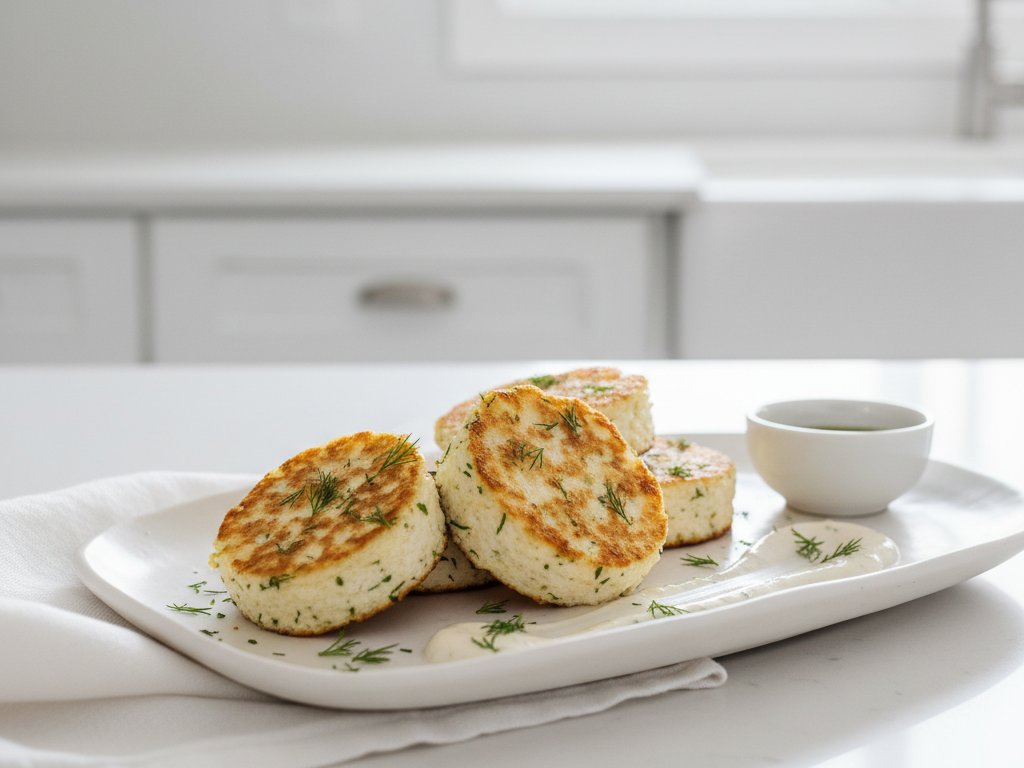
1. Easy Cottage Cheese Egg White Bites
Fresh dill tops seasoned cottage cheese on tender egg whites. 24g protein, just 124 cal, no cooking needed. The ultimate high-protein quick bite.
View Recipe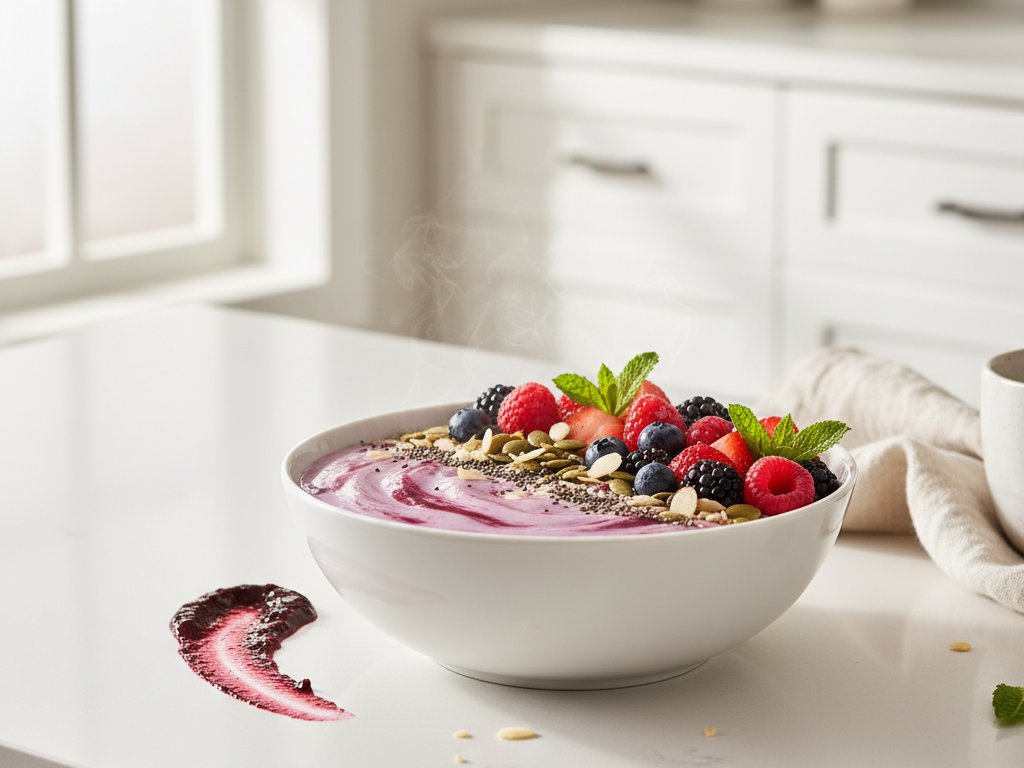
2. Greek Yogurt Berry Smoothie Bowl
Thick, spoonable berry smoothie bowl bursting with frozen fruit and creamy Greek yogurt. 53g protein, 536 cal in just 5 minutes flat.
View Recipe
3. Fluffy Cottage Cheese Pancakes with Berry Compote
Pillowy blended cottage cheese pancakes topped with warm berry compote. 27g protein, 403 cal, 50 min. Weekend brunch elevated.
View Recipe
4. Yogurt-Marinated Tandoori-Style Chicken with Lentil Pilaf
Aromatic yogurt-marinated chicken roasted with warm spices, served over earthy lentil pilaf. 47g protein, 561 cal in 50 min.
View Recipe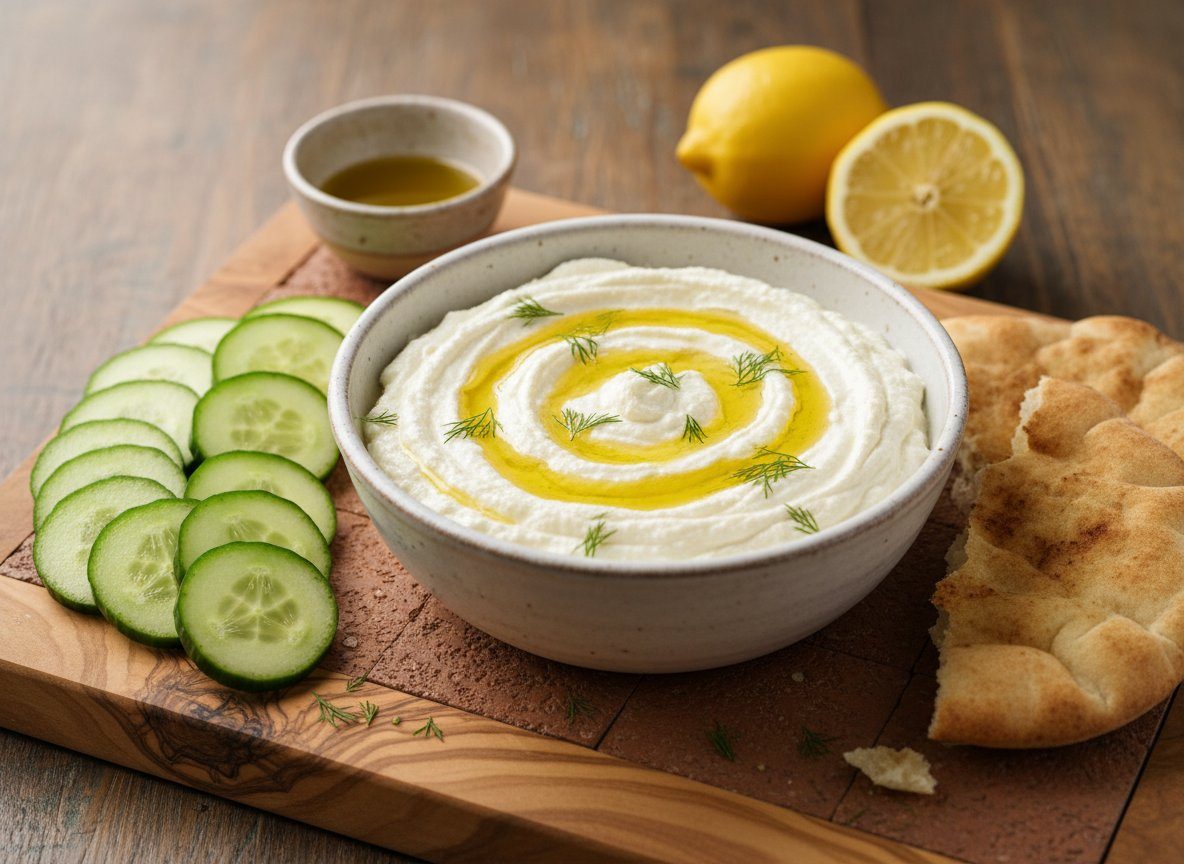
5. Blended Cottage Cheese Mediterranean Dip - 23g Protein
Blended cottage cheese becomes a silky Mediterranean dip with 23g protein and 188 calories per serving. Faster than hummus, higher protein than labneh.
View Recipe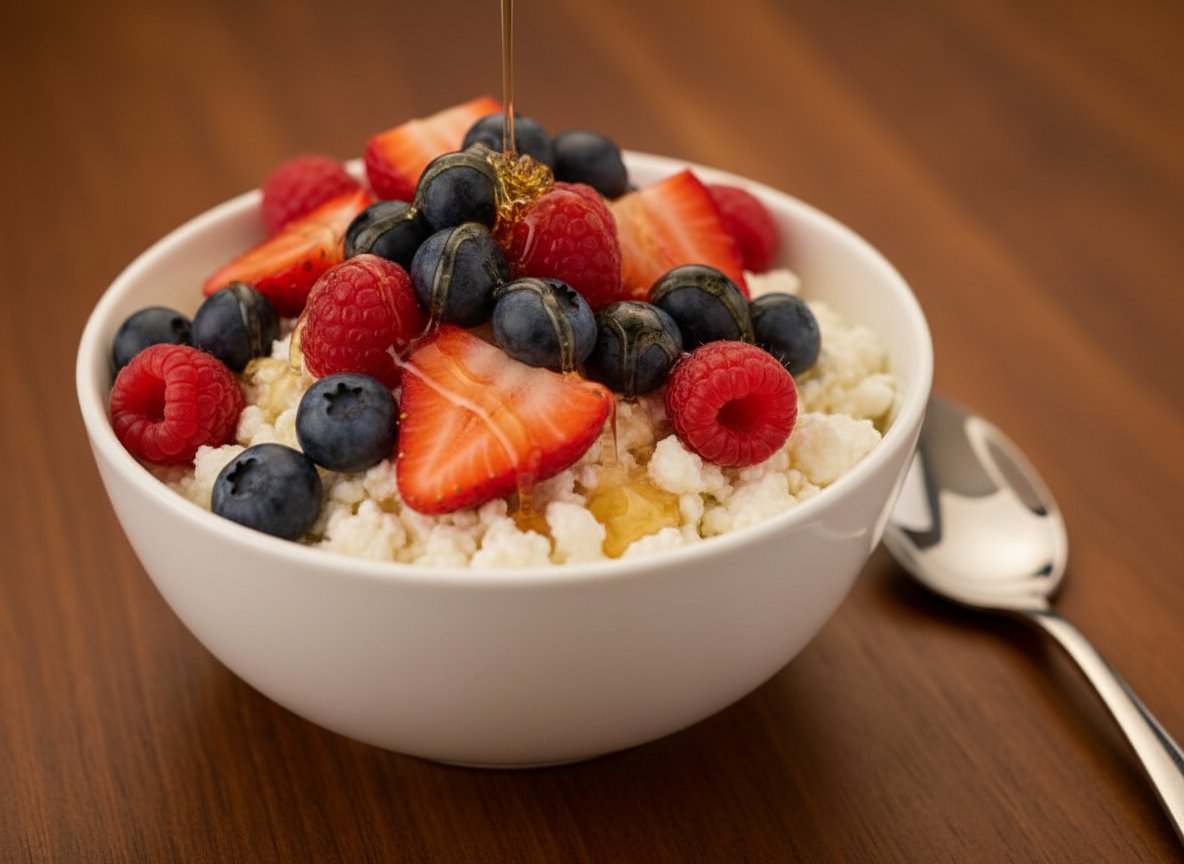
6. Cottage Cheese Berry Night Bowl with 25g Protein
5-minute pre-bed cottage cheese snack with mixed berries and honey. 25g protein, 249 calories. Low-fat cottage cheese for overnight satiety.
View Recipe