Chicken Breast vs Thigh: Which Has More Protein?
Breast has 31g protein per 100g. Thigh has 25g — but costs less, reheats better, and is harder to ruin. Data-backed comparison with recipes for both.
Part of The Protein Atlas — your complete guide to protein.
Chicken breast: 31g protein per 100g cooked. Chicken thigh: 25g. Six grams apart. Same animal, same aisle, completely different cooking experience.
Breast is leaner. Thigh is cheaper. Every fitness blog stops there. None of them mention that breast turns to cardboard on Day 3 of meal prep, or that bone-in thigh costs 30% less per gram of protein at the grocery store.
The protein gap is 6 grams. The forgiveness gap is 5 degrees.
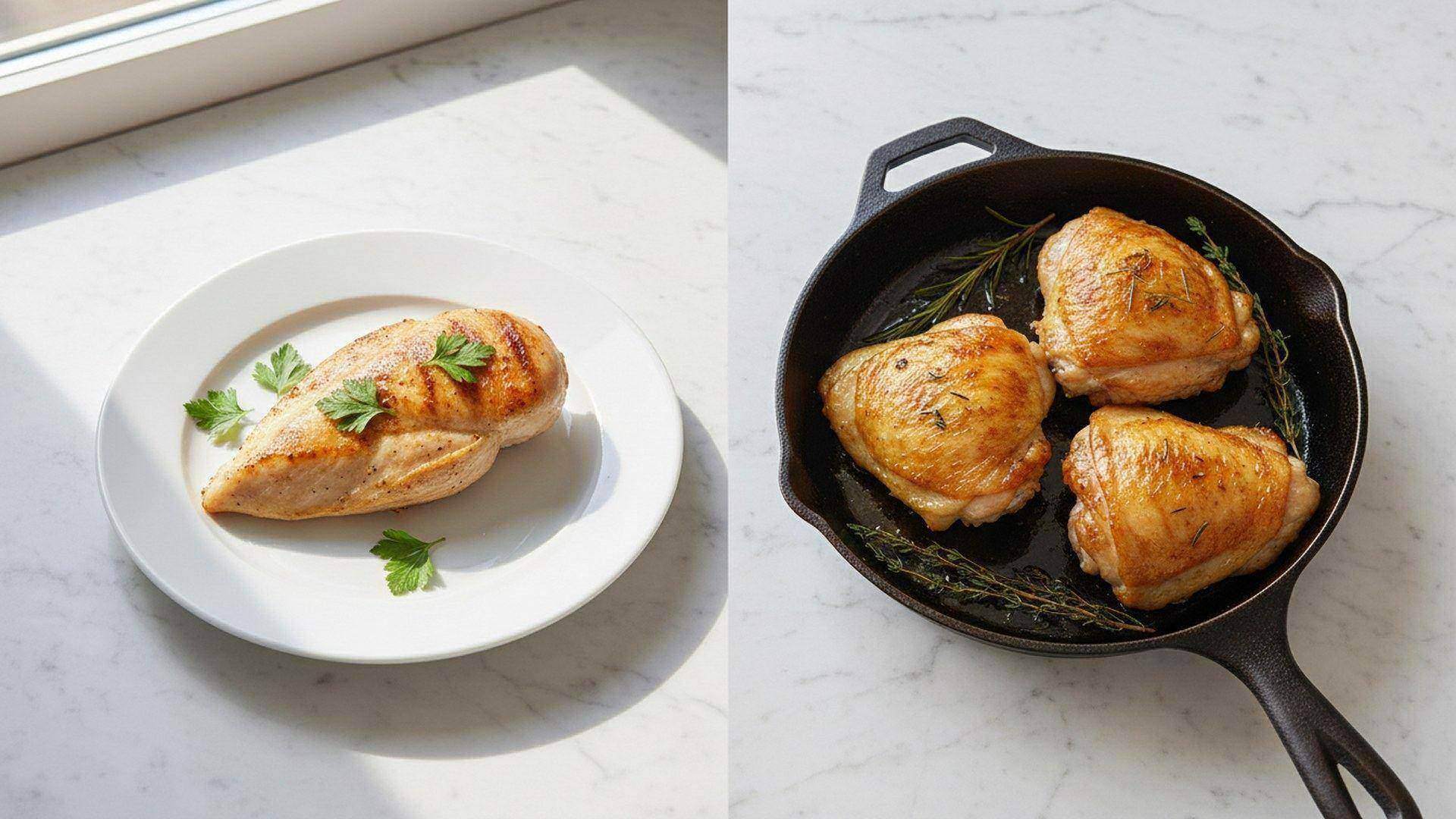
Buy both. Breast for stir-fries, wraps, and anything where lean protein is the point (31g protein, 165 cal per 100g cooked). Thighs for meal prep, braising, and anything that needs to survive reheating (25g protein, 209 cal). The 6g protein difference is real but small. The cooking forgiveness, cost, and Day 3 texture differences are what actually change your week.
Choose breast if: you’re tracking protein and fat closely, want the leanest option, need plain protein to pair with sauces, or cooking it the same day you eat it.
Choose thighs if: you meal prep, cook for taste, want lower grocery bills, hate dry chicken, or are feeding people who “don’t like chicken.”
How Much Protein Is in Chicken Breast vs Thigh?
Chicken breast has 31g of protein per 100g cooked. Chicken thigh has 24.8g per 100g cooked. The difference is 6.2g per 100g, real but narrower than most fitness content implies.
All numbers below use cooked weight. After cooking, chicken loses about 25% of its weight, so a 130g raw breast becomes roughly 100g cooked. That is about the size of a deck of cards.
| Per 100g cooked | Protein | Calories | Fat | Sat Fat |
|---|---|---|---|---|
| Breast | ||||
| Breast, skinless | 31.0g | 165 | 3.6g | 1.0g |
| Breast, skin-on | 29.8g | 197 | 7.8g | 2.2g |
| Thigh | ||||
| Thigh, skinless | 24.8g | 209 | 10.9g | 3.0g |
| Thigh, skin-on | 23.3g | 247 | 15.5g | 4.3g |
Source: USDA FoodData Central, SR Legacy database. All values per 100g cooked, roasted.
First, the protein gap between skinless breast and skinless thigh is 6.2g per 100g. That is real, but it is not the canyon that fitness culture makes it. Over a 200g serving, that is about 12g of protein. Second, skin adds fat but barely changes protein. Skin-on thigh has 23.3g protein versus 24.8g skinless. If you like crispy skin, the protein cost is small.
The bottom line: breast wins on protein density, but the margin is narrower than most people assume.
Which Gives You More Protein Per Calorie?
This is the metric that matters if you are cutting weight or fitting chicken into a calorie budget. In simple terms: for the same number of calories, breast gives you more protein.
| Metric | Breast (skinless) | Thigh (skinless) | Winner |
|---|---|---|---|
| Protein per 100 calories | 18.8g | 11.9g | Breast |
| Protein per 100g cooked | 31.0g | 24.8g | Breast |
| Calories for 30g protein | 160 cal | 253 cal | Breast |
Breast delivers 58% more protein per calorie than thigh. If you are eating in a deficit and every calorie needs to earn its place, breast is the clear winner. There is no honest way around that.
But here is the trade-off nobody talks about: the calorie difference between breast and thigh is 44 calories per 100g. That is one tablespoon of olive oil. One small apple. If you are eating at 2,000 calories a day, switching from breast to thigh costs you 2% of your daily budget for a cut that is dramatically easier to cook well.
The calorie gap is 44 per 100g. That is one tablespoon of olive oil.
For strict cutting phases, breast wins clearly. For maintenance or a casual deficit, the 27% calorie difference is real but manageable. For someone not tracking calories at all, it will not matter.
Is Chicken Thigh High in Fat Compared to Breast?
This is where the two cuts genuinely diverge. Thigh has three times the fat of breast, and that gap widens further with skin on.
| Per 100g cooked | Total Fat | Saturated Fat | Calories | Protein-to-Fat Ratio (higher = leaner) |
|---|---|---|---|---|
| Breast, skinless | 3.6g | 1.0g | 165 | 8.6 : 1 |
| Thigh, skinless | 10.9g | 3.0g | 209 | 2.3 : 1 |
| Thigh, skin-on | 15.5g | 4.3g | 247 | 1.6 : 1 |
Breast has an 8.6:1 protein-to-fat ratio. That is extremely lean, comparable to white fish. Thigh at 2.3:1 is closer to lean ground beef. The practical difference: breast needs added fat to taste good (olive oil, butter, sauce), while thigh brings its own.
The fat threaded through the thigh muscle itself (think of the marbling in a good steak, about 8-9g per 100g raw versus 3g for breast) is exactly why thigh is more forgiving. Fat insulates the meat from heat, so you have a wider temperature window before the texture goes wrong. Overcook breast by 5 degrees and you get cardboard. Overcook thigh by 10 degrees and you barely notice.
Which Is Cheaper Per Gram of Protein?
Price matters when you are buying chicken 2-3 times a week. We are based in Canada, so the table below uses Canadian prices. US prices follow a similar pattern with bone-in thigh consistently cheaper than boneless breast per gram of protein. The relative ranking between cuts holds across both countries, though exact prices vary by region and retailer.
| Cut (boneless, skinless) | Price/kg | Protein/100g raw | Cost per 25g Protein |
|---|---|---|---|
| Breast | $13.20/kg | 23.1g | $1.43 |
| Thigh (boneless) | $10.80/kg | 19.6g | $1.38 |
| Thigh (bone-in, skin-on) | $6.60/kg | 16.5g | $1.00 |
Prices: Loblaws/No Frills weekly flyer averages, Ontario, March 2026 (CAD). Bone-in thigh prices fluctuate ($6-9/kg depending on the week). Frozen breast at Costco runs $8-10/kg CAD (~$3.50-4.50/lb USD), which closes the price gap with thigh almost entirely. If you have freezer space, frozen breast is the best value per gram of protein in the chicken aisle.
Note: this table uses raw protein values (before cooking) because that is what you pay for at the store. These are lower than the cooked values in the nutrition tables above because cooking concentrates the protein as water evaporates. Bone-in, skin-on means the thigh still has the leg bone inside and the skin attached. You cook it the same way. The bone keeps the meat juicier, and you either eat the skin (crispy) or pull it off before eating.
Boneless breast and boneless thigh are surprisingly close per gram of protein, about $1.43 vs $1.38 for 25g. The real savings come from bone-in, skin-on thighs at $6.60/kg. That is 30% less per gram of protein than breast, and you get crispy skin as a bonus.
The budget play is clear: bone-in thighs are the best protein value in the chicken aisle. For someone buying chicken twice a week who switches entirely from boneless breast to bone-in thighs, the savings are roughly $8 per week. Most people will buy a mix, but even a partial switch adds up over a year.
Which Is Better for Meal Prep?
This is where thigh pulls ahead of breast by the widest margin. Meal prep is not about Day 1 texture. It is about Day 3 and Day 5.
| Factor | Breast | Thigh | Winner |
|---|---|---|---|
| Day 1 texture (freshly cooked) | Excellent if not overcooked | Excellent | Tie |
| Day 3 texture (reheated) | Dry, chalky | Still moist | Thigh |
| Day 5 texture (reheated) | Cardboard | Acceptable | Thigh |
| Microwave reheat | Gets rubbery | Holds texture | Thigh |
| Cooking forgiveness | 74-77C / 165-170F (3-5 min margin) | 74-85C / 165-185F (10-15 min margin) | Thigh |
| Batch cook yield | A 500g pack cooks down to ~350-375g | A 500g pack cooks down to ~400-425g | Thigh |
The reason is the fat. Breast has 3.6g fat per 100g cooked. Once you reheat it and drive off more moisture, there is nothing left to keep the texture pleasant. Thigh has 10.9g of fat woven through the muscle fibers. That fat acts as a built-in moisture reserve.
Overcook thigh by 10 degrees and you barely notice. The same mistake ruins breast.
The cooking method matters as much as the cut. Steam-poached breast (Hainanese Chicken Rice) holds up dramatically better on Day 3 than pan-seared breast. And braised thigh dishes like chicken tinga tacos or adobo actually improve overnight as the sauce penetrates the meat. If you are meal prepping, pick the method, not just the cut.
One more thing most people skip: brining or yogurt-marinating breast for 30-60 minutes before cooking closes most of the texture gap on reheating. It is passive time, not work.
Which Is Better for Muscle Building?
Fitness culture treats breast as the “muscle protein” and thigh as the lazy option. The research says otherwise. Your muscles do not care which cut the amino acids came from.
Both cuts contain all the building blocks your muscles need (amino acids), and your body can use nearly all of it. Both score above 1.0 on the DIAAS scale, which is the scientific way of saying the protein is complete and highly usable, unlike some plant proteins where a chunk goes to waste.
| Factor | Breast | Thigh | Difference |
|---|---|---|---|
| Protein quality (DIAAS) | >1.0 | >1.0 | None |
| Total protein per 100g | 31.0g | 24.8g | 6.2g |
| Calories per 30g protein | 160 | 253 | 93 cal |
What the research says: A large review of muscle-building studies (Morton et al., 2018, British Journal of Sports Medicine) found that gains plateau at roughly 1.6g of protein per kg of body weight per day. Total daily intake is what matters, not whether it comes from breast or thigh. A practical starting point: aim for roughly your body weight in pounds as grams of protein (e.g., 170 lbs = 170g protein/day).
The only scenario where breast has a meaningful advantage is if you are eating very high protein (200g+ daily) in a strict calorie deficit. In that case, the 93-calorie saving per 30g of protein from breast adds up across 6-7 servings. For everyone else, eat whichever cut you will actually cook and enjoy. Consistency matters more than optimization.
When Should You Use Each?
Here is a quick-reference decision framework.
| Situation | Best Pick | Why |
|---|---|---|
| Stir-fry | Breast | Cooks fast, absorbs sauce, stays firm in high heat |
| Wraps and sandwiches | Breast | Slices clean, neutral flavor pairs with any filling |
| Strict calorie deficit | Breast | 18.8g protein per 100 cal vs 11.9g |
| Breaded and fried (katsu, schnitzel) | Breast | Even thickness after pounding, lean base offsets breading calories |
| Meal prep (3-5 day) | Thigh | Fat insulates against reheating, stays moist to Day 5 |
| Braising and slow cooking | Thigh | Thigh stays tender and adds richness to the sauce; breast dries out |
| Grilling | Thigh | Fat prevents drying over open flame, more flavorful char |
| Crispy skin dishes | Thigh (bone-in, skin-on) | More skin per piece, fat renders into crispiness |
| Budget cooking | Thigh (bone-in) | 30% less per gram of protein than breast |
| Curries and stews | Either | Long cooking times equalize texture; thigh adds body to sauce |
The pattern: breast is better when you want lean protein as a canvas. Thigh is better when you want the chicken to carry the dish.
Our Favorite Chicken Breast Recipes
Organized by how you will actually use them.
High-protein technique:
- Hainanese Chicken Rice — 60g protein, 605 cal. Steam-poached breast served over chicken-fat rice with chili-ginger sauce. The technique keeps the breast impossibly juicy, and the rice absorbs all the flavor.
- Crispy Gochujang Chicken Breast — 54g protein, 569 cal. Cornstarch-coated and pan-seared, then glazed in caramelized gochujang. Sticky, crispy, and the highest protein in this collection.
Global flavors:
- Thai Basil Chicken (Pad Krapow Gai) — 51g protein, 607 cal. Ground breast stir-fried with holy basil and Thai chilies over rice with a fried egg. Authentic street food with serious protein.
- Chicken Breast Shawarma Wraps — 35g protein, 446 cal. Eight-spice yogurt marinade, broiled, with yogurt-garlic sauce. Lunch-ready in the time it takes to marinate.
Weeknight staples:
- Chicken Piccata — 35g protein, 457 cal. Pounded cutlets in a lemon-caper butter sauce. The pan sauce technique alone is worth learning.
- Japanese Chicken Katsu Curry — 40g protein, 616 cal. Panko-crusted breast over rice with from-scratch Japanese curry sauce. More components than most weeknight recipes, but the curry roux is what pulls it together.
Our Favorite Chicken Thigh Recipes
Crispy skin:
- Cold-Pan Crispy Chicken Thighs with Smashed Potatoes — 46g protein, 676 cal. Start in a cold pan, render for 20 minutes until the skin shatters. Potatoes roast in the rendered chicken fat. A complete dinner plate.
Meal prep:
- Honey Garlic Chicken Thighs Meal Prep — 44g protein, 608 cal. Four containers, 35 minutes. The honey-garlic glaze gets better overnight.
- Chicken Tinga Tacos — 40g protein, 546 cal. Shredded chicken braised in chipotle-tomato sauce, served as tacos with pickled red onion and cotija. Freezes for 3 months.
One-pot comfort:
- Marry Me Chicken — 42g protein, 399 cal. Seared thighs in a blended cottage cheese cream sauce with sun-dried tomatoes and parmesan. All the richness, 12g more protein than the original. One pan, 30 minutes.
- Filipino Chicken Adobo — 37g protein, 277 cal. Soy-vinegar braise that tastes better on Day 2. One of the most efficient protein-per-calorie dishes in our thigh collection.
Browse all chicken recipes on the Protein Atlas Recipe Finder. For more protein comparisons, see Chicken vs Beef vs Fish and Tuna vs Salmon.
The Bottom Line
The protein-per-gram question that brought you here has a clear answer: breast wins, 31g to 25g per 100g cooked. Six grams is real. It is not nothing.
But protein per gram is one dimension of a multi-dimensional decision. Thigh costs less, reheats better, is harder to ruin, and tastes better to most people without any added effort. Breast is leaner, cooks faster for stir-fries and wraps, and is the right call for anyone in a strict deficit. Once you’ve settled on a cut, the next matchup worth running is chicken against red meat — Steak vs Chicken covers where beef pulls ahead on iron and creatine and where it just costs more for the same protein.
What to buy this week: One pack of boneless skinless breast (about 700g, roughly $9) and one pack of bone-in skin-on thighs (about 1kg, $6-8). Use the breast for 2-3 same-day meals (stir-fry, wraps, katsu). Use the thighs for Sunday meal prep that lasts through Thursday. That gives you about 30-40g protein per serving across 8-10 meals for roughly $15-17.
Stop picking sides. Use both. Know when each one earns its place on the plate.
Frequently Asked Questions
Is chicken breast or thigh better for weight loss?
Breast is leaner: 165 calories and 31g protein per 100g cooked, versus 209 calories and 25g protein for thigh (USDA FoodData Central). That means breast delivers 58% more protein per calorie. In a strict calorie deficit where every calorie matters, breast is the better choice. However, the calorie difference is 44 per 100g, roughly one tablespoon of olive oil. If choosing thigh means you actually enjoy your meals and stay consistent with your diet, the compliance benefit outweighs the 44-calorie difference.
How much more protein does chicken breast have than thigh?
6.2g more per 100g cooked (31.0g vs 24.8g for boneless, skinless cuts). Over a typical 200g serving, that is about 12g of protein. To put it in context: one large egg has 6g of protein. The gap between breast and thigh is about two eggs. Both cuts provide complete protein with all essential amino acids and similar leucine content.
Are chicken thighs unhealthy because of the fat?
No. Skinless chicken thigh has 10.9g total fat and 3.0g saturated fat per 100g cooked. For context, the American Heart Association recommends limiting saturated fat to 13g per day on a 2,000-calorie diet. A 200g serving of skinless thigh contributes 6g of saturated fat, well within daily limits. The fat in chicken thigh is a mix: roughly one-third saturated, one-third monounsaturated, and one-third polyunsaturated. It is not a low-fat food, but it is not bacon either. Thigh is a moderate-fat protein, not a high-fat one.
Can I substitute thighs for breast in recipes?
Usually, yes, with two adjustments. First, thighs have more fat, so you may want to reduce added cooking oil. Second, thighs cook slightly slower than breast because they are denser. For stir-fries and quick-cook recipes, slice thighs thinner to match breast cooking times. For braising and slow cooking, thighs are actually the better starting point. The main exception is breaded recipes like katsu or schnitzel, where breast’s even thickness after pounding produces a more uniform crust.
Is chicken breast or thigh better for building muscle?
Both are excellent. The protein quality is identical (both score above 1.0 on the DIAAS scale), and leucine content is similar across both cuts. A 2018 meta-analysis in the British Journal of Sports Medicine (Morton et al.) found that muscle gains plateau at about 1.6g protein per kg body weight per day, regardless of source. For most people lifting weights and trying to gain muscle, the cut does not matter. The only scenario where breast has a meaningful edge is during aggressive calorie cuts where you need maximum protein per calorie. If you are a competitive bodybuilder prepping for a show, breast is standard for a reason. For everyone else, eat whichever cut you will consistently cook and eat.
Featured Recipes
All 11 recipes from this article, ready to cook
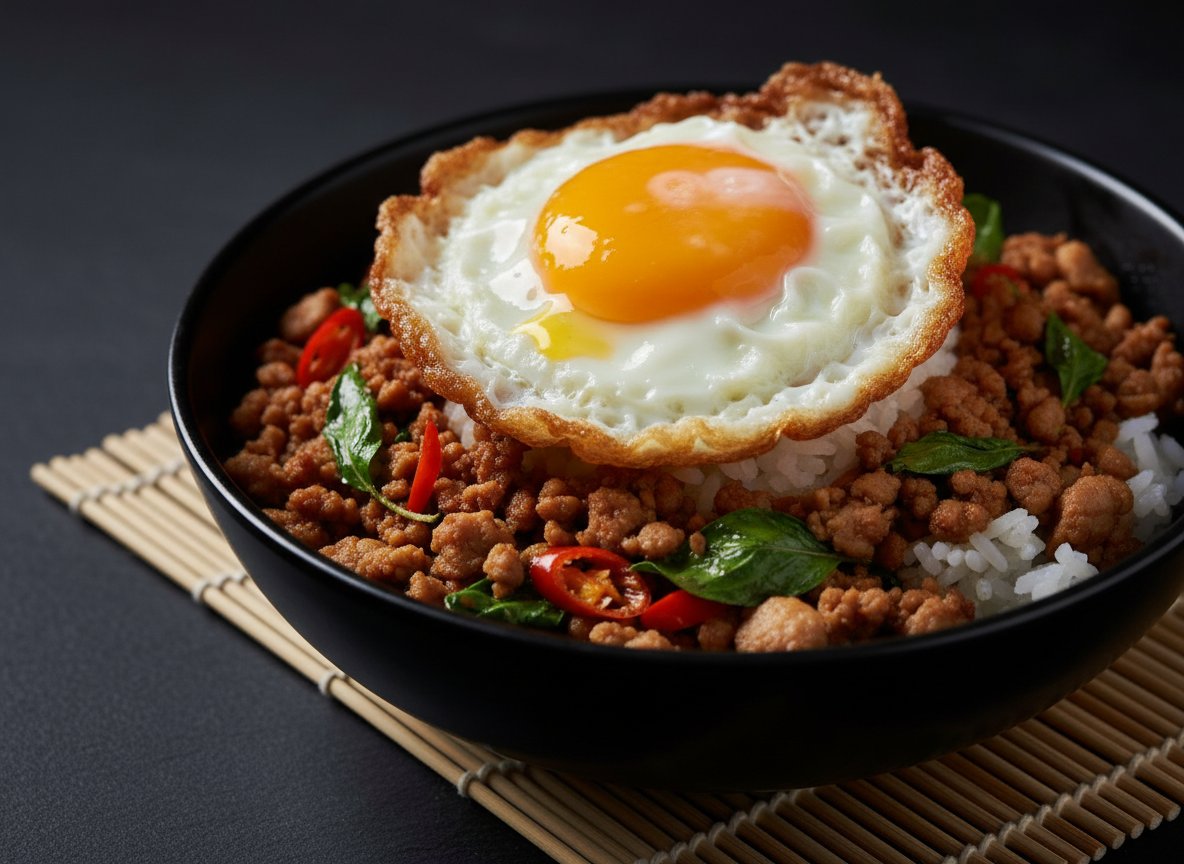
1. Thai Basil Chicken (Pad Krapow Gai) with 51g Protein and Fried Egg
Thai basil chicken (pad krapow gai) with 51g protein and a crispy fried egg. Ground chicken breast, fish sauce, Thai chilies over jasmine rice. 25 minutes.
View Recipe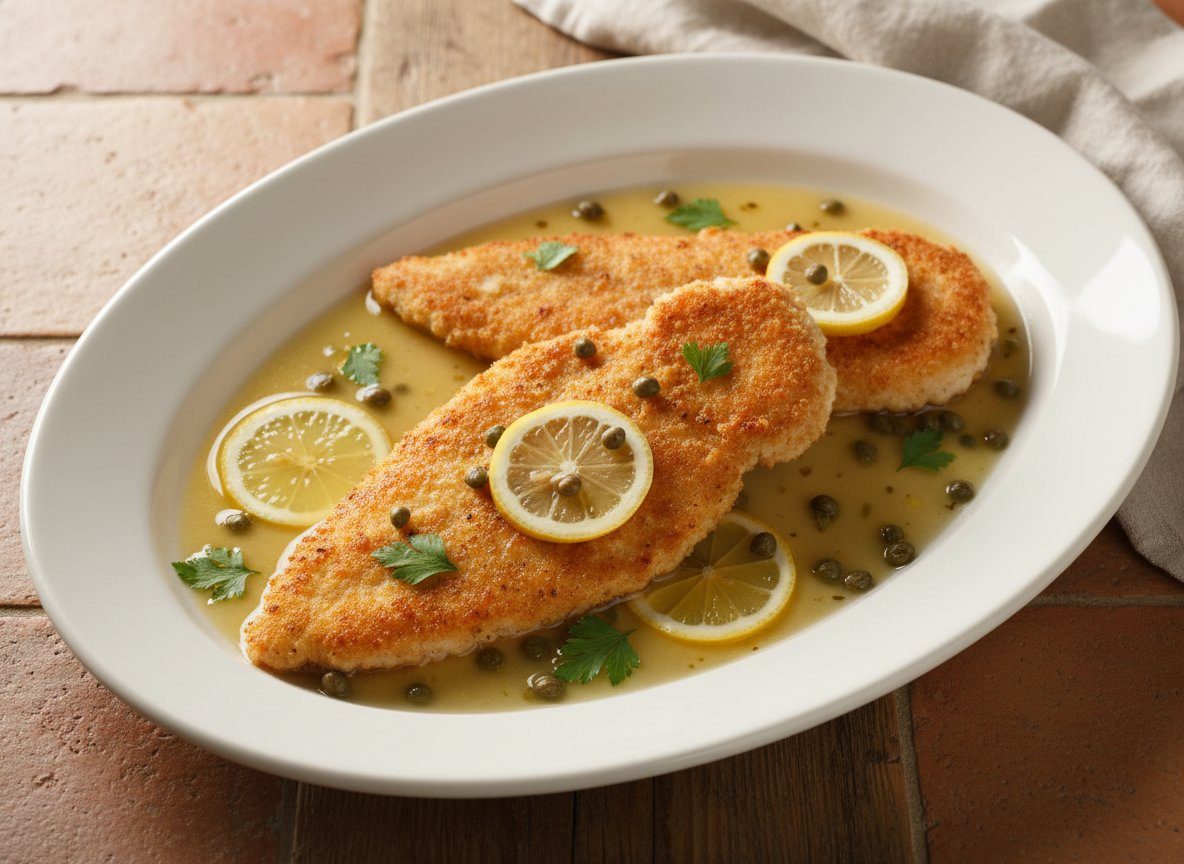
2. Chicken Piccata with Lemon-Caper Pan Sauce - 35g Protein
Chicken piccata with lemon-caper pan sauce - 35g protein, 457 cal per serving. Pounded cutlets, flour dredge, quick sear, butter-mounted pan sauce.
View Recipe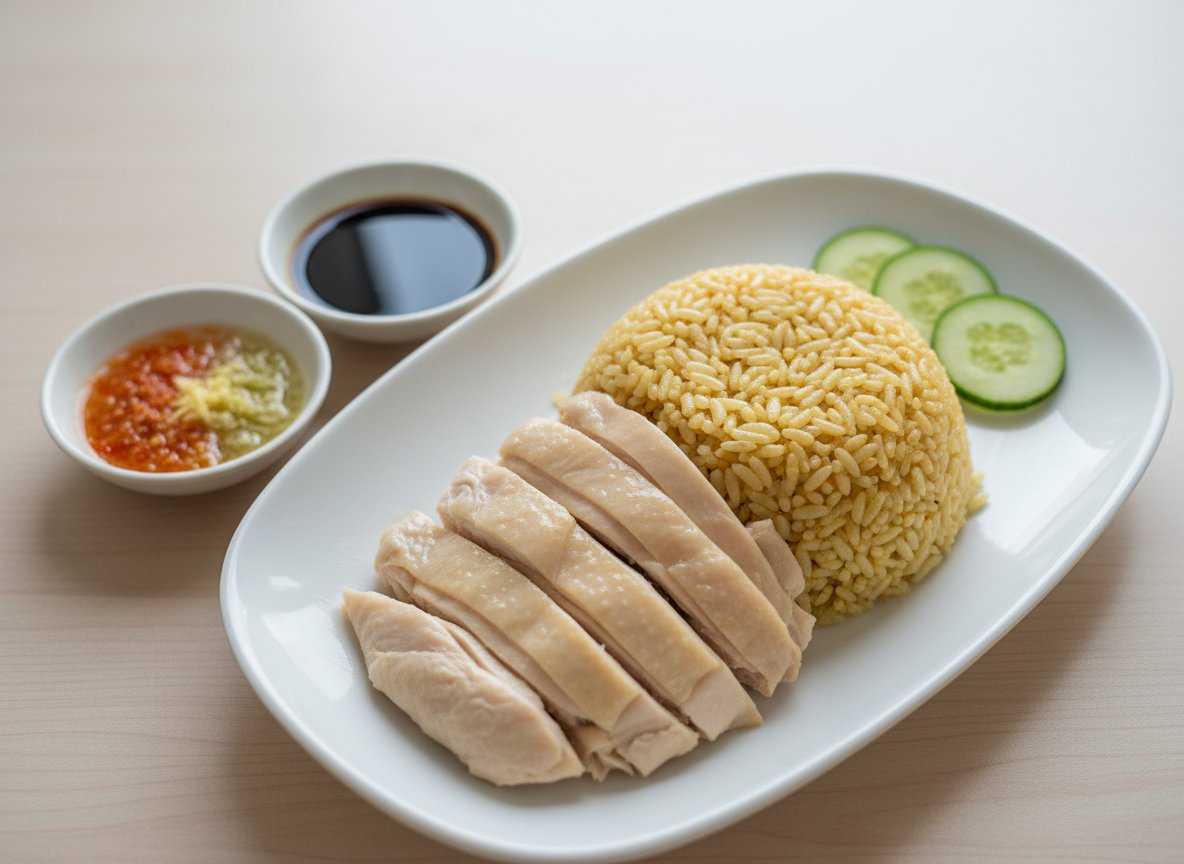
3. Hainanese Chicken Rice: 60g Protein, 605 Calories (Steam-Poach Method)
High-protein Hainanese Chicken Rice using steam-poach breast instead of whole chicken. 60g protein, 605 cal per serving. Ginger rice, chili sauce, 35 minutes.
View Recipe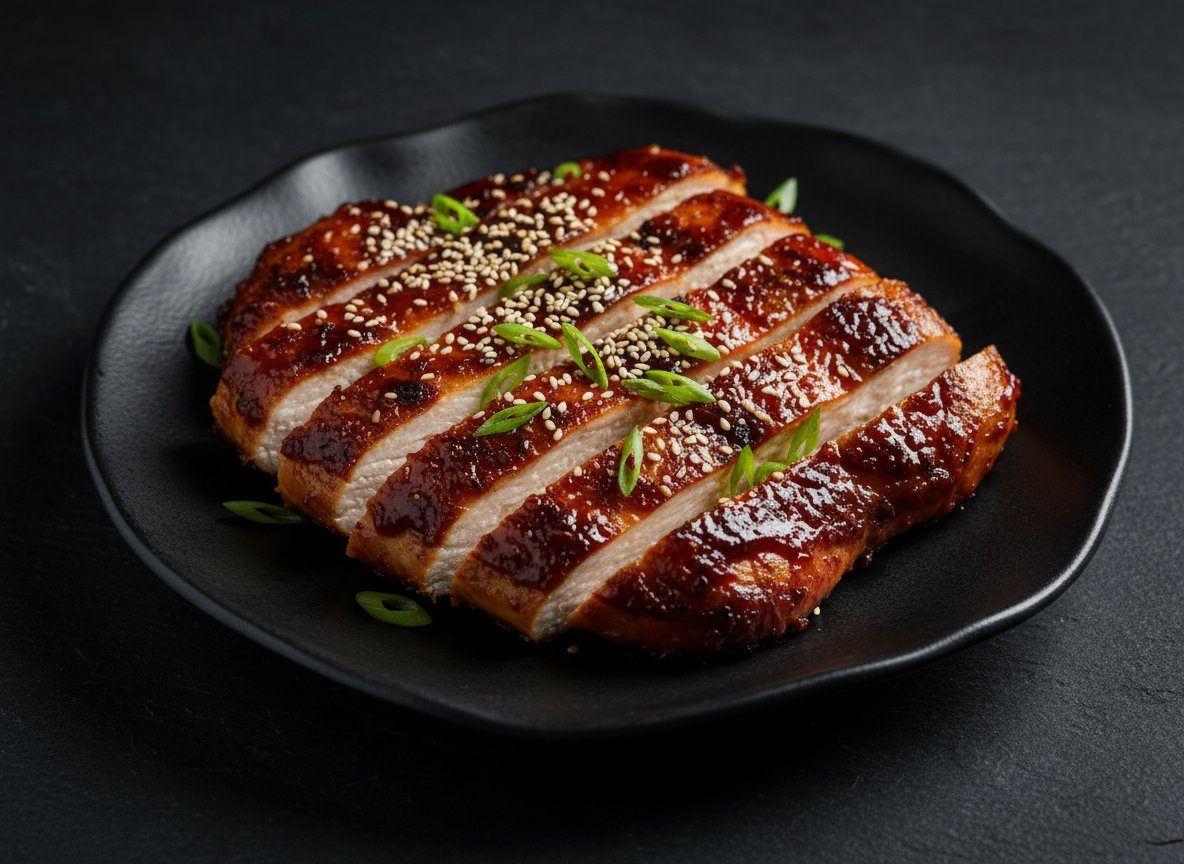
4. Crispy Gochujang Chicken Breast with Sesame Glaze — 54g Protein
Cornstarch-coated chicken breast pan-seared crispy, then glazed in caramelized gochujang, honey, and soy sauce. 54g protein, 507 calories.
View Recipe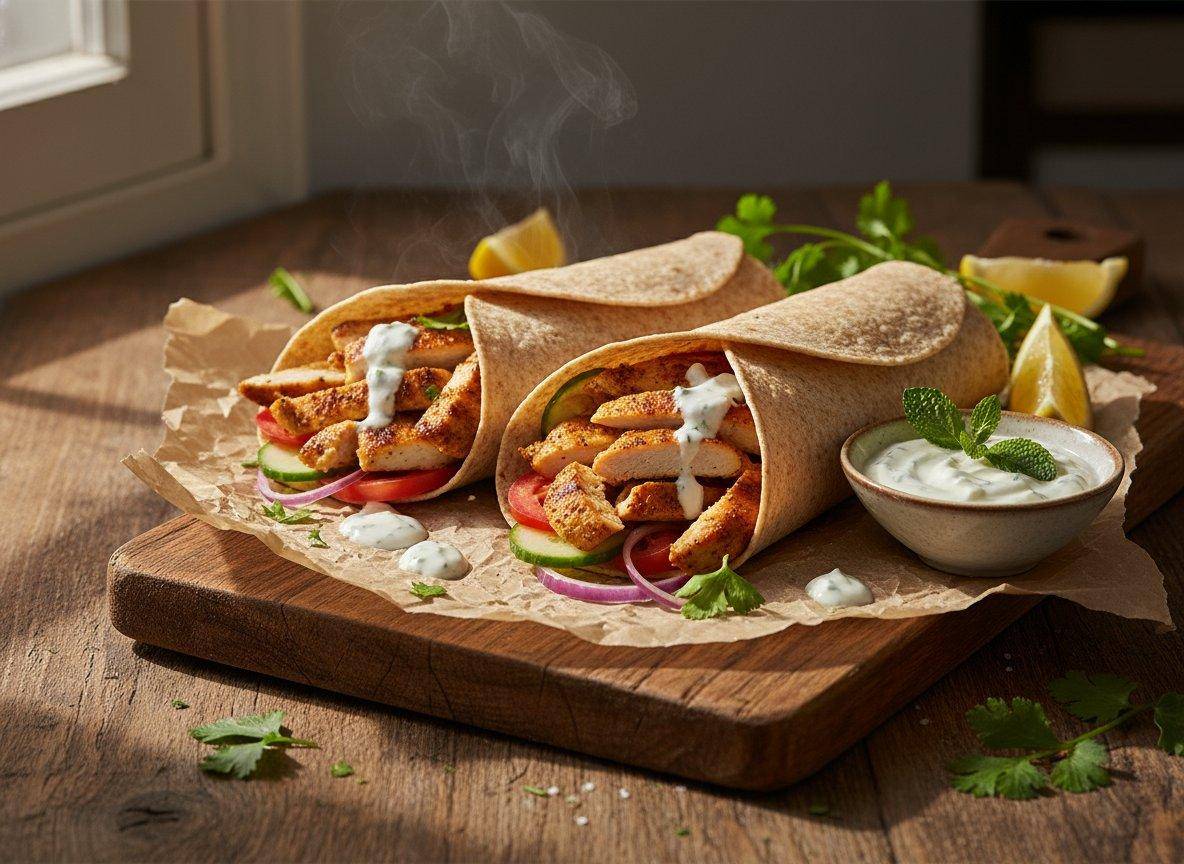
5. Chicken Breast Shawarma Wraps with Yogurt-Garlic Sauce
Chicken breast marinated in 8 spices and Greek yogurt, roasted with a broil finish. Yogurt-garlic sauce, cucumber, tomato. 37g protein, 504 cal.
View Recipe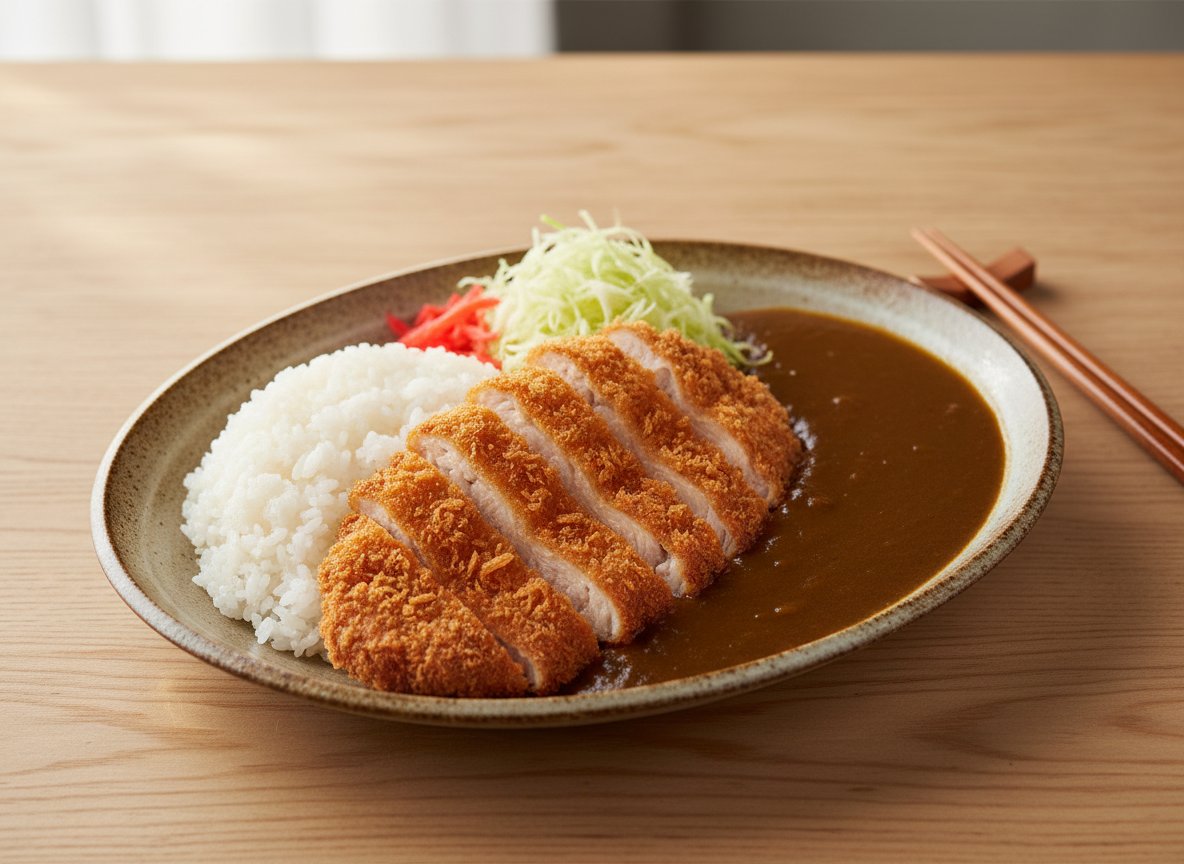
6. Japanese Chicken Katsu Curry with 46g Protein per Bowl
Crispy panko-crusted chicken breast over jasmine rice with savory Japanese curry sauce and shredded cabbage. 46g protein, 735 cal, 45-min dinner.
View Recipe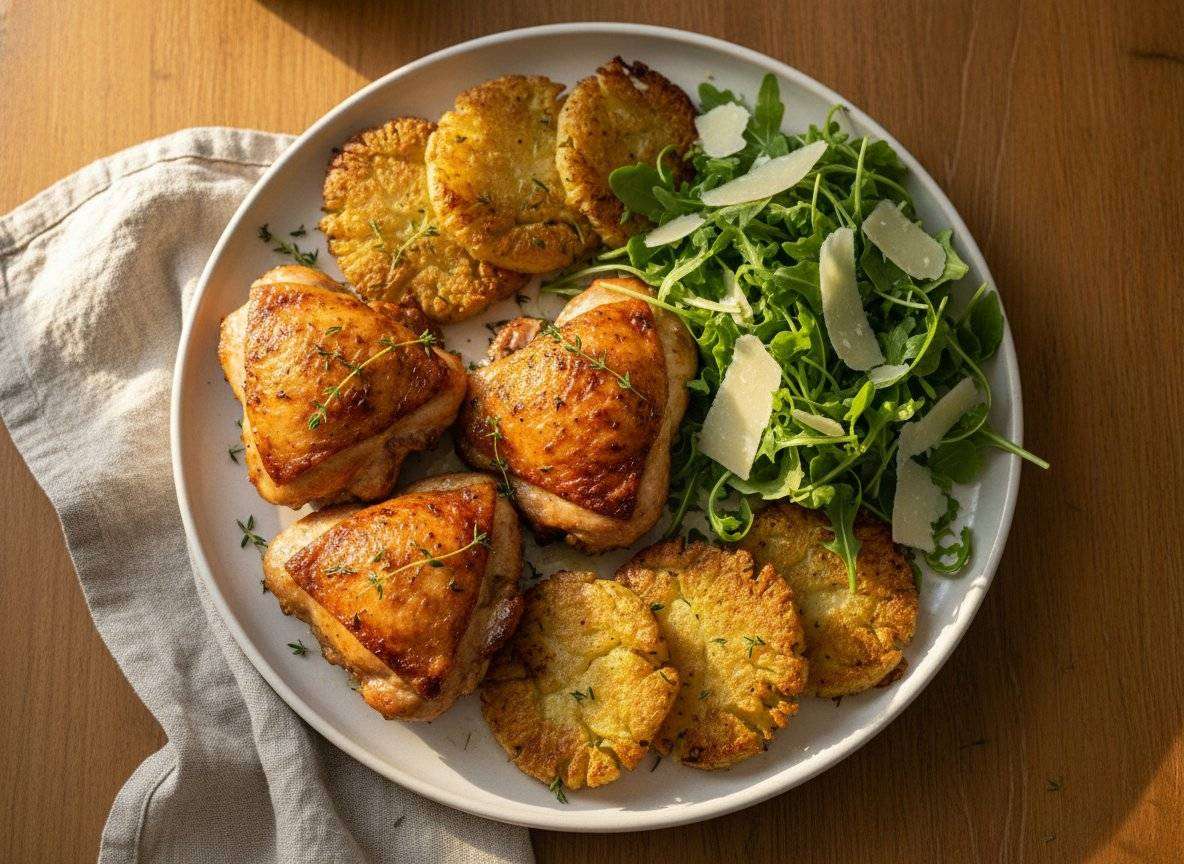
7. Cold-Pan Crispy Chicken Thighs with Smashed Potatoes and 46g Protein
Bone-in chicken thighs cold-pan started for crispy skin, smashed potatoes roasted in rendered fat, lemon-parmesan arugula. 46g protein, 676 cal.
View Recipe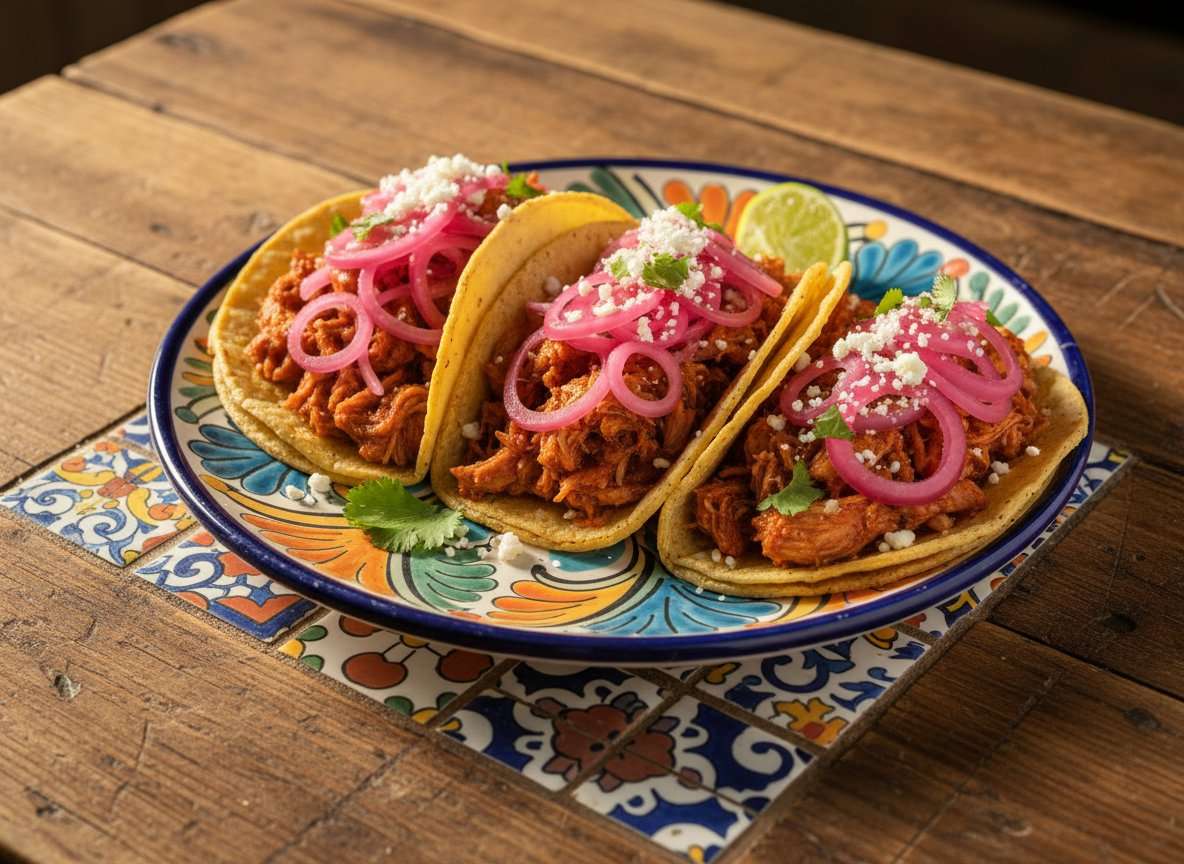
8. Chicken Tinga Tacos: 40g Protein, About $2.50 Per Serving
Chicken Tinga Tacos: 40g protein. Thighs braised in chipotle-tomato sauce, shredded into corn tortillas with pickled onion and cotija. 35 minutes.
View Recipe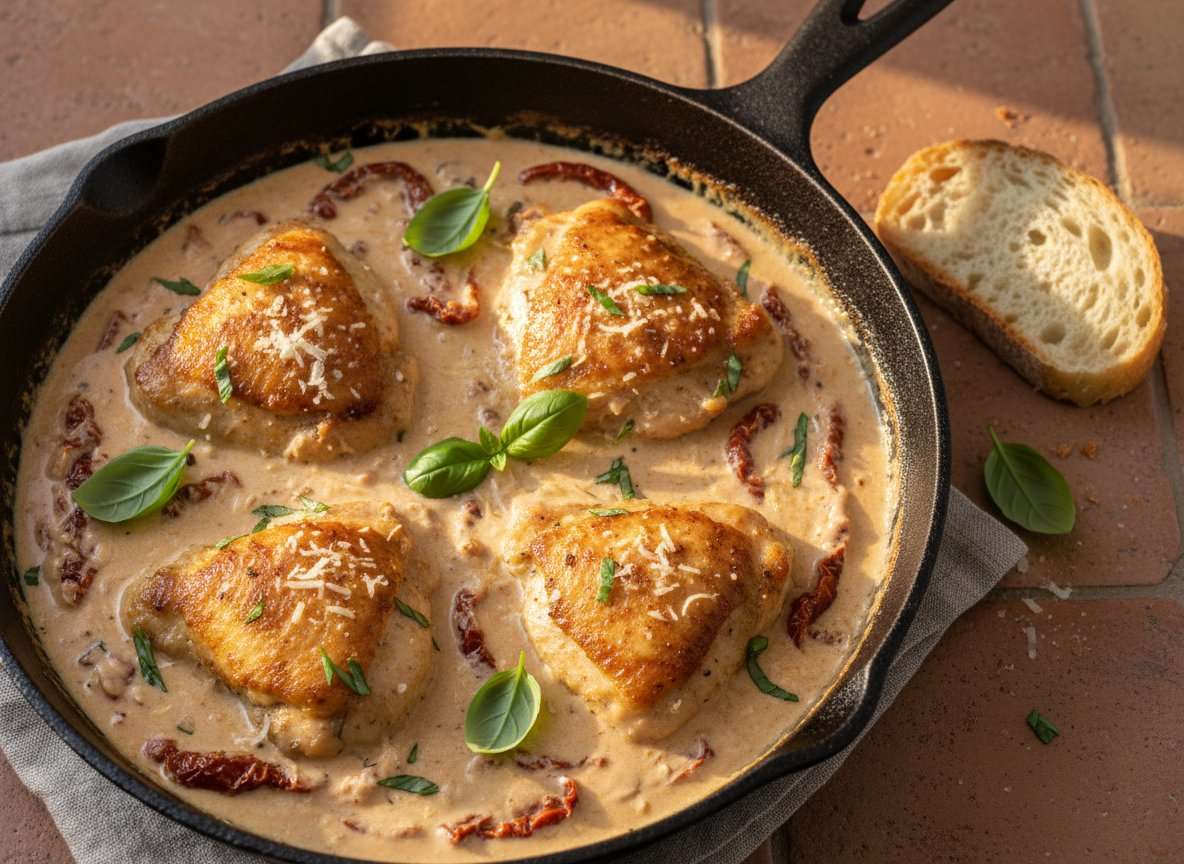
9. Marry Me Chicken with 42g Protein Cottage Cheese Cream Sauce
Chicken thighs seared golden then simmered in a sun-dried tomato sauce built on blended cottage cheese. 42g protein, 399 cal, one pan, 30 minutes.
View Recipe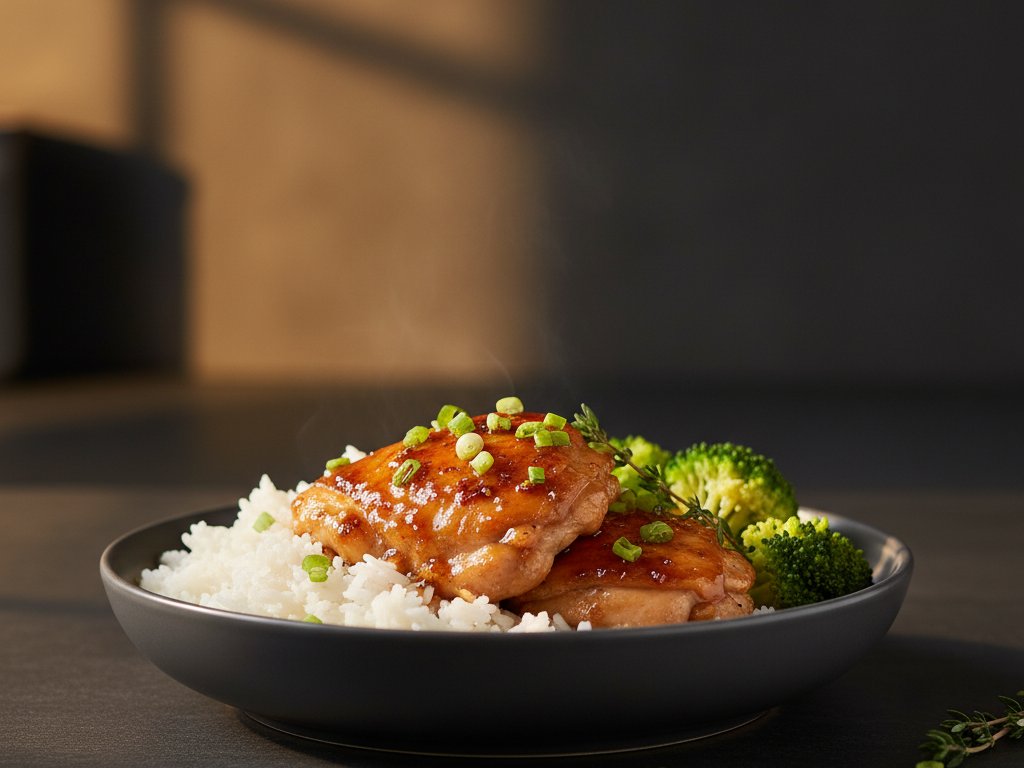
10. Honey Garlic Chicken Thighs Meal Prep (44g Protein, 608 Cal)
Crispy-skinned thighs glazed in sweet-savory honey-garlic sauce over fluffy jasmine rice. 44g protein, 608 cal. 4 meal prep containers in 35 min.
View Recipe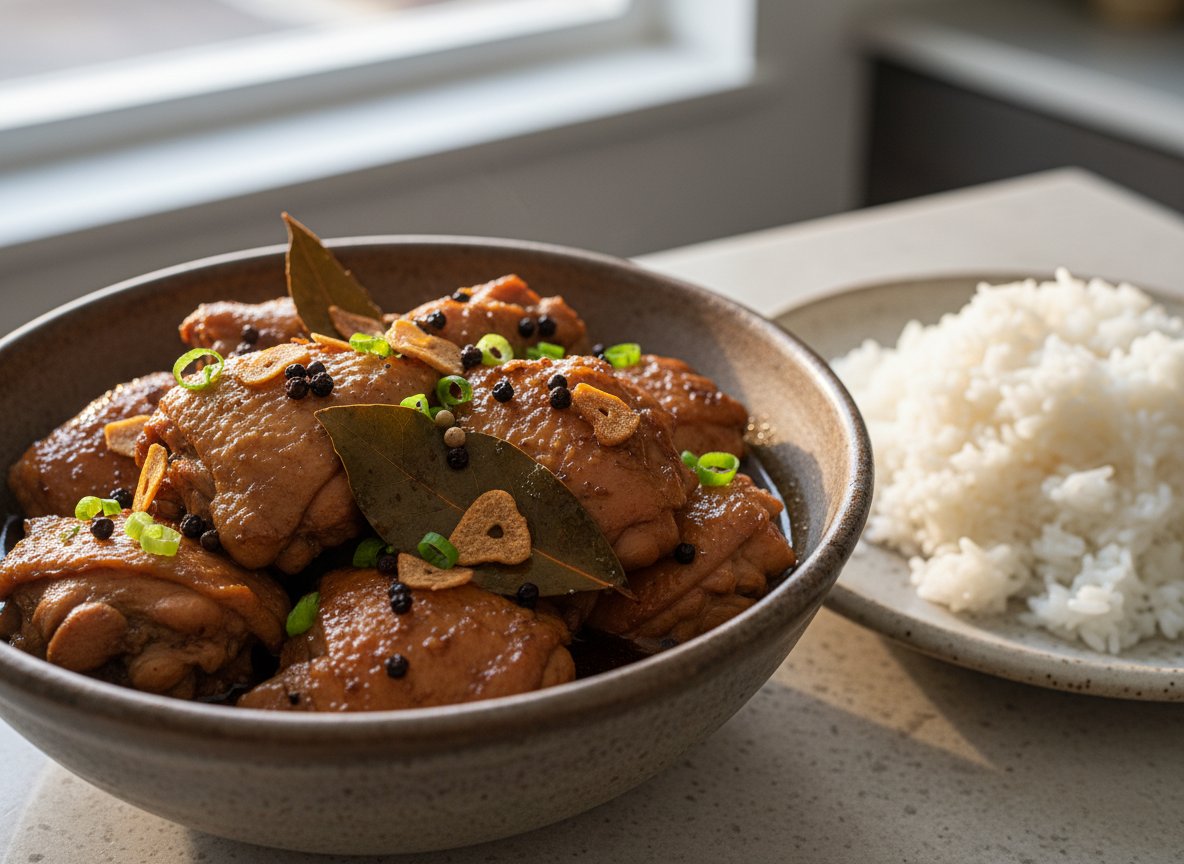
11. Filipino Chicken Adobo
Tangy soy-vinegar braise with fall-apart chicken thighs. 37g protein, 277 cal, 55 min. Garlic, bay leaves, and whole peppercorns build concentrated flavor.
View Recipe