Pork vs Beef: Why the Cut Matters More Than the Animal
At matched leanness, pork and beef are a near-tie per gram of protein delivered. The real differences are micronutrients, price, and which cut you're actually buying — not the animal.
Part of The Protein Atlas — your complete guide to protein.
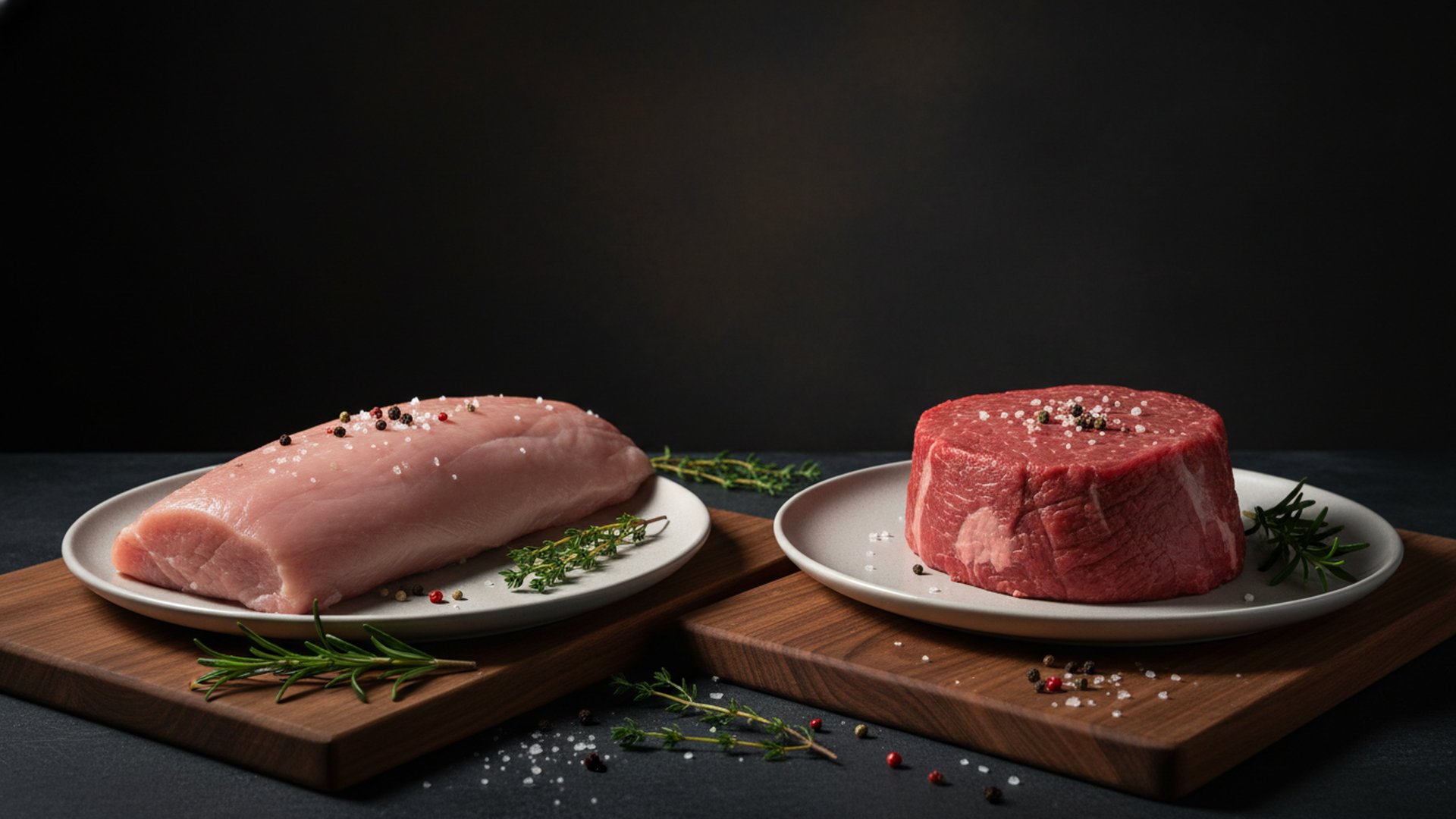
Pork tenderloin (roasted): 26g protein, 143 cal per 100g. Beef eye of round (roasted): 30g protein, 163 cal. Per gram of protein delivered, they’re tied at ~5.5 cal/g — and pork tenderloin is usually cheaper at the register.
If you believed beef was fattier than pork, you were comparing lean pork to fatty beef — and your recipe rotation chose that comparison, not you.
Lean cut to lean cut, the gap mostly disappears. The interesting differences live in micronutrients and price — not in the animal.
Pork and beef are close calls at matched leanness, not identical. Per 100g cooked, pork tenderloin is the leanest red meat option (143 cal, 3.5g fat); beef eye of round packs more protein density (30g, 163 cal). Per gram of protein delivered, they’re tied at ~5.5 cal/g. The “pork is leaner” belief is a recipe culture story — Americans buy lean pork (tenderloin, loin) and fatty beef (ground 80/20, ribeye, sirloin) because that’s what our recipes call for. The real differences: beef carries more iron, zinc, and B12 (species pattern, varies by cut); pork carries far more thiamine and somewhat more selenium. Pick based on cooking style, micronutrient priority, and budget — not which animal is “healthier.”
Quick picks by goal:
- Cheapest lean red meat: Pork tenderloin (usually $3–4/lb, vs eye of round $7–11/lb except on sale)
- Highest protein density: Beef eye of round (30g per 100g cooked)
- Iron or B12 priority: Any beef cut (species pattern — beef is generally higher)
- Thiamine priority: Pork (especially tenderloin and loin)
- Weeknight ground: Ground beef 80/20 for flavor, ground pork 85/15 for leaner
- Weight loss: Either lean cut — both ~165 cal per 30g protein serving
What this comparison covers: fresh pork tenderloin, pork loin, lean pork chops, beef eye of round, top round, sirloin, and lean ground beef. What it does not cover: bacon, sausage, ham, hot dogs, deli meat, ribeye, brisket, pork belly, or 80/20 ground beef. Processed meat is a different category — IARC classifies it as carcinogenic to humans (Group 1), and processing adds sodium, curing agents, and risk considerations the lean-cut comparison doesn’t capture. Fatty fresh cuts (ribeye, pork belly) follow different math because the calorie and fat ceilings move.
Your Recipe Rotation Is Lying To You
Think about your last 10 beef dinners. Be honest. Burgers? Tacos? Meatballs? Bolognese? Chili? A ribeye on Saturday night? For most Americans, the answer is 8 or 9 of the 10. Maybe a pot roast if you slow-cook.
Now think about your last 10 pork dinners. Pork tenderloin with a mustard glaze. Ginger pork stir-fry. Pork chops with apple. Thai basil pork. Maybe carnitas if you had time. The default is lean, quick, weeknight-friendly.
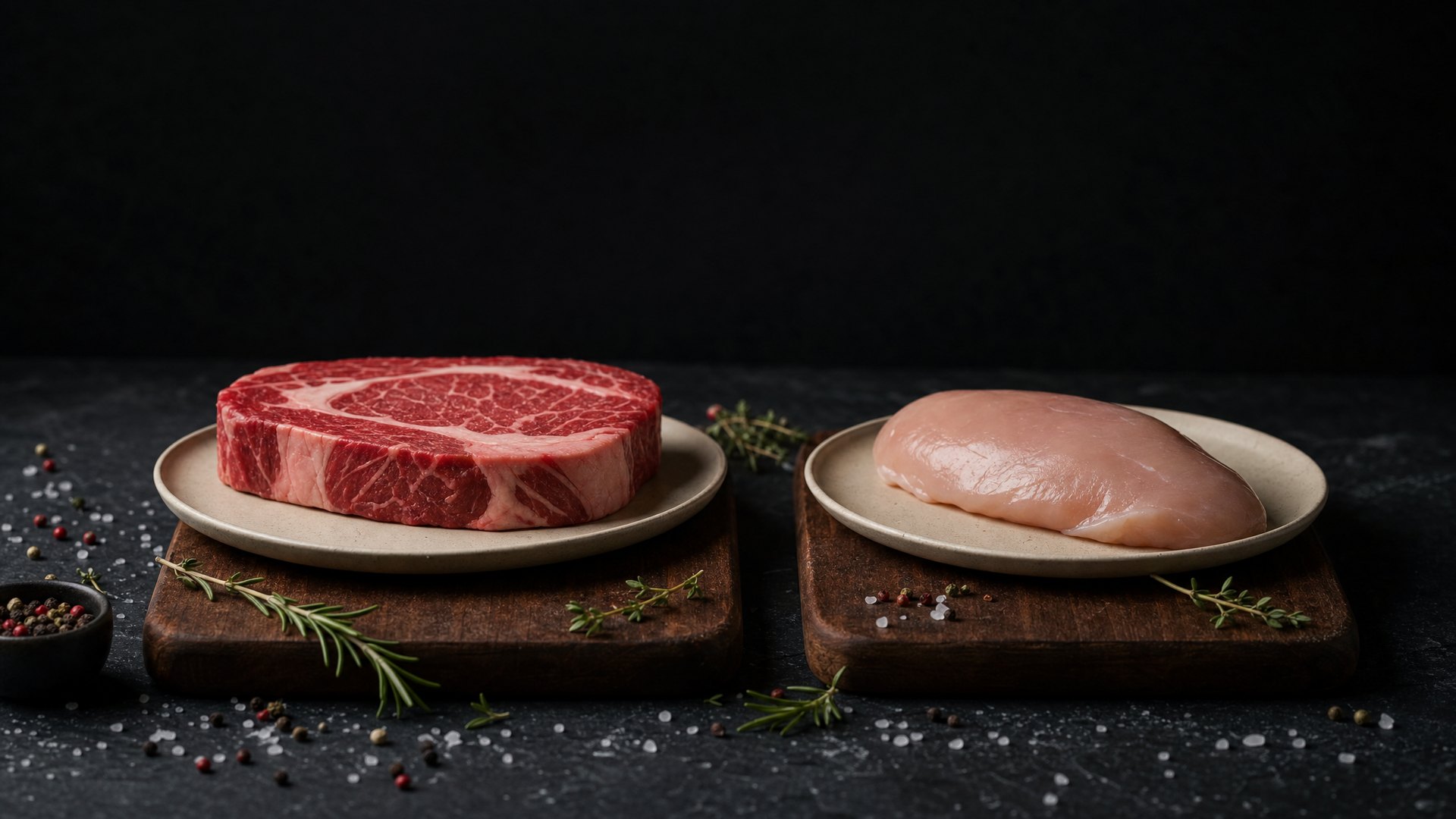
Here’s what you just discovered: “The beef you usually eat” is 15-20g fat per 100g cooked. “The pork you usually eat” is 5g fat per 100g. You’re not comparing pork to beef. You’re comparing two different leanness tiers across a cultural divide.
At matched leanness, the gap mostly closes. Beef eye of round (roasted) delivers ~30g protein, ~163 cal, ~3.9g fat per 100g. Pork tenderloin (roasted) delivers ~26g protein, ~143 cal, ~3.5g fat. Per gram of protein delivered, they’re tied (~5.5 cal/g). On price, pork tenderloin usually wins outright — eye of round is competitive on sale or as a larger roast, but rarely matches tenderloin at full retail.
The animals aren’t meaningfully different. Your recipes are.
Does Pork Have More Protein Than Beef?
Direct answer: at matched leanness, beef edges pork on protein density per 100g, but they’re tied per gram of protein delivered. Per serving (30g protein) they’re effectively identical.
How to read these numbers (data methodology): Values are USDA FoodData Central / SR Legacy entries, per 100g cooked, roasted unless noted, lean portion where the database distinguishes. Cooked meat values vary by cooking method — broiled tenderloin runs ~30g protein / ~187 cal, roasted runs ~26g / ~143 cal because of water loss differences. We use roasted-vs-roasted as the canonical cross-cut comparison and mark variation as ±1–2g protein. For weight-management decisions, the per-30g-protein column is the fairest comparison.
| Leanness | Pork cut (roasted) | Protein | Cal | Fat | Beef cut (roasted) | Protein | Cal | Fat |
|---|---|---|---|---|---|---|---|---|
| Ultra-lean (3-4%) | Pork tenderloin | ~26g | ~143 | ~3.5g | Beef eye of round | ~30g | ~163 | ~3.9g |
| Lean (8-11%) | Pork loin roast | ~27g | ~200 | ~9g | Beef sirloin (lean) | ~29g | ~217 | ~11g |
| Medium (13-15%) | Pork chop (lean) | ~28g | ~225 | ~13g | Beef chuck (lean) | ~27g | ~240 | ~14g |
| Ground 93/7 (cooked) | Ground pork 93/7 | ~26g | ~200 | ~11g | Ground beef 93/7 | ~26g | ~200 | ~10g |
| Ground 85/15 (cooked) | Ground pork 85/15 | ~25g | ~289 | ~22g | Ground beef 85/15 | ~25g | ~255 | ~17g |
Sources: USDA FoodData Central SR Legacy. Cooked values vary by method (roasted vs broiled vs pan-fried) by ±1–2g protein and ±15–40 cal. Ground pork cooked entries are less standardized than ground beef.
The fairest comparison — per 30g protein serving:
| Cut (roasted) | Cooked weight for 30g protein | Calories | Fat |
|---|---|---|---|
| Pork tenderloin | ~115g | ~164 | ~4g |
| Beef eye of round | ~100g | ~163 | ~3.9g |
At a normalized 30g protein, the two cuts are within rounding error on calories and fat — that’s the actual tie. Per 100g, pork tenderloin is leaner; per gram of protein, the two are dead even. That’s not a finding, it’s arithmetic: protein is 4 cal/g, fat is 9 cal/g, so if you match the fat percentage and protein density, the calorie math falls out. Anyone claiming “pork is leaner per calorie” without specifying cuts is cherry-picking. Match cuts honestly and the gap is small.
What remains is genuinely not the same between the two animals — and that’s where the interesting story begins.
Where Beef Genuinely Wins: Iron, Zinc, B12
These are species-pattern differences. They vary by cut and cooking method, but on average beef carries more iron, zinc, and B12 than pork. The size of the gap depends on which beef cut and which pork cut you’re comparing — composite “beef vs pork” averages run wider than lean-cut-vs-lean-cut comparisons.
For the flagship cuts in this article (cooked, per 100g):
| Nutrient | Beef eye of round | Pork tenderloin | Eye of round advantage |
|---|---|---|---|
| Iron | ~1.9 mg | ~0.95 mg | ~2x |
| Zinc | ~4.4 mg | ~2.2 mg | ~2x |
| Vitamin B12 | ~1.7 mcg | ~0.5 mcg | ~3x |
The gap widens for fattier or more iron-dense beef cuts (chuck, sirloin, ground beef can run iron 2.5–3 mg / 100g, zinc 5–7 mg). The lean-vs-lean comparison above is the honest one if you’re choosing between the leanest cut of each animal.
These matter when the deficiency is real, not as a theoretical “beef is better.” Iron transports blood oxygen. Zinc supports immune function and wound healing. B12 builds red blood cells and maintains nerve function. If your ferritin came back low or your doctor flagged B12 deficiency, beef is a meaningfully better source than pork per serving — and a fattier beef cut (chuck, ground 85/15) edges out lean cuts on iron and zinc.
Who should actually care: Women of reproductive age (iron demand is twice what men need). Endurance athletes whose ferritin tends to run low. Vegetarians transitioning back to meat who are rebuilding iron stores. Anyone over 50 with declining B12 absorption.
Who shouldn’t: If your labs are fine and you eat a mixed diet, these differences are at the margins. Both meats exceed the RDA for all three nutrients in a 4oz serving. The gap matters if you’re already deficient — not as a reason to eat one over the other daily.
Where Pork Genuinely Wins: Thiamine (B1) And Selenium
Same caveat — species pattern, not cut-independent — but the thiamine gap is large enough to survive any reasonable cut substitution.
| Nutrient | Pork tenderloin | Beef eye of round | Pork advantage |
|---|---|---|---|
| Thiamine (B1) | ~0.7 mg | ~0.05 mg | ~14x |
| Selenium | ~38 mcg | ~26 mcg | ~1.5x |
Thiamine is the one most people don’t think about. It’s the cofactor that converts carbohydrates into usable energy. A 4oz serving of pork delivers roughly 50% of an adult’s daily thiamine. Beef delivers around 5%. The U.S. RDA is 1.1–1.2 mg/day, and median U.S. intake from food is around 2 mg/day, so most adults eating fortified grains and a mixed diet aren’t deficient — but pork tenderloin is one of the easiest high-protein ways to get thiamine if your diet is light on fortified grains, legumes, or other B-vitamin-rich foods.
Selenium supports thyroid function and the body’s glutathione antioxidant system. Pork delivers about 70% of an adult’s daily selenium per 100g cooked. Beef eye of round delivers around 47%. Less dramatic than thiamine, but a real edge.
The Leucine Question
This is where the muscle-building debate actually lives. Leucine is the amino acid that triggers muscle protein synthesis — the threshold for maximum MPS response is around 2.5-3g per meal in adults.
Both meats cross the threshold at normal servings. A 150g serving (~5oz) of either lean cut delivers 3-4g leucine. Pork tenderloin has slightly more leucine per 100g because it’s slightly more protein-dense, but per gram of protein, both meats are effectively tied at 77-86 mg leucine per gram.
If anyone tells you beef is better for building muscle because of leucine, they’re wrong. The muscle-building conversation lives in total daily protein intake, not beef vs pork.
Your Beef Recipes Are Fatty. Your Pork Recipes Are Lean. Here’s Why.
This is the part most articles miss. The “pork is leaner” belief didn’t come from comparing animals at matched leanness. It came from what Americans cook with each meat, and that came from a hundred years of history.
America’s beef recipe rotation was built on ground meat and fatty steaks. Hamburgers became the default casual beef meal by the 1950s — cheap, convenient, industrial. Steakhouse culture filled the “nice dinner” slot with ribeye and strip. Pot roast, chili, Bolognese, meatballs: all ground meat. By the 1970s, beef’s cultural positioning was locked — ground staple for weekdays, indulgence steak for weekends. The lean middle was a cultural void. There is still no American cultural staple “Tuesday night lean beef dinner.” The closest thing is flank steak stir-fry, but that’s a technique most home cooks don’t have in rotation.
Pork’s recipe rotation always included lean cuts. Pork chops with apple. Pork loin roast. Asian stir-fries with lean pork slices. And then, in 1987, the National Pork Board launched “Pork. The Other White Meat” — a campaign that ran for 24 years, specifically positioning pork tenderloin and loin as the lean, health-conscious alternative to beef. It worked. Pork sales rose 20%. Northwestern University ranked it the 5th most memorable tagline in contemporary advertising history. The campaign didn’t invent lean pork culture — it amplified a positioning that was AVAILABLE because beef had already ceded the lean middle.
The loop is self-reinforcing. You cook what you know. You know what your mom cooked. What your mom cooked was built around the cuts her grocery store pushed. Your grocery store pushes what the beef industry’s marketing conditioned shoppers to buy decades ago. New generations inherit the rotation unchanged.
The result: when you compare “my usual pork” (tenderloin, 5g fat) to “my usual beef” (80/20 ground or ribeye, 15-20g fat), of course pork wins on calories. That’s not a nutrition finding. It’s a recipe culture finding.
The Lean Beef Cut You’ve Never Bought
Beef eye of round. 30g protein, 163 calories, 3.9g fat per 100g cooked. About $7-11/lb at Kroger, Costco, and Safeway — every major grocery chain carries it. It matches pork tenderloin almost exactly on every metric that matters, including price.
You’ve probably never cooked it. And if you have, there’s a good chance you cooked it wrong and concluded it was tough and flavorless.
The “tough” reputation is real, but it’s technique-dependent, not cut-dependent. Eye of round comes from a well-exercised muscle in the rear quarter of the cow. It has almost no marbling. Treated like a ribeye — seared hot, medium-well, sliced thick — it dries out fast and turns rubbery. That’s where the bad reputation comes from, and it’s earned when the cook treats a lean roast like a marbled steak.
Treated correctly, it’s genuinely excellent. America’s Test Kitchen has tested methodology for eye of round: salt-cure it for 18+ hours, stovetop sear, roast at 225°F to 115°F internal, shut off the oven, let it rest to 130°F in fading heat. The science: tenderizing enzymes called calpains and cathepsins are most active at higher temperatures, and this method holds the meat near 130°F long enough to maximize enzymatic tenderizing without overcooking. Slice paper-thin across the grain afterward. The result is tender, medium-rare, genuinely flavorful beef at one-quarter the cost of a ribeye roast.
The second technique is even easier: thin-slice it across the grain for stir-fries. Partially freeze it for 30 minutes first to make slicing easier. Then marinate briefly and sear fast in a hot pan — the Korean bulgogi method. At that thickness (1/8” or thinner), even the “tough” fibers cook tender in 90 seconds.
Honest caveats: Eye of round isn’t the most forgiving cut. Overcook it by 5°F and it dries out. It’s not a grilling steak. And if you’ve tried it and hated it, sirloin tip (also in the round section, similar price, similar leanness) is slightly more tender — a reasonable alternative. The thesis still holds: lean beef is available and affordable, you just don’t have a recipe for it yet.
So Which Should You Buy? (The Honest Decision Framework)
| Your situation | Best choice | Why |
|---|---|---|
| Iron-deficient (ferritin < 30 ng/mL) | Any beef cut | 3.5x more iron — the one place animal matters |
| Cutting carbs, energy dragging | Pork (lean cuts) | 7x more thiamine, helps carb-metabolism demands |
| Want lean + cheap | Pork tenderloin OR beef eye of round | Tied on leanness, calories, and price |
| Taco night / weeknight casual | Ground beef 80/20 or ground pork 85/15 | Flavor ceiling matters more than leanness here |
| Meal prep that reheats well | Pork loin roast or reverse-sear eye of round | Sliced lean meat holds up in the fridge |
| Impressive dinner at budget price | Reverse-sear eye of round with red wine pan sauce | One-quarter the cost of ribeye, looks identical on the plate |
| Slow-cooker braise | Pork shoulder OR beef chuck | Fat = flavor + forgiveness in long cooks |
| Don’t know what to buy | Pork tenderloin | Widely available, hard to mess up, genuinely lean |
Recipes To Break Your Rotation
If you want to shift your mental model of “beef is fattier than pork,” you need recipes that put lean beef on your weeknight calendar. Here are the ones worth adding.
Lean pork weeknight recipes
- Honey Garlic Pork Tenderloin — 53g protein, 571 calories. Sweet-savory weeknight classic.
- Herb-Crusted Pork Chops with Apple Slaw — 44g protein, 547 calories.
Ground meat (where the cultural divide actually lives)
- Asian Ground Pork Lettuce Wraps — 40g protein, 690 calories. Pork’s weeknight ground staple.
- Korean Ground Beef Bowls — 47g protein, 660 calories. Beef’s weeknight ground staple.
When fat is the point
- Korean Beef Bulgogi Bowl — 55g protein, 739 calories. Sirloin-based, rich and savory.
- Slow Cooker Pulled Pork Bowls — 51g protein, 739 calories. Fatty pork shoulder at its best.
- Beef and Broccoli Meal Prep — 45g protein, 552 calories.
- Steak Fajita Sheet Pan — 47g protein, 590 calories.
The Bottom Line
Stop asking which animal is healthier. It’s the wrong question. Pork and beef are both excellent high-protein foods when you compare lean cuts fairly. Beef eye of round delivers more protein per 100g and more iron, zinc, and B12 per serving. Pork tenderloin is usually cheaper at the register, much higher in thiamine, slightly higher in selenium, and easier to cook lean. The real mistake is comparing lean pork to fatty beef and calling it an animal-level difference.
Buy one package of beef eye of round this week. Cook it slow-roast or thin-sliced. Decide for yourself whether the “tough” reputation is earned at your stove. If you hate it, try sirloin tip next time. If you like it, you just added a lean beef staple to a rotation that was missing one — and you stopped believing a recipe culture story your grandmother inherited from a 1987 marketing campaign.
FAQ
Does pork have more protein than beef? No. Per 100g cooked, beef edges pork on protein density: roasted beef eye of round runs ~30g protein, pork tenderloin ~26g. Per gram of protein delivered, the two are tied at ~5.5 cal/g. The “pork has more protein per calorie” claim only holds if you compare pork’s leanest cuts to beef’s fattier cuts (ribeye, ground 80/20), which isn’t a fair comparison.
Is pork healthier than beef for weight loss? At matched leanness, they’re a near-tie. A 30g protein serving runs ~163 cal whether it’s beef eye of round (~100g cooked) or pork tenderloin (~115g cooked). Pork tenderloin is leaner per 100g, so it lets you eat slightly more food for the same protein. If you want the lowest calorie per gram of protein, chicken breast (31g / 165 cal per 100g) is slightly better than either — though beef cuts hold their own against chicken once you’re weighing iron, zinc, and price instead of calories alone.
Is pork or beef better for building muscle? Neither. Both cross the leucine threshold (2.5-3g per meal) for maximum muscle protein synthesis at normal servings. Total daily protein matters more than which meat you choose.
Is pork higher in cholesterol than beef? No — they’re roughly equivalent at 75-85mg per 100g cooked. Since the 2015 USDA Dietary Guidelines removed the 300mg cholesterol cap, the cholesterol difference between meats isn’t clinically meaningful for most people.
Which has more iron, pork or beef? Beef has more — but the size of the gap depends on which cut. Lean-vs-lean (eye of round vs pork tenderloin) is roughly 2x (~1.9 mg vs ~0.95 mg per 100g cooked). Composite “beef vs pork” averages and fattier beef cuts (chuck, ground 85/15) widen the gap to 2.5–3x. The iron edge is a species pattern, not a cut-independent constant. If you’re iron-deficient, beef is a meaningfully better source per serving.
Is beef eye of round actually tender? It can be, with the right technique. Slow-roasted to 130°F internal (reverse sear) and sliced paper-thin across the grain, it’s genuinely tender. Thin-sliced for stir-fry, it works great. Treated like a ribeye — hot pan, medium-well, thick slices — it dries out fast. America’s Test Kitchen has a tested methodology that works reliably.
Is pork or beef better environmentally? Pork, generally — and by a wide margin if the beef comes from a beef herd rather than dairy. Beef carries roughly 3–4x the greenhouse-gas emissions per gram of protein compared with pork (Our World in Data, based on the Poore & Nemecek 2018 dataset). Pork is still meaningfully higher than chicken, eggs, or plant proteins, but if climate impact is part of your decision, pork generally beats beef even when protein and calories are similar.
Is fresh lean meat the same as processed meat for health? No. This article is about fresh lean cuts. Bacon, ham, sausage, hot dogs, salami, and deli meat are a separate category — the IARC classifies processed meat as carcinogenic to humans (Group 1), distinct from fresh red meat (Group 2A, “probably carcinogenic”). The lean-cut math here doesn’t apply to processed pork or processed beef.
What’s the cheapest lean beef cut? Beef eye of round at $7-11/lb is the cheapest lean option widely available. Sirloin tip is similar price and slightly more tender. Both are in the “round” section of the butcher case. Pork tenderloin at $3-4/lb is usually cheaper still, which is why “lean + cheap” defaults to pork at full retail and only flips to beef when eye of round is on sale.
Featured Recipes
All 8 recipes from this article, ready to cook
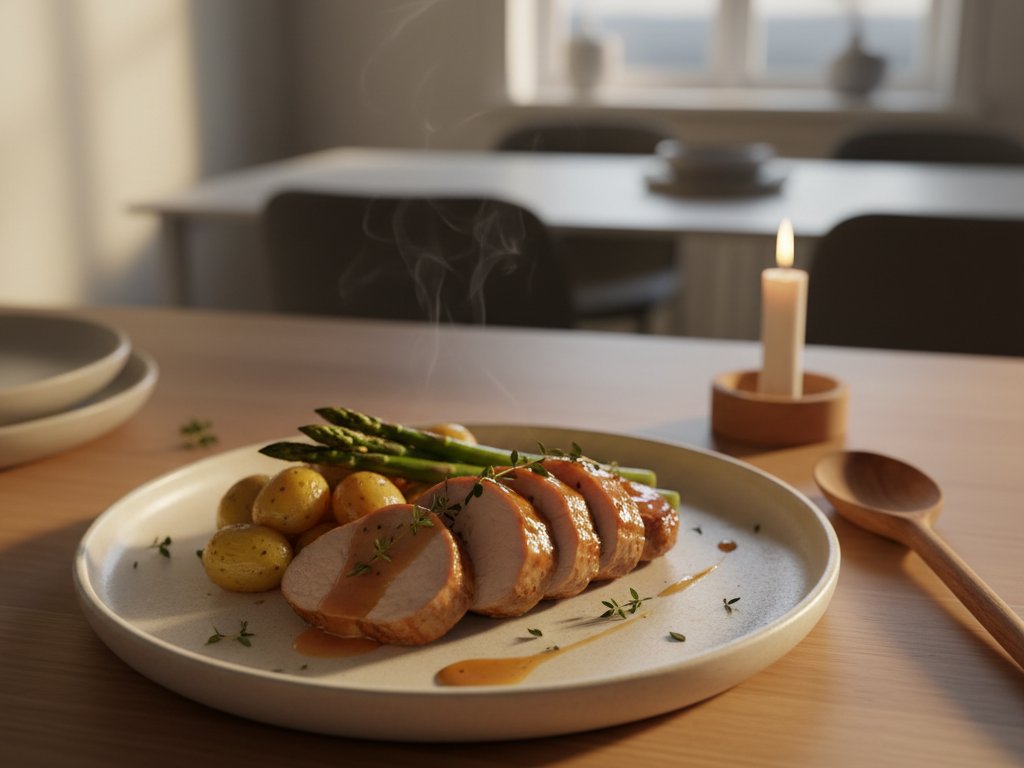
1. Honey Garlic Pork Tenderloin
Honey garlic pork tenderloin seared golden, then oven-roasted with a sticky glaze. Easy weeknight dinner with roasted vegetables. 53g protein.
View Recipe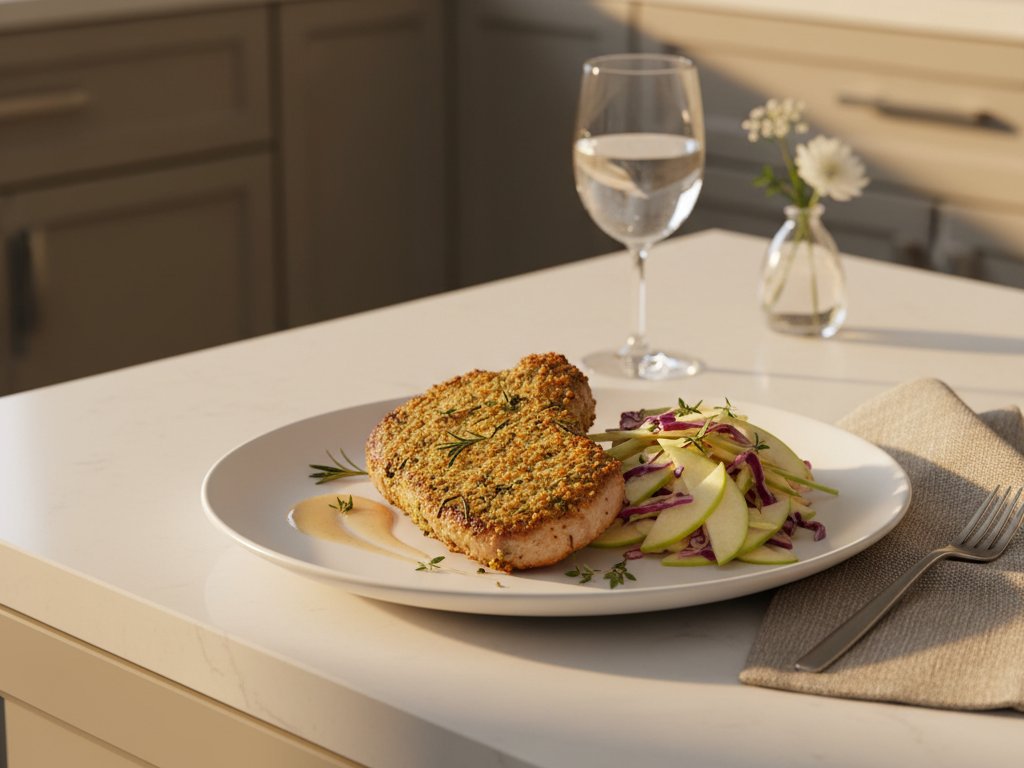
2. Herb-Crusted Pork Chops with Apple Slaw
Butter-basted pork with rosemary-thyme crust paired with crisp, tangy apple-cabbage slaw. 44g protein, 547 cal, 35 min skillet dinner.
View Recipe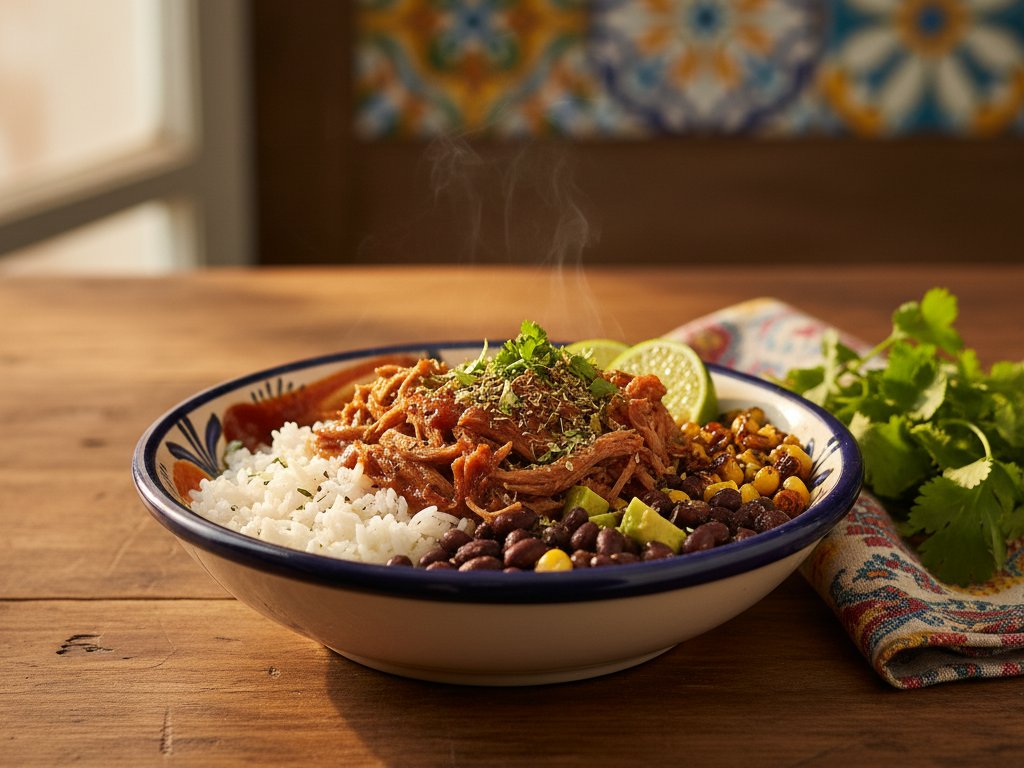
3. Slow Cooker Pulled Pork Carnitas Bowls
Fall-apart pork shoulder with citrus and warm spices over cilantro-lime rice. 51g protein, 739 cal. Six servings, one slow cooker.
View Recipe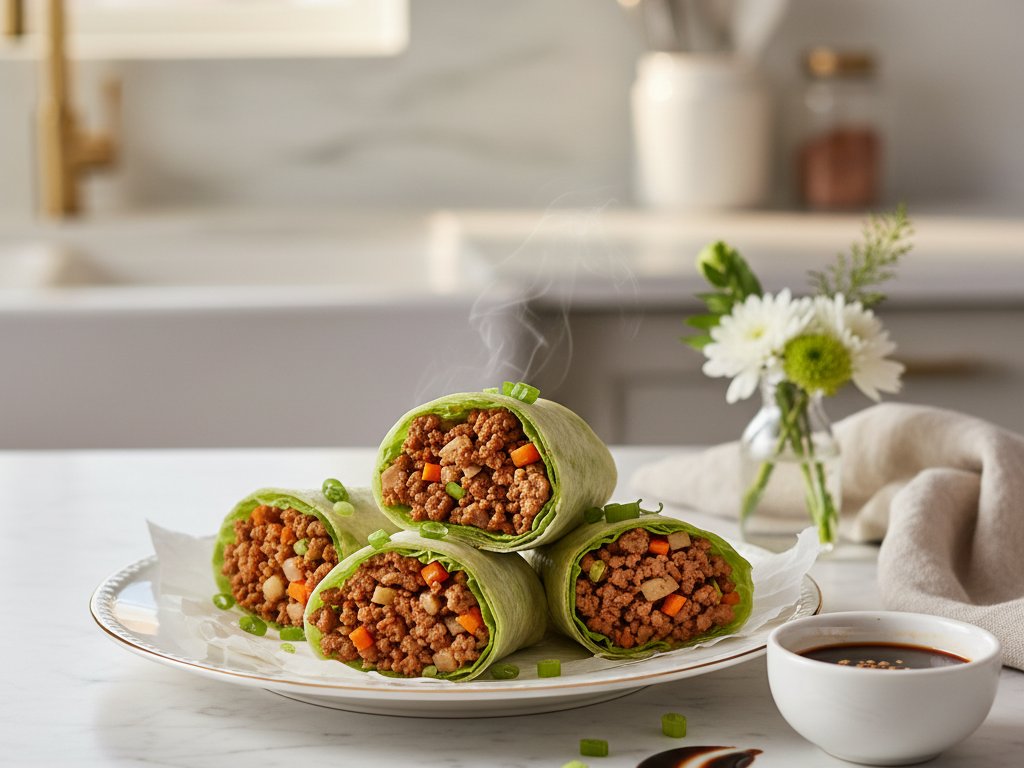
4. Asian Ground Pork Lettuce Wraps
Savory pork meets crunchy water chestnuts in hoisin glaze, wrapped in crisp butter lettuce. 40g protein, 690 cal, 20 min. Restaurant flavor, your kitchen.
View Recipe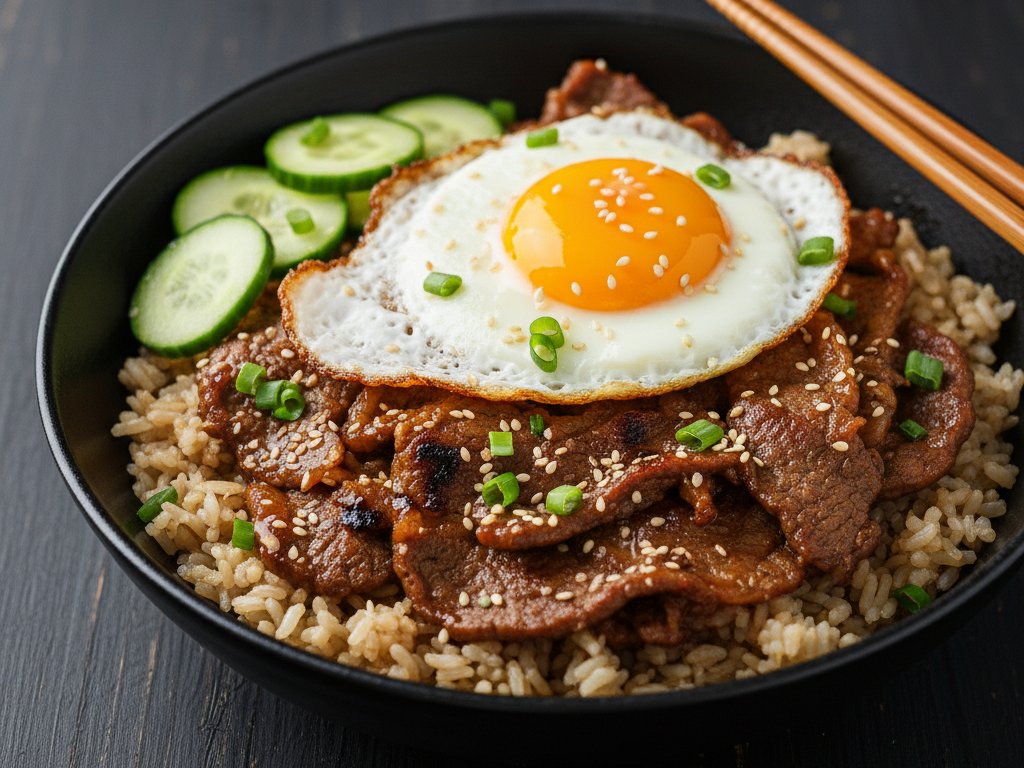
5. Korean Beef Bulgogi Bowl
Beef bulgogi bowl with thin-sliced Korean marinated beef over quinoa. 55g protein, 739 cal per serving — gochujang-sesame marinade, ready in 35 minutes.
View Recipe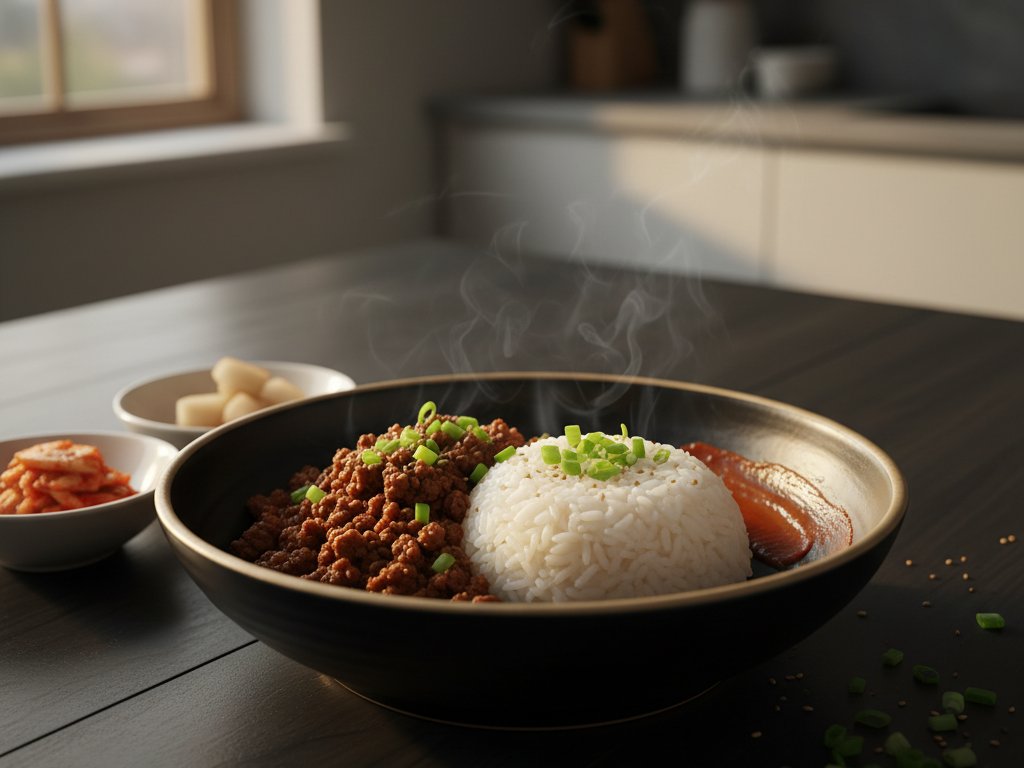
6. Korean Ground Beef Bowls
Sweet-savory ground beef glazed with gochujang, topped with a runny egg. 47g protein, 660 cal in 30 min. Quick-pickled crunch included.
View Recipe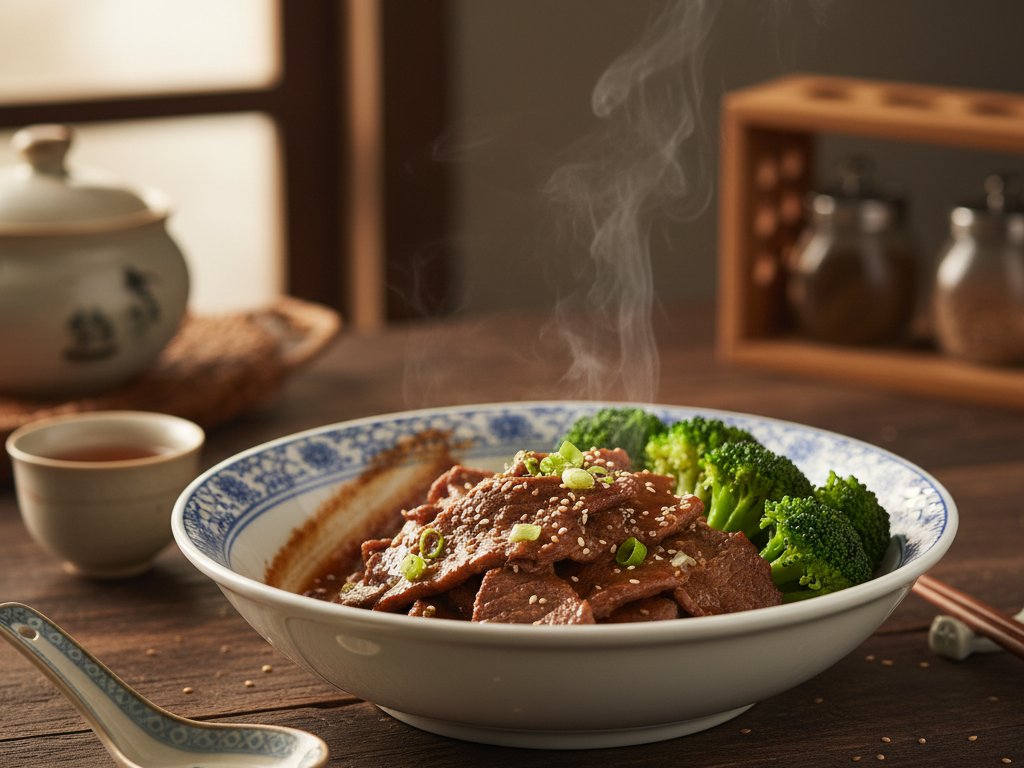
7. Beef and Broccoli Meal Prep
Tender flank steak and crisp-tender broccoli in ginger-garlic sauce. 45g protein, 552 cal, 30 min. Better than takeout, portioned for your whole week.
View Recipe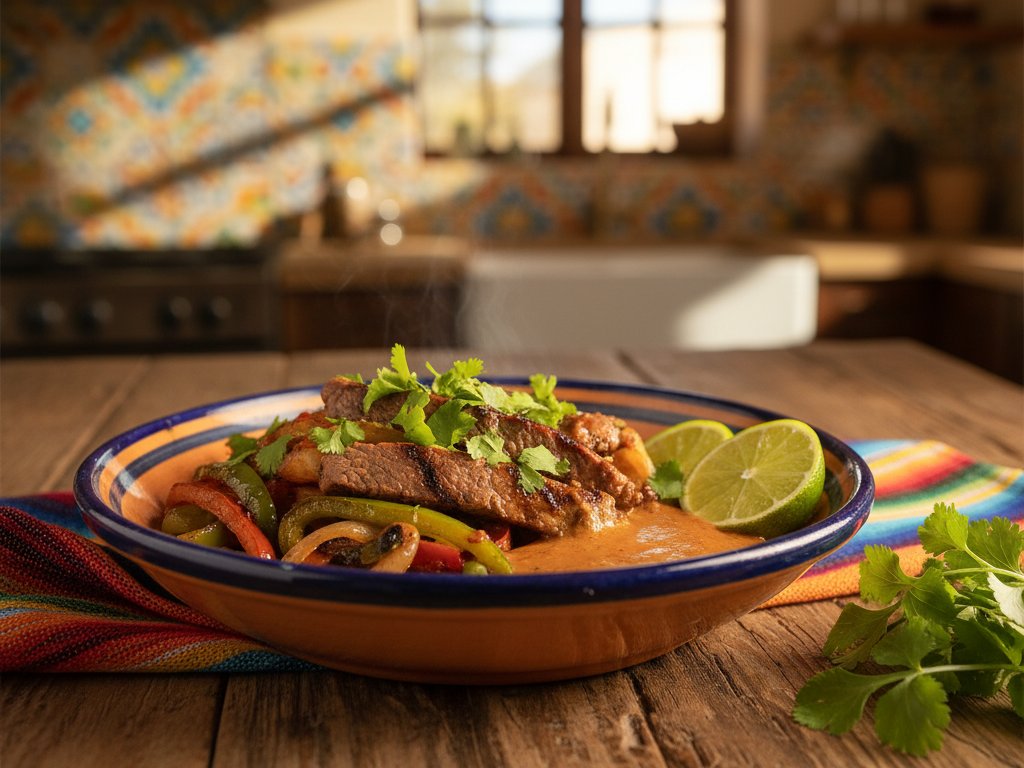
8. Steak Fajita Sheet Pan
Charred flank steak and sizzling peppers roast hands-off in 33 min. 47g protein, 590 cal per serving with Greek yogurt crema.
View Recipe