

Meals · High Protein
Filipino Chicken Adobo (37g Protein)
Filipino chicken adobo delivers 37g protein per serving in a tangy soy-vinegar sauce. Boneless, skinless chicken thighs braise until tender, developing concentrated soy-vinegar flavor from the 1:1 ratio and garlic-bay aromatics.
Nutrition per serving
- Protein
- 37 g
- Calories
- 277
- Carbs
- 3 g
- Fat
- 13 g
Nutritional values are estimates based on standard ingredient data and may vary by brand or preparation method. This information is for general reference only and is not a substitute for professional dietary advice. Consult a healthcare provider or registered dietitian for personalized nutrition guidance.
Ingredients
- 2 lbs boneless, skinless chicken thighs — about 32oz total
- 0.5 cup soy sauce
- 0.5 cup white distilled vinegar — or cane vinegar for traditional Filipino flavor
- 8 cloves garlic cloves — smashed
- 3 leaves bay leaves
- 1 tsp black pepper — whole peppercorns preferred
- 0.5 cup water
Steps
- Wash hands and sanitize surfaces after handling raw chicken. Combine chicken thighs, soy sauce, white distilled vinegar, smashed garlic, bay leaves, black peppercorns, and water in a large pot or deep skillet.
- Bring to a boil over high heat, then reduce to medium-low. Cover and braise for 30-35 minutes, turning chicken halfway through, until thighs reach 165°F internal temperature and are fork-tender.
- Remove chicken to a plate. Let sauce settle for 2-3 minutes, then skim rendered fat from surface using a spoon. This reduces fat by about 2g per serving.
- Return chicken to skillet. Increase heat to medium-high and simmer uncovered for 8-10 minutes, turning occasionally, until sauce reduces by half and coats chicken with a glossy sheen.
- Serve with reduced sauce spooned over rice. For day 2-3, refrigerate and remove solidified fat layer before reheating.
Why This Works
The 1:1 soy-vinegar ratio creates balanced tangy-savory flavor that penetrates deep into the meat during braising. Skimming rendered fat after cooking removes about 2g fat per serving while preserving the rich sauce. Boneless, skinless chicken thighs deliver 37g protein per serving (181g raw thigh at 19.6g protein per 100g, plus 2g from soy sauce) and stay moist through the 35-minute braise. That's the core advantage of thighs in any braised dish: the intramuscular fat keeps the meat tender where breast would tighten and dry out. We detail the full protein and texture comparison between the two cuts in a separate guide. Compared to a typical restaurant chicken adobo with skin-on thighs (~30g protein, ~550 calories), this version delivers 23% more protein at roughly half the calories by using boneless skinless thighs and skimming the braising fat.
The Filipino Tradition
Adobo is the unofficial national dish of the Philippines, where "inadobo" cooking (braising in vinegar and soy) originally preserved meat before refrigeration. The dish predates Spanish colonization, though the name comes from the Spanish "adobar" (to marinate). Regional variations are significant: Bisaya (Visayan) adobo often includes coconut milk for richness, while Tagalog versions lean heavier on vinegar for a sharper tang. Whole black peppercorns are traditional and release their heat slowly during braising, producing a gentler warmth than ground pepper. Bay leaves and garlic round out the aromatic base found in most family recipes. As food historian Raymond Sokolov notes, the vinegar-soy combination likely evolved from the pre-colonial practice of cooking meat in palm vinegar alone.
Day 2-3 Advantage
This recipe improves with time as flavors meld and deepen overnight. The sauce thickens slightly when refrigerated, creating a more concentrated coating when reheated. The fat layer that solidifies on top can be easily removed before reheating, further reducing calories if desired.
Make It Your Own
For lower sodium, use low-sodium soy sauce without changing the ratio. For a sweeter profile, add 1-2 tsp brown sugar in the final reduction. For crispy edges, remove cooked chicken and broil 3-4 minutes or pan-fry in a hot skillet until browned before returning to sauce. Add sliced onions with the garlic for extra depth.
Sources Research-Backed
Frequently Asked Questions
What vinegar should I use for chicken adobo?
White cane vinegar (sukang maasim) is the traditional Filipino choice and gives the cleanest tang. Distilled white vinegar is the closest widely available substitute. Apple cider vinegar works but adds a mild sweetness that shifts the flavor profile. Avoid balsamic or red wine vinegar, which overpower the soy sauce.
What is the difference between Filipino adobo and Mexican adobo?
They are completely different dishes that share a name inherited from Spanish colonialism. Filipino adobo is a vinegar-soy braise. Mexican adobo is a chili-based sauce or marinade, often built on dried ancho or guajillo peppers. The Spanish word "adobar" (to marinate or season) was applied independently to each local cooking tradition.
Can I freeze chicken adobo?
Yes. Chicken adobo freezes well for up to 3 months. Store the chicken and sauce together in an airtight container, leaving a small gap for expansion. Thaw overnight in the refrigerator and reheat gently on the stovetop. The flavors actually improve after freezing and thawing.
Is chicken adobo better the next day?
Yes. The vinegar-soy sauce penetrates deeper into the chicken overnight, and the sauce concentrates as it cools. Many Filipino families cook adobo a day ahead specifically for this reason. Skim the solidified fat layer off the top before reheating for a leaner result.
Featured In
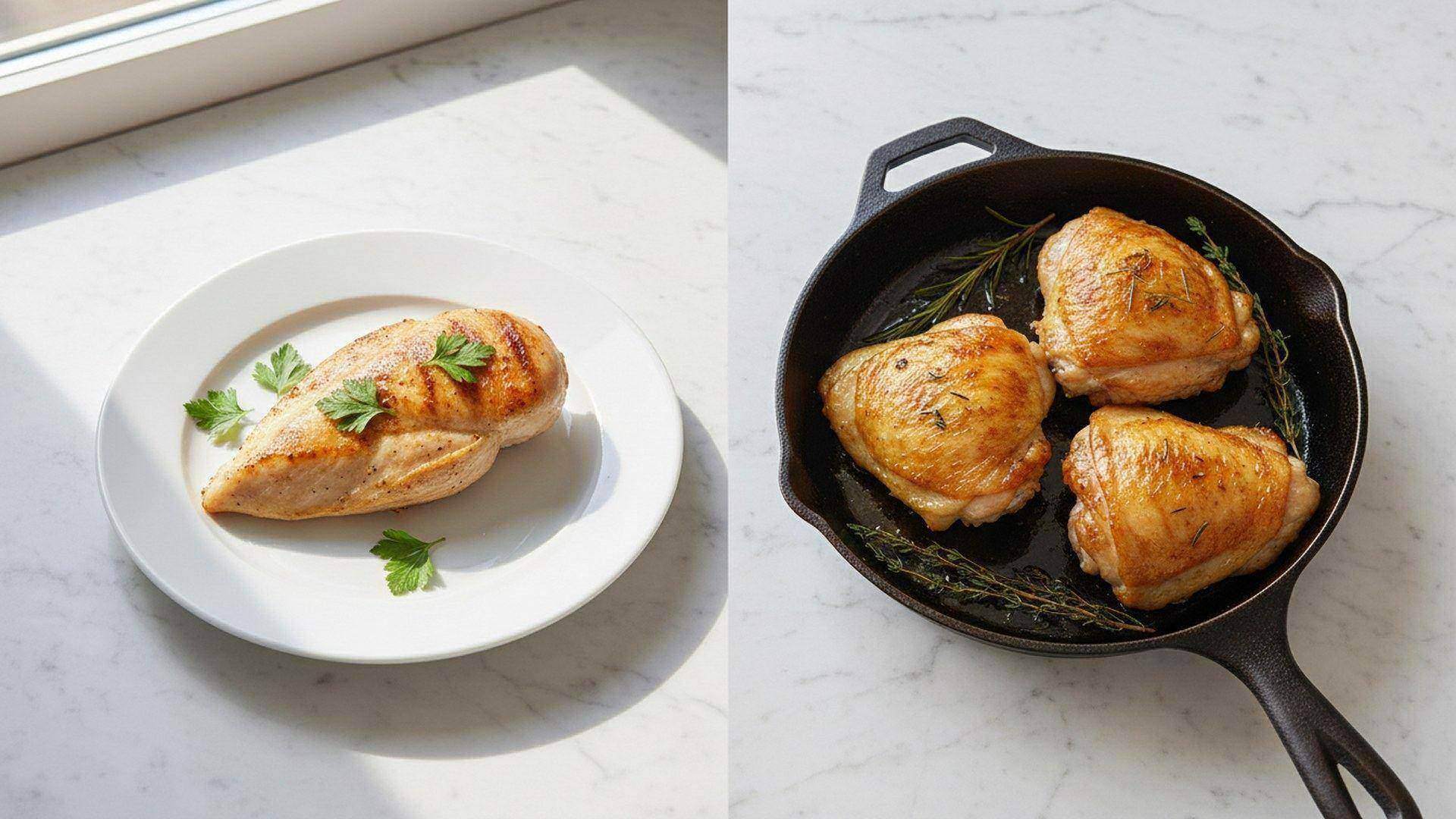
Chicken Breast vs Thigh: Which Has More Protein?
Breast has 31g protein per 100g. Thigh has 25g — but costs less, reheats better, and is harder to ruin. Data-backed comparison with recipes for both.
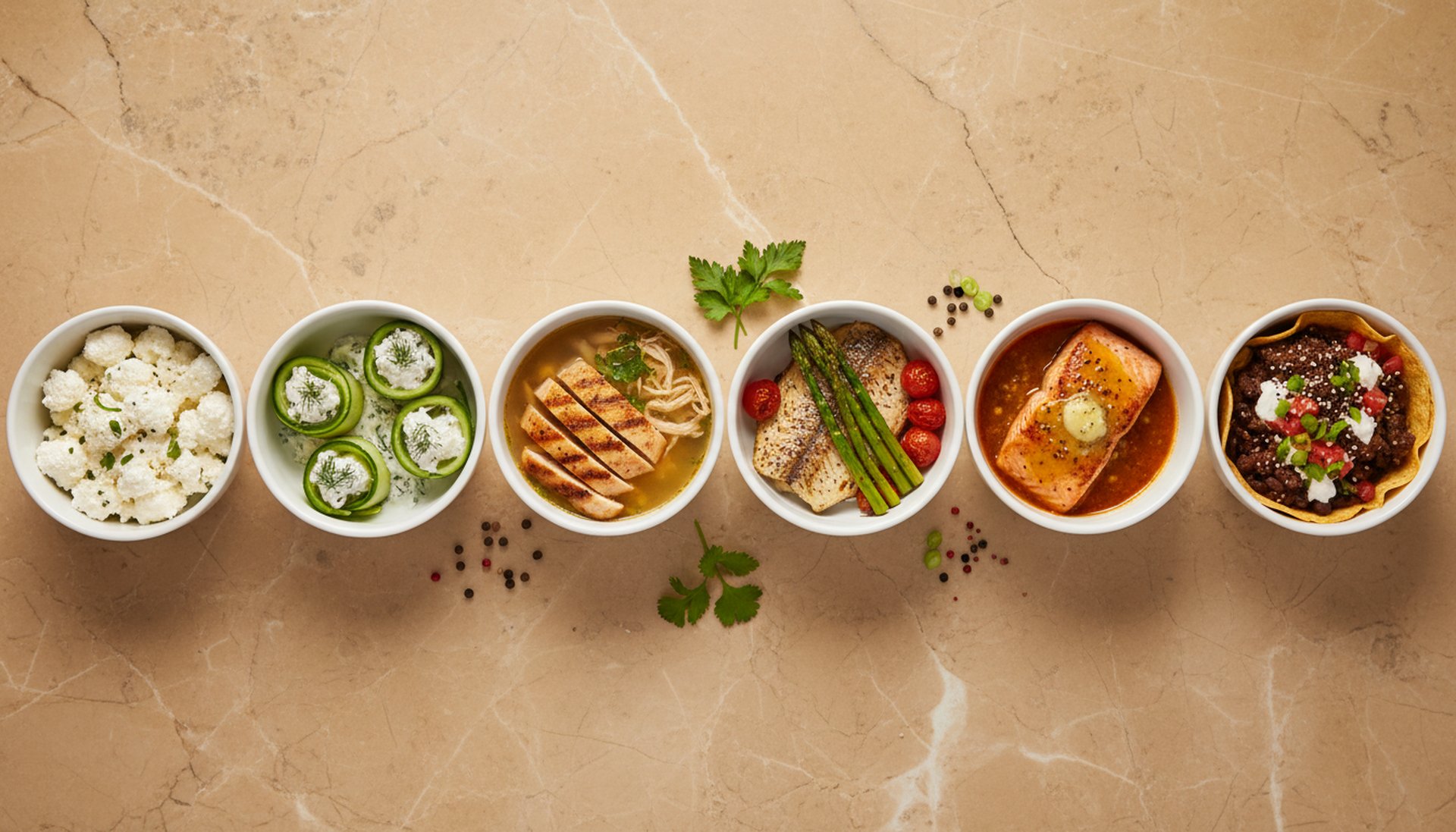
We Ranked All 133 Recipes by Protein-Per-Calorie. Some Results Surprised Us.
Cottage cheese bites beat chicken breast. Plant-based recipes clustered at the bottom. We ranked every recipe by protein efficiency.
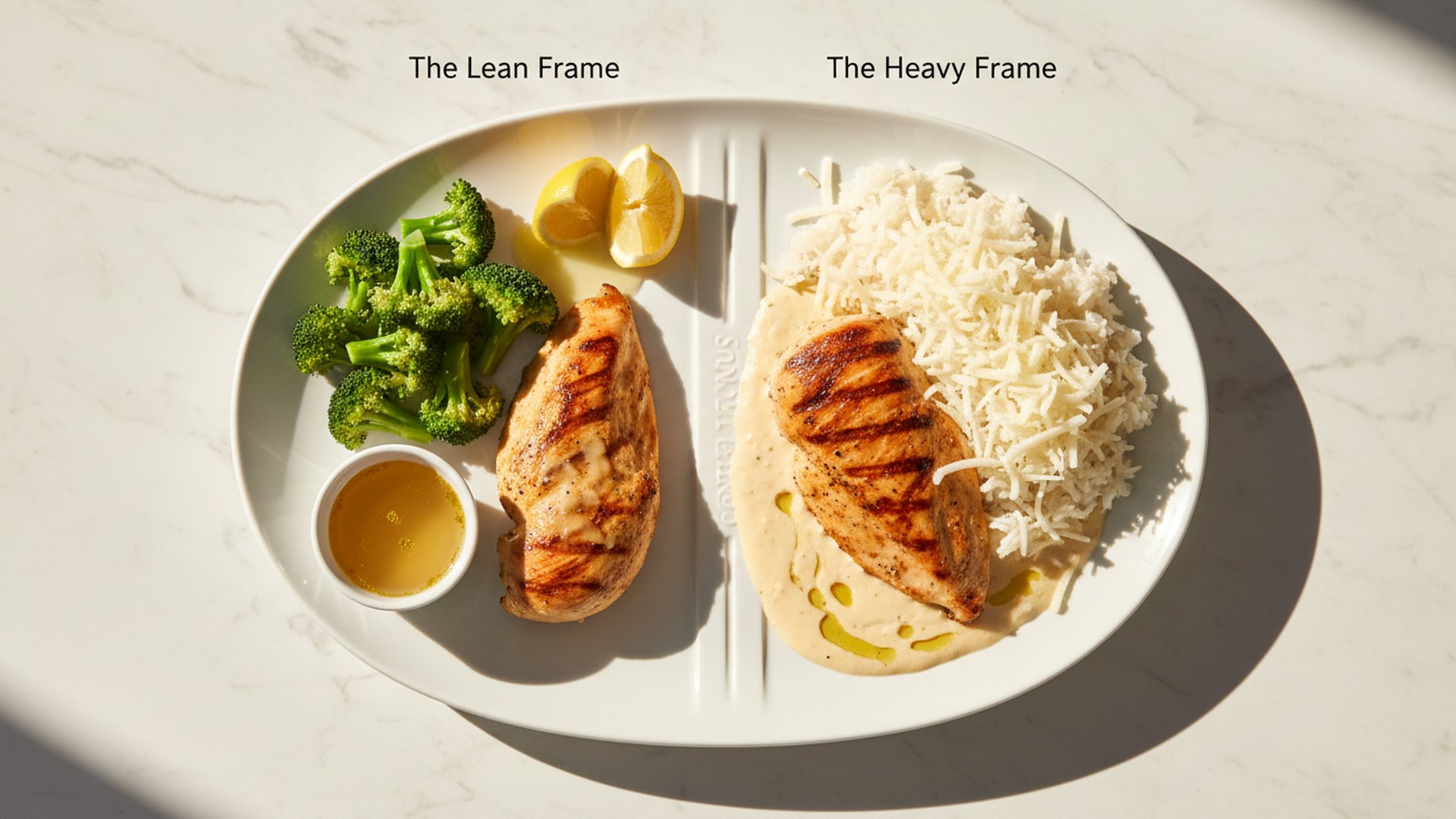
Why Your High-Protein Meals Have So Many Calories
We analyzed 133 recipes. Fat is twice as punishing per gram as carbs — but the internet blames carbs. Here's what actually drives protein-to-calorie ratio.


