
Meals · High Protein
Chicken Piccata with Lemon-Caper Pan Sauce - 35g Protein (35g Protein)
This pan-seared chicken piccata delivers 35 grams of protein and 457 calories per serving. Two chicken breast cutlets, pounded to an even half-inch and flour-dredged, sear fast and stay tender. Deglazing with lemon juice and broth lifts the fond (the browned bits stuck to the pan), and cold butter mounted at the end builds a lemon-caper butter sauce.
Nutrition per serving
- Protein
- 35 g
- Calories
- 457
- Carbs
- 13 g
- Fat
- 30 g
Nutritional values are estimates based on standard ingredient data and may vary by brand or preparation method. This information is for general reference only and is not a substitute for professional dietary advice. Consult a healthcare provider or registered dietitian for personalized nutrition guidance.
Ingredients
- 10 oz boneless, skinless chicken breast — 2 breasts ~5oz each; halve horizontally and pound to 1/2-inch thickness
- 3 tbsp all-purpose flour — for dredging
- 3 tbsp butter — divided: 1 tbsp for searing, 2 tbsp cold for mounting sauce
- 1 tbsp olive oil
- 3 cloves garlic — minced
- 1/4 cup dry white wine — or substitute additional chicken broth; not in USDA registry - trace macros only
- 1/4 cup chicken broth
- 3 tbsp lemon juice — freshly squeezed, about 1.5 lemons
- 2 tbsp capers — drained; not in USDA registry - trace macros only (~5 cal total)
- 2 tbsp parsley — fresh, finely chopped
- 1/2 tsp salt
- 1/4 tsp black pepper
Steps
- Prepare the cutlets: Place each chicken breast on a cutting board. Hold your hand flat on top and slice horizontally through the thickest part to create two even cutlets. Pound each cutlet between two pieces of plastic wrap or in a zip-lock bag using a meat mallet or heavy skillet until uniformly 1/2-inch thick. Pat dry with paper towels. Season both sides with salt and black pepper. Wash hands and sanitize surfaces after handling raw chicken.
- Dredge in flour: Spread the flour on a flat plate. Dredge each cutlet lightly in flour, shaking off the excess. You want a thin, even coating. This creates the fond and slightly thickens the sauce, but heavy flour makes the cutlets gummy.
- Sear the cutlets: Heat a 12-inch stainless steel or cast iron skillet over medium-high heat. Add the olive oil and 1 tablespoon of butter. When the butter foams and begins to subside (around 350°F), add the cutlets in a single layer. Do not crowd the pan, work in batches if needed. Sear 2-3 minutes per side until golden brown and the internal temperature reaches 165°F. At 1/2-inch thickness, the chicken may need up to 4 minutes per side. Check with a thermometer. 165°F internal is the true indicator, not time. Transfer to a plate and tent loosely with foil.
- Build the fond: Pour off any excess fat from the pan into a heat-safe container (never down the drain), leaving about 1 tablespoon. Carefully tilt the pan away from you, using an oven mitt on the handle. Reduce heat to medium. Add the minced garlic and cook 30 seconds, stirring constantly, until fragrant but not browned.
- Deglaze: Add the white wine (or chicken broth) to the hot pan. If substituting broth for wine, use 1/2 cup total broth here and skip the additional broth in Step 6. Use a wooden spoon to scrape up all the brown bits stuck to the bottom. That is the fond, the concentrated flavor base of the sauce. Let it reduce by half, about 1 minute.
- Build the pan sauce: Add the remaining chicken broth, lemon juice, and capers. Bring to a simmer and cook 2-3 minutes until the sauce has reduced by about half and looks glossy.
- Mount with butter: Remove the pan from heat. Add the remaining 2 tablespoons of cold butter, one tablespoon at a time, swirling the pan continuously as each piece melts. The cold butter emulsifies into the sauce, giving it a glossy, velvety texture. Do not return to high heat after mounting. The sauce will break.
- Finish and serve: Return the chicken cutlets to the pan, spooning the sauce over them. Scatter fresh parsley over the top. Serve immediately. The sauce thickens as it cools.
Why This Works
Chicken breast piccata relies on three mechanics working together. First, pounding to an even 1/2-inch thickness solves breast meat's biggest problem: uneven cooking. (Thighs don't need this step because their fat distribution is more forgiving, which is one of the key differences between the two cuts.) A thick breast dries out at the edges before the center is safe. At 1/2 inch, the whole cutlet hits 165°F in under 3 minutes per side, too fast for moisture loss to be significant. Second, the flour dredge creates Maillard browning on a surface that would otherwise stay pale and steam-poach rather than sear. That browned flour sticking to the pan is the fond, the flavor base the sauce is built from. Without it, the pan sauce is just lemony broth. Third, mounting with cold butter at the end (monter au beurre, meaning swirling cold butter into the sauce off heat to create a glossy emulsion) emulsifies fat into the sauce. The cold butter hits the hot, acid-rich liquid and forms a temporary emulsion, glossy, thick, and coating. Reheat it and the emulsion breaks. This is why you serve immediately.
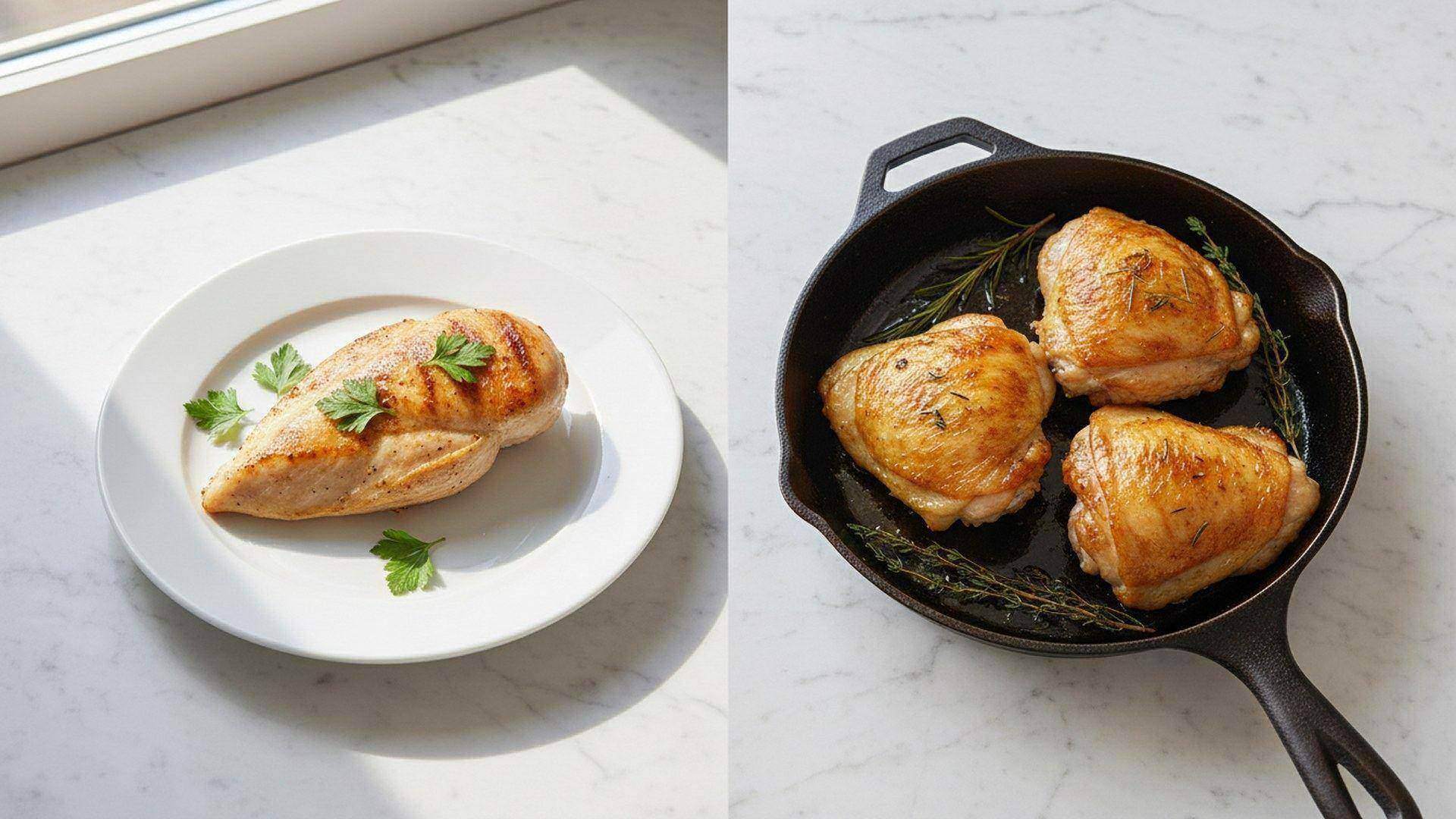
For the breast-vs-thigh comparison: this dish demonstrates precisely when breast outperforms thigh. The flat, boneless cutlet format makes a clean, fast-cooking platform for a delicate pan sauce. Thigh meat, with its higher fat and connective tissue, would render grease into the sauce and requires longer cook times that would over-reduce the lemon. Breast is the right protein here.
The Pan Sauce Sequence
The sauce builds in three stages, each adding a layer of flavor. Stage one: fond development. The flour from the dredge sticks to the hot pan and browns. When you deglaze with wine, those Maillard compounds dissolve into the liquid. This is where the deep savory base comes from, not the broth. Stage two: reduction. The wine and broth reduce together, concentrating acidity and flavor. You are looking for the sauce to reduce by about half, until it looks glossy. Stage three: butter mount. Cold butter added off heat creates an emulsion. The sauce goes from thin and watery to glossy and velvety in about 30 seconds. If the pan is too hot, the butter separates into greasy pools. If your sauce breaks, add a tablespoon of cold water and whisk vigorously. It can sometimes re-emulsify.
Make It Your Own
Classic piccata skips garlic, but we add three cloves for depth. If you want a more traditional version, omit the garlic. The lemon-caper-butter sauce is beautiful on its own. No white wine? Substitute with equal parts chicken broth plus a teaspoon of white wine vinegar. The acidity does most of the work the wine does. No capers? Finely chopped green olives are a common substitute, adding similar briny, salty notes. For more lemon presence, add thin lemon slices to the pan during the sauce reduction. They soften and serve as a garnish. To scale to 4 servings, use the same pan sauce proportions but sear chicken in two batches. The fond from both batches enriches the sauce further.
Sources Research-Backed
Frequently Asked Questions
Why does my piccata sauce taste too sour?
Too much lemon juice relative to butter. The butter-to-acid ratio matters: use at least 2 tablespoons of cold butter per tablespoon of lemon juice. The butter emulsifies the sauce and rounds out the acidity.
Can I make chicken piccata without white wine?
Yes. Substitute equal parts chicken broth with a splash of white wine vinegar (about 1 teaspoon per quarter cup of broth). The acidity from the vinegar replaces the wine's role in deglazing.
What should I serve with chicken piccata?
Angel hair pasta or orzo to catch the sauce, or crusty bread. A simple green salad balances the richness. For a higher-protein meal, serve over steamed broccoli instead of pasta.
Can I use chicken thighs instead of breast?
Yes, but the sauce will be richer since thighs release more fat during cooking. You may want to pour off extra rendered fat before building the pan sauce.