
Meals · High Protein
Crispy Gochujang Chicken Breast with Sesame Glaze — 54g Protein (54g Protein)
A quick weeknight pan-sear that delivers 54 grams of protein and 507 calories per serving. Chicken breast pieces are tossed in cornstarch for crispy edges, then glazed in a caramelized gochujang, honey, soy, and sesame sauce. No deep-frying required: this finishes in 25 minutes in a single skillet.
Nutrition per serving
- Protein
- 54 g
- Calories
- 507
- Carbs
- 30 g
- Fat
- 19 g
Nutritional values are estimates based on standard ingredient data and may vary by brand or preparation method. This information is for general reference only and is not a substitute for professional dietary advice. Consult a healthcare provider or registered dietitian for personalized nutrition guidance.
Ingredients
- 16 oz chicken breast, boneless, skinless — cut into 1.5-inch pieces
- 3 tbsp cornstarch — for coating
- 1.5 tbsp avocado oil
- 2.5 tbsp gochujang — Korean fermented chili paste, found in Asian grocery stores and many supermarkets
- 1.5 tbsp honey
- 1 tbsp soy sauce
- 1.5 tsp sesame oil
- 1 tbsp rice vinegar
- 3 cloves garlic — minced
- 2 tsp sesame seeds
- 2 stalks scallions — thinly sliced
Steps
- Pat the chicken pieces dry with a paper towel. Wash hands and sanitize surfaces after handling raw chicken. Toss them in cornstarch until each piece is lightly coated on all sides. Shake off any excess.
- Whisk together gochujang, honey, soy sauce, sesame oil, rice vinegar, and minced garlic in a small bowl. Set the glaze aside.
- Heat avocado oil in a 12-inch stainless steel or cast-iron skillet over medium-high heat until shimmering (the oil will ripple and look wavy across the surface). Avoid non-stick pans at high heat. Add the chicken in a single layer without crowding.
- Sear for 3-4 minutes without moving, until the bottom edges look golden and the coating is set. Flip and cook 2-3 minutes on the second side. The internal temperature should reach 165 degrees F.
- Reduce heat to medium. Pour the glaze over the chicken. Toss to coat and cook for 60-90 seconds, turning the pieces frequently so the sauce caramelizes around each piece without burning.
- Remove from heat. Divide between two plates and garnish with sesame seeds and sliced scallions. Serve immediately.
Why This Works
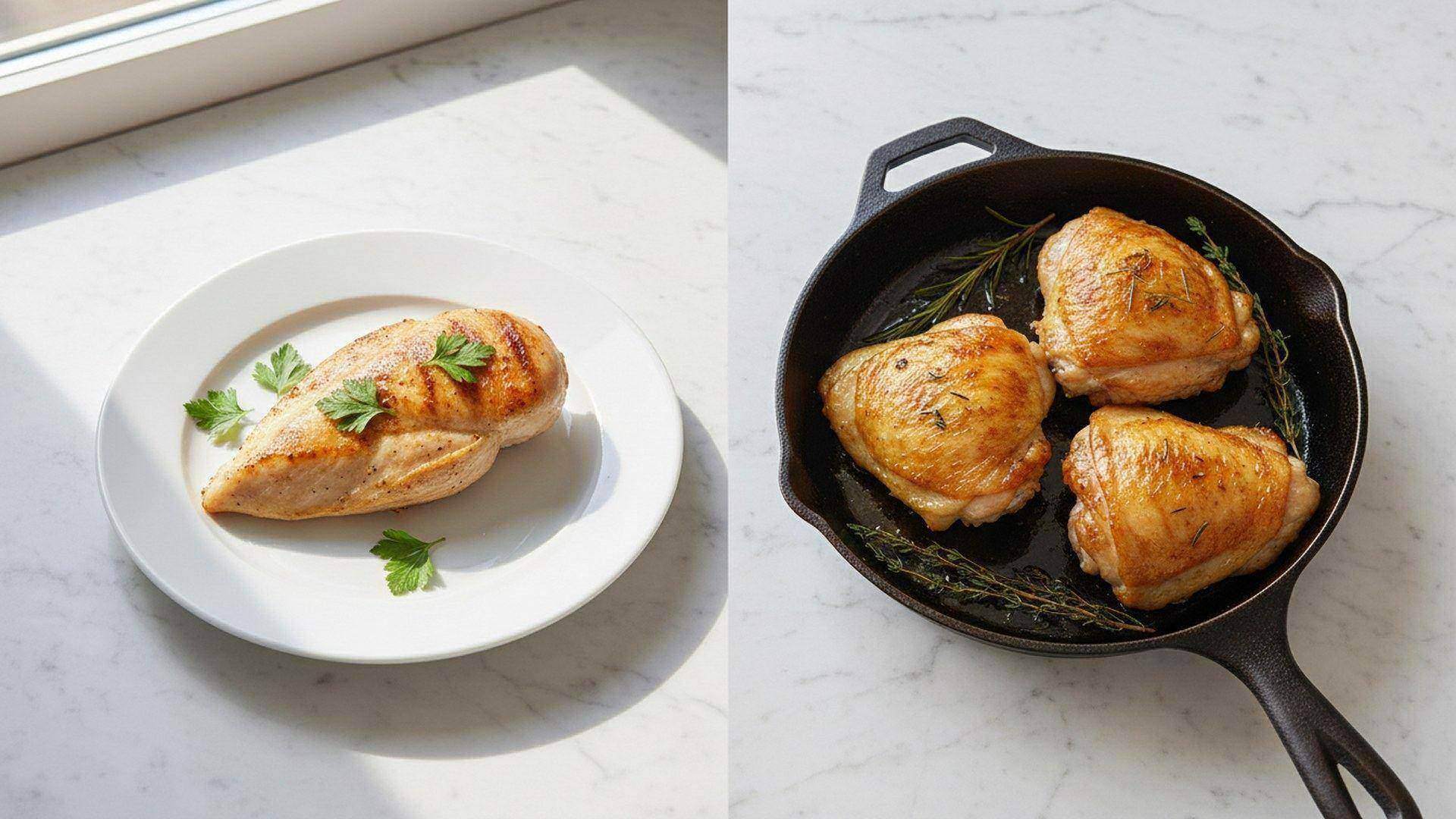
This is a quick weeknight pan-sear, not a deep-fried Korean chicken. Breast is the right pick here because its firm, even texture takes a cornstarch crust better than thigh, which can buckle and cook unevenly when coated. More on when to reach for breast over thigh. The cornstarch coating is the structural key. Cornstarch forms a denser, crispier crust than flour because it has no gluten to go chewy when wet. When the starch granules hit hot oil, they gelatinize instantly into a rigid shell that stays crisp even after the sauce goes on. The gochujang-honey glaze has a sugar content high enough to caramelize in under 90 seconds at medium heat, which concentrates the fermented, mildly spicy flavor without burning. Gochujang (a Korean fermented chili paste made from glutinous rice, red pepper, and soybeans) has a Maillard-reactive protein content that browns as it heats, adding a roasted, slightly smoky depth that sriracha or generic chili paste cannot replicate. The sesame oil goes in the glaze rather than the pan, so its delicate volatile aromatics are not driven off by high heat. For the traditional double-fried version using thighs, see our Korean Yangnyeom Chicken.
What Is Gochujang
Gochujang is a Korean fermented chili paste with a thick, brick-red consistency and a flavor that is simultaneously spicy, savory, and faintly sweet. It tastes nothing like hot sauce: the fermentation adds depth similar to miso, and the heat is gradual rather than sharp. Look for it in the Asian foods aisle of most large grocery stores, or at any Korean or Asian market. It is sold in small red tubs or tubes. The heat level varies by brand: Haechandle and Sempio are mild-to-medium, while Bibigo leans hotter. Once opened, it keeps refrigerated for up to a year.
The Caramelization Window
The glaze goes on after the chicken is fully cooked, not before. Adding sugar-containing sauces too early causes scorching before the interior reaches temperature. Once the chicken hits 165 degrees F, reduce to medium and add the glaze. It should bubble and thicken quickly, coating each piece in a sticky layer. Turn the pieces every 20-30 seconds to prevent any single face from burning. The glaze is done when it clings and looks glossy rather than watery. If it starts to smoke or smell acrid, pull the pan off the heat immediately.
Make It Your Own
For a milder version, use 1.5 tablespoons gochujang and add 1 tablespoon of water to the glaze. To increase heat, add a pinch of gochugaru (Korean chili flakes) or a small amount of the paste from a tube of sambal. For extra color and vegetable volume, add thinly sliced bell pepper or zucchini to the pan after the first sear, cook 2 minutes, then add the glaze. The recipe scales cleanly: double all ingredients for 4 servings, using a 12-inch skillet or cooking in two batches to avoid crowding. For a Korean fried chicken version using thighs, see our Korean Yangnyeom Chicken.
Sources Research-Backed
Frequently Asked Questions
Can I use chicken thighs instead of breast?
Yes. Boneless, skinless thighs work well and are more forgiving of high heat. The protein per serving drops to approximately 31g protein per serving (down from 54g) since thighs have 25.9g protein per 100g cooked versus breast's 31g. Fat increases, but the glaze caramelizes the same way.
What if I can't find gochujang?
Gochujang is increasingly stocked in the Asian foods section of major grocery chains. If it is truly unavailable, a mix of miso paste and sambal oelek (equal parts) is the closest substitute, though the flavor profile shifts noticeably.
Why not use a non-stick pan?
Non-stick pans should not be used over medium-high heat (the temperature needed for searing). The coating can degrade at high temperatures. Stainless steel or cast iron produces a superior crust and handles the heat safely.
Can I meal prep this?
The chicken keeps well refrigerated for 3 days. Reheat in a skillet over medium-low heat with a splash of water to loosen the glaze. Microwaving works but softens the crust.