Why Your Meal Prep Chicken Is Dry (And How to Fix It)
Your chicken isn't dry because of the brand. It's dry because you cooked it to 165°F. The science, 5 ranked fixes, and whether you should just switch to thighs.
Part of The Protein Atlas — your complete guide to protein.
Your chicken isn’t dry because you bought the wrong brand. It’s dry because you cooked it past 155°F (68°C). (Don’t worry — 155°F is safe. The USDA’s own time-temperature tables confirm it, and we’ll explain exactly why below.)
The USDA recommends 165°F (74°C) for instant food safety — and that’s a fine guideline. But it’s also 10-15 degrees past the point where chicken breast goes from juicy to sawdust. If you’ve ever wondered why is my meal prep chicken dry by Wednesday — rubbery, flavorless, borderline inedible — the thermometer is the first place to look.
The same chicken breast that tastes perfect on Sunday is dry by Wednesday. The problem isn’t the chicken. It’s what happened before it went in the container.
Brine for 30 minutes if you have time — a teaspoon of salt per pound, rubbed on and left to sit. The salt restructures the proteins so they hold more water during cooking. Pull at 155°F (68°C) and let it rest 5 minutes — the internal temperature keeps rising after you remove it from heat, reaching a safe 160-162°F (71°C) without you doing anything. Store whole pieces with a splash of broth or sauce — never slice until you reheat. Or switch to thighs and stop fighting the problem entirely. Here’s how to keep chicken moist for meal prep, ranked from zero-effort to takes-planning.
Why Does Meal Prep Chicken Get Dry?
Two proteins control whether your chicken is juicy or dry: myosin and actin. You don’t need to memorize the numbers — just the principle.
Myosin breaks down at 120-140°F (49-60°C). (“Denatures” is the science word — it means the protein changes shape permanently.) This is the first stage of cooking. Muscle fibers firm up and act like a sponge that holds onto its water. This is why chicken starts to feel firm and turn white — but at this stage it’s not yet safe to eat. The proteins are setting, but pathogens haven’t been killed.
Actin breaks down at 150-176°F (66-80°C). This is where the damage happens. Actin contraction squeezes water out of those same muscle fibers — like wringing the sponge dry. The proteins unfold, aggregate, and permanently lose their ability to hold moisture. Chicken breast loses roughly 20% of its weight when cooked to 165°F (74°C) compared to about 12% at 155°F (68°C).
The sweet spot is 155°F (68°C). At this temperature, myosin has fully set (meat is firm and opaque) and the chicken is safely pasteurized when held for approximately 55 seconds — per the USDA’s own FSIS time-temperature tables for poultry. But actin hasn’t fully contracted, so the meat still holds its water. Let it rest 5 minutes and carryover brings the internal temp to 160-162°F (71°C). That’s where you want to land.
The USDA’s consumer guideline of 165°F (74°C) instant-read is also safe — but it’s deep in the actin-contraction zone, and the difference in juiciness is dramatic.
But cooking is only half the problem. Even properly cooked chicken degrades in the fridge:
-
Moisture migration. As chicken cools, muscle fibers contract further and squeeze out bound water. That pool of liquid at the bottom of your container on Tuesday? It was inside the meat on Sunday.
-
Warmed-over flavor. This is why day 3-4 chicken tastes like cardboard even if it’s technically still moist. It’s a chemical reaction — oxygen reacts with fats in the meat, producing stale, metallic off-flavors that get worse each day in the fridge. Chicken breast is especially susceptible because it has so little fat that the reaction affects a bigger proportion of what’s there. Sauces and broth slow this down by coating the surface and blocking oxygen.
Dry chicken is a cooking problem. Cardboard-flavored chicken is a storage problem. Most meal preppers have both.
How Do You Keep Meal Prep Chicken Moist?
Five fixes, ranked from zero-effort to takes-planning. Each one works on its own, but they stack. If you’re doing multiple: pound first, then brine, then cook to 155°F, then store whole with broth.
Fix 1: Pull at 155°F (68°C), not 165°F (74°C)
The single biggest change you can make, and it costs you nothing.
This is the threshold from the science section above — myosin has set, actin hasn’t fully contracted, and carryover during a 5-minute rest brings the final temp to a safely pasteurized 160-162°F (71°C). A completely different eating experience from 165°F chicken.
Important: This applies to whole chicken breasts and thighs only. Ground chicken (burgers, meatballs) must reach 165°F (74°C) — bacteria get mixed throughout during grinding.
A good starting point: bake at 400°F (200°C) for 18-22 minutes (for a pounded 3/4-inch breast), checking with a thermometer starting at 18 minutes. At higher oven temps you have less margin — at 425°F (220°C), there’s maybe 2 minutes between 155°F and 170°F. At 350°F (175°C), closer to 5 minutes. A good instant-read thermometer pays for itself the first week.
Fix 2: Pound to even thickness
Two minutes with a rolling pin. Solves a problem most people don’t realize they have.
Chicken breasts taper from 1/2 inch at one end to 2+ inches at the other. By the time the thick center hits 155°F (68°C), the thin end is at 180°F (82°C) and bone dry. Pound to 3/4-inch even thickness (put it in a zip-lock bag and whack it with a rolling pin or heavy pan) and every part finishes at the same temperature. If pounding isn’t working, cut the breast in half horizontally to make two thinner pieces. This is also why Mediterranean Chicken Skewers (58g protein, 442 cal) work well for meal prep — the small, uniform pieces cook evenly by default.
Fix 3: Dry brine for 30 minutes
Thirty seconds of active work, thirty minutes of waiting. The salt does the rest.
Sprinkle 1 teaspoon of kosher salt per pound of chicken. Wait 30 minutes (or up to overnight in the fridge). The salt draws moisture to the surface via osmosis, dissolves into it, then the brine reabsorbs into the meat. The dissolved salt restructures muscle proteins so they physically hold 7-10% more water during cooking.
This is the same science behind yogurt marinades — the acid and salt in a tandoori marinade both work to trap moisture. For a recipe that demonstrates it: Tandoori-Style Chicken with Lentil Pilaf (53g protein, 583 cal).
For sliced or diced chicken (stir-fries, wraps): a Chinese restaurant technique works even faster. Mix about 1/4 teaspoon of baking soda per pound into the sliced chicken, let it sit for 15-20 minutes, then rinse thoroughly before cooking. The alkalinity changes the protein surface so it holds more water — a different mechanism from salt brining. This is why stir-fried chicken at Chinese restaurants has that silky, tender texture. Use too much or skip the rinse and you’ll taste it, so measure carefully.
Fix 4: Store whole, slice when reheating
A habit change, not a technique. But it matters more than most people expect.
Slicing before storage exposes more surface area to air — which means faster moisture evaporation and faster lipid oxidation (the cardboard flavor from the science section above). Storing whole pieces and slicing only when you reheat reduces both problems.
Refrigerate within 2 hours of cooking — no need to cool to room temperature first. The faster you get it sealed in an airtight container, the less moisture escapes.
Fix 5: Add broth or sauce to the container
Ten seconds. A tablespoon of chicken broth, a spoonful of sauce, or a drizzle of olive oil.
The liquid coats the meat surface and creates a barrier against oxygen. That’s why braised chicken reheats well on day 4 while plain baked breast tastes stale — the sauce isn’t just flavor, it’s preservation. This one fix addresses the warmed-over flavor problem directly.
| Fix | Effort | Impact |
|---|---|---|
| Pull at 155°F (68°C) | None | Juicy instead of dry on day 1 |
| Pound even | 2 min | No more dry thin ends |
| Dry brine | 30 sec + wait | 7-10% more moisture retained |
| Store whole | Habit change | Less moisture loss + less oxidation |
| Add broth or sauce to container | 10 sec | Slows cardboard flavor development |
Should You Just Switch to Thighs?
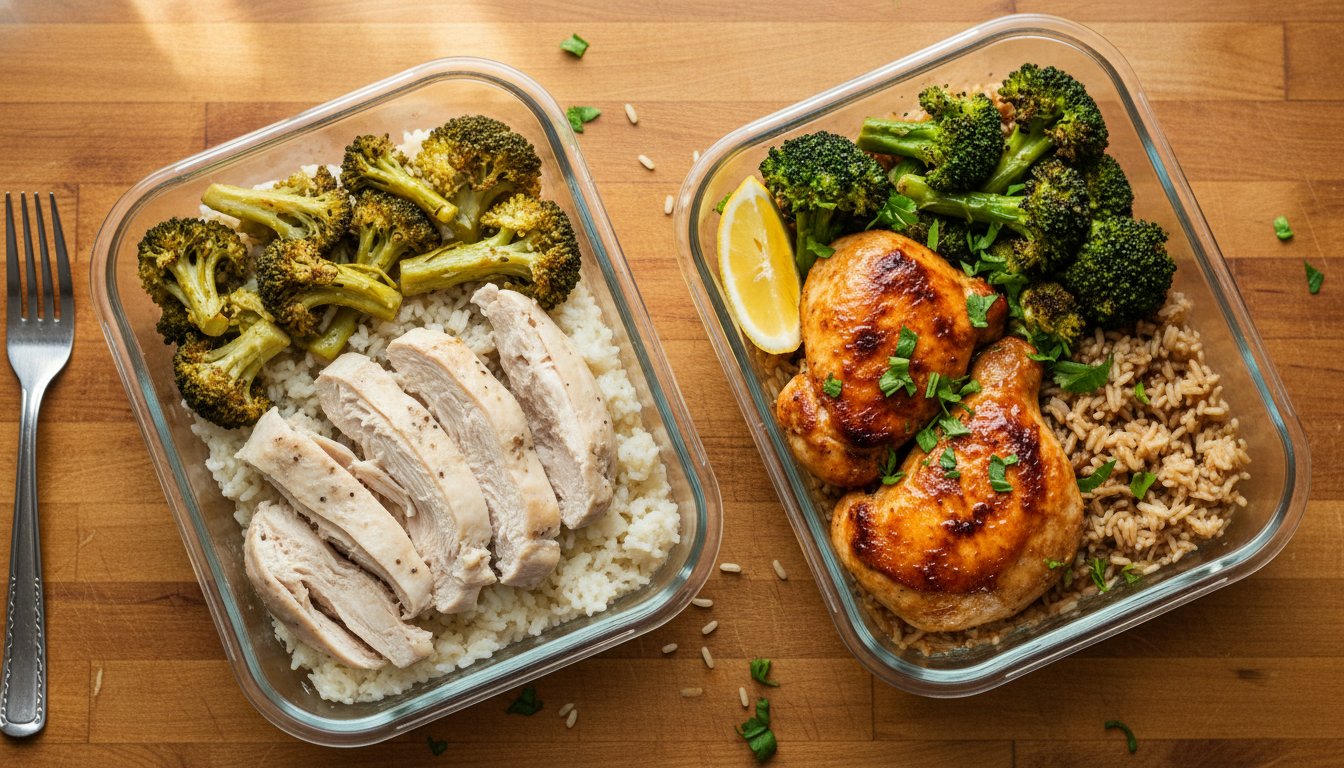
Or you could start with a cut that’s harder to ruin. Thighs benefit from the same fixes above, but they’re more forgiving if you skip a few. Even without brining or careful temperature management, thighs stay moist through day 4 in ways that breast simply won’t.
| Per 100g (roasted, skinless) | Breast | Thigh | Difference |
|---|---|---|---|
| Protein | 31.0g | 24.8g | -6.2g (-20%) |
| Calories | 165 | 179 | +14 (+8.5%) |
| Fat | 3.6g | 8.2g | +4.6g |
| Protein per calorie | 18.8g/100cal | 13.9g/100cal | -26% |
Source: USDA FoodData Central (breast #05064, thigh #172388), roasted, meat only, skinless.
The protein hit is real: 6.2g less per 100g. If you eat 200g of chicken daily, that’s 12.4g less protein — roughly one egg’s worth. The calorie increase is modest at 14 per 100g. Whether the tradeoff matters depends on how tight your cut is.
What you get in return: chicken that stays moist through day 5, reheats without turning to cardboard, and tastes better cold. The extra fat acts as a moisture buffer and a flavor carrier.
On cost: thighs are typically 30-50% cheaper per pound than breast. For a meal prepper buying 3-4 pounds weekly, that’s $3-5 saved — which adds up over months.
For meal prep specifically: Honey Garlic Chicken Thighs Meal Prep (53g protein, 633 cal) — designed for the container, not just the plate. Or for a faster option: Crispy Air Fryer Chicken Thighs (60g protein, 579 cal, 35 min).
If you want to stick with breast, do it right: Lemon Herb Chicken Breast Meal Prep (77g protein, 630 cal). Brine, pound even, pull at 155°F (68°C), store whole.
How Do You Reheat Meal Prep Chicken?
The cooking and storage are fixed. The last step is reheating without drying it out again.
Microwave (fastest, works well): Cover with a damp paper towel. Use 50% power — or 25% if you have an extra minute. Heat in 1-minute intervals, checking between each. The damp towel adds steam and the lower power heats evenly instead of scorching the edges while the center stays cold. This is how most meal preppers reheat, and it works.
Oven (best for batch reheating): 300°F (150°C), covered with foil, 10-15 minutes depending on thickness. Add a splash of broth or sauce to the dish before covering. The steam environment prevents surface drying. Better for reheating 3-4 portions at once.
Stovetop: Covered pan over medium-low heat, splash of water or broth, 3-4 minutes. Flip once. The lid traps steam. Good for sliced chicken going into a stir-fry or wrap.
The one thing to avoid: Microwaving uncovered on full power. No steam, no moisture protection, uneven heating. That’s how Wednesday’s chicken turns into a rubber eraser.
The Bottom Line
1. Pull your chicken at 155°F (68°C) and let it rest 5 minutes. This alone fixes 80% of the problem.
2. Store whole pieces with a splash of broth or sauce. Slice only when you reheat.
3. If you’re prepping for 4+ days, make at least half of it thighs. Your Thursday self will thank you.
Most weeks, I cook both. Six honey garlic thighs go in first — they’re the meals I know I’ll reheat on Thursday. Four breasts go in next, brined and pounded even, following the lemon herb meal prep method. Those are the meals I eat fresh or within 48 hours. That split means I never eat dry chicken and I never sacrifice protein when it matters.
Frequently Asked Questions
Is chicken safe at 155°F (68°C)?
Yes — for whole muscle chicken (breast and thigh). The USDA’s 165°F (74°C) is for instant kill of pathogens — no hold time required. At lower temperatures, the same kill happens over time. At 155°F (68°C) held for approximately 55 seconds, or at 150°F (66°C) for about 4 minutes, chicken achieves equivalent pasteurization. These are from the USDA’s FSIS Appendix A time-temperature tables for poultry — not a hack, not a workaround, just the full version of the same science behind the 165°F guideline.
Three important caveats. First, “held for 55 seconds” means the thickest part of the meat stays at 155°F for that duration — not a momentary spike on the thermometer. A 5-minute rest after pulling easily covers this. Second, this applies to whole muscle cuts only. Ground chicken must reach 165°F (74°C) — bacteria get mixed throughout during grinding, so the surface-only logic doesn’t apply. Third, if you’re cooking for anyone who is pregnant, elderly, or immunocompromised, stick with 165°F (74°C). The time-temp tables assume healthy adults.
Wet brine or dry brine for meal prep?
Dry brine for most situations. It’s simpler (just kosher salt, no container of water), produces better browning, and achieves similar moisture retention. Use wet brine (1/4 cup table salt per quart of water, 1-2 hours) when you need maximum moisture — like if you’re baking breast at high heat with no sauce. Both work. Dry brine wins on convenience.
How long does meal prep chicken last?
Three to four days in the fridge is the standard food safety window. With proper storage (airtight container, refrigerated within 2 hours, broth or sauce added), quality stays good through day 4. Thighs hold up noticeably better than breast through this window — that’s the warmed-over flavor difference at work. Beyond 4 days, freeze individual portions and thaw overnight in the fridge.
Can I freeze meal prep chicken?
Yes — and it’s better than eating dry day-5 chicken from the fridge. Freeze in individual portions with sauce or broth. Thaw overnight in the refrigerator, never at room temperature. Frozen cooked chicken keeps for 2-3 months. The texture takes a small hit after freezing, but the flavor holds if you stored it with liquid.
Why does reheated chicken taste like cardboard?
That’s warmed-over flavor — lipid oxidation, not dryness. It’s a separate problem from moisture loss, which is why some chicken can taste stale even when it’s technically still moist. The reaction starts during cooking and accelerates in the fridge with oxygen exposure. Your best defense: store with sauce or broth (blocks oxygen), eat breast within 48 hours, and use thighs for anything you’ll reheat on day 3+.
- Chicken, Beef, and Fish Compared — The full protein comparison across animal sources.
- Greek Yogurt vs Cottage Cheese — The dairy side of the protein aisle.
Featured Recipes
All 5 recipes from this article, ready to cook
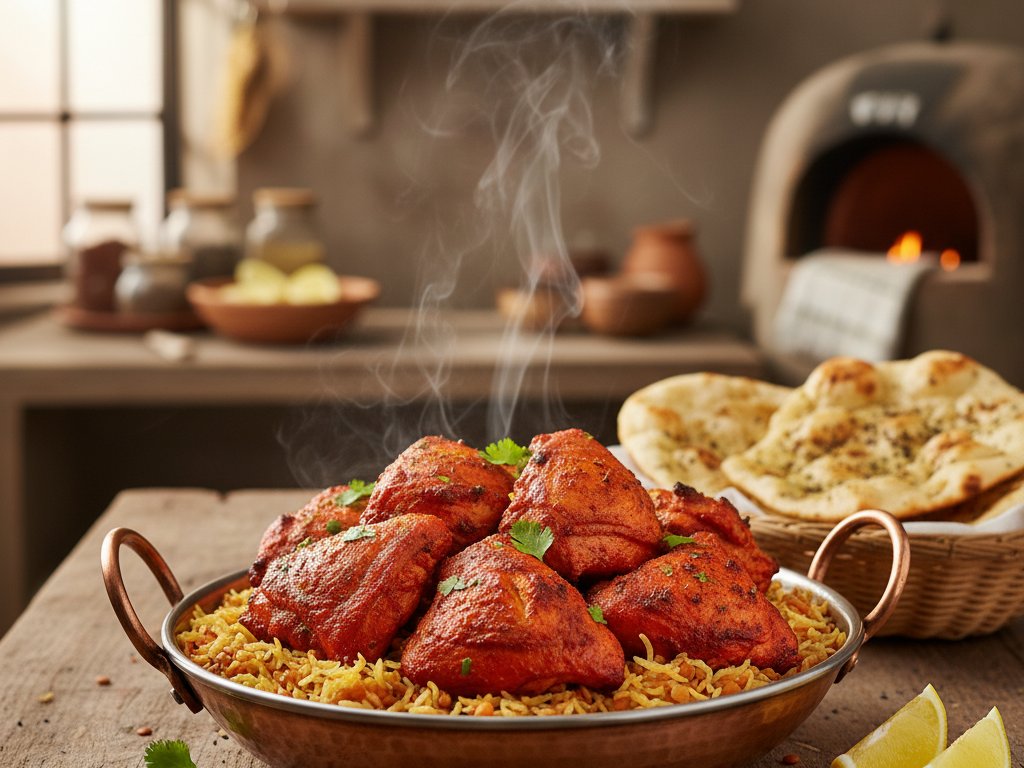
1. Yogurt-Marinated Tandoori-Style Chicken with Lentil Pilaf
Aromatic yogurt-marinated chicken roasted with warm spices, served over earthy lentil pilaf. 53g protein, 583 cal in 50 min.
View Recipe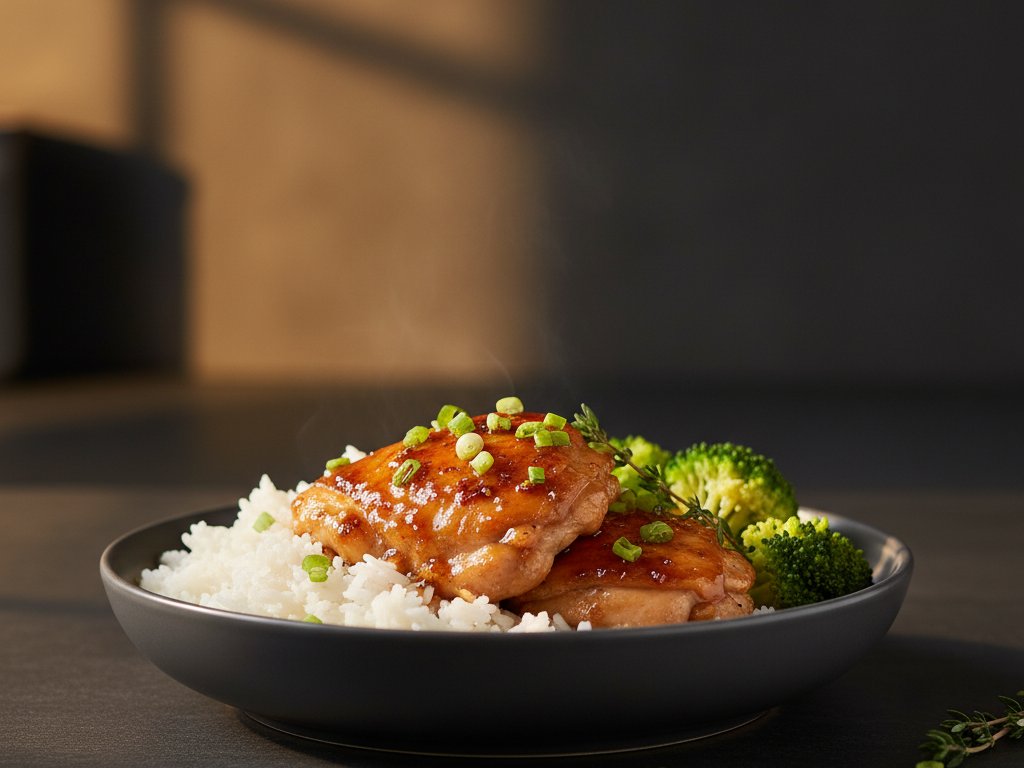
2. Honey Garlic Chicken Thighs Meal Prep
Crispy-skinned thighs glazed in punchy honey-garlic sauce over fluffy jasmine rice. 53g protein, 633 cal. 4 meal prep containers in 35 min.
View Recipe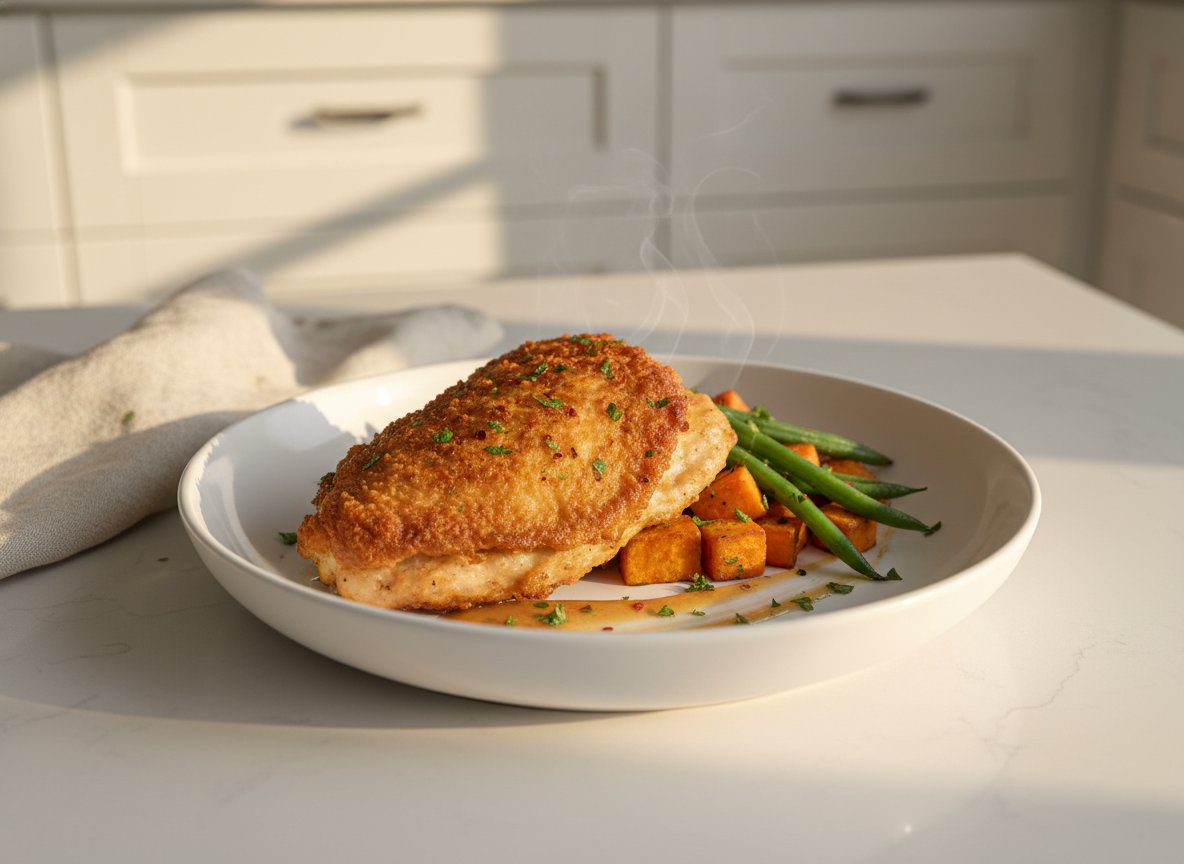
3. Crispy Air Fryer Chicken Thighs
Air fryer chicken thighs at 380°F in 35 min — crispy skin, juicy meat, 60g protein per serving. Simple smoked paprika spice rub, no deep-frying needed.
View Recipe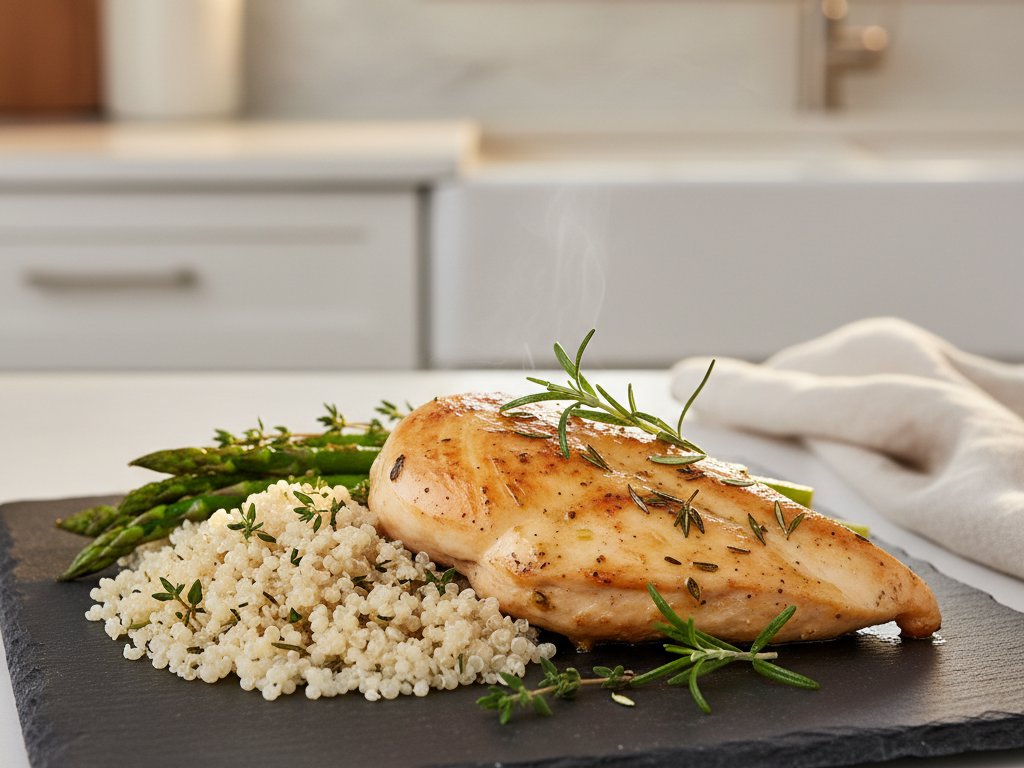
4. Lemon Herb Chicken Breast Meal Prep
Juicy lemon herb chicken breasts prepped for the whole week in 40 minutes. Pairs with any grain or greens for a quick, satisfying lunch.
View Recipe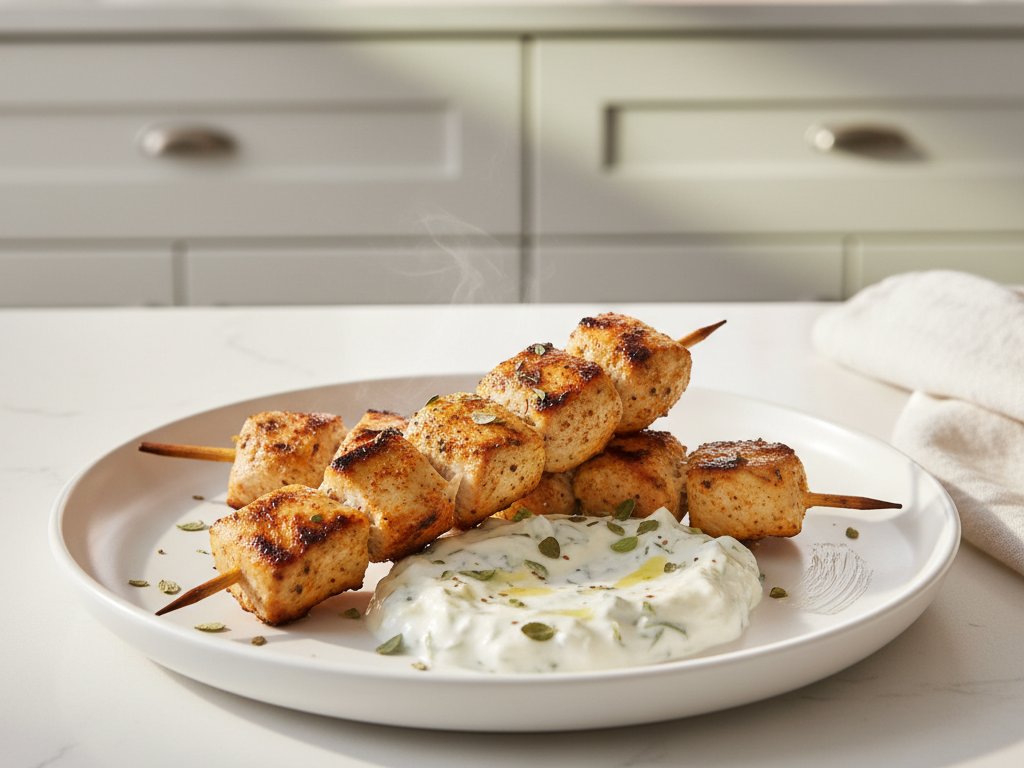
5. Mediterranean Chicken Skewers and Tzatziki
Charred lemon-herb chicken meets cool cucumber tzatziki. 58g protein, 442 cal in 32 min. Greek flavors that fuel your goals.
View Recipe