How Much Protein Do You Actually Need?
The RDA is a floor, not a ceiling. Here's what the research actually says about protein intake—and how to hit your targets.
Part of The Protein Atlas — your complete guide to protein.
Wondering why protein matters for weight loss? Read the science first →
54 grams of protein a day. That’s the official recommendation—the RDA (Recommended Dietary Allowance). For a 150-pound person. Two chicken breasts. Done.
Except it’s not done. That number was designed to prevent deficiency—the bare minimum to avoid muscle wasting in sedentary people. It came from 1940s research. It doesn’t help you build muscle, lose fat without feeling starving, or stop craving snacks two hours after every meal. (And no, higher protein doesn’t damage healthy kidneys—that myth comes from guidelines for people with existing kidney disease.)
The number your doctor quotes was designed for sedentary 1940s patients. Not for you.
If you’re reading a site called Protein Atlas, you probably have different goals. The actual research points somewhere higher.
The official RDA of 0.8g of protein per kilogram of body weight (about 54g/day for a 150-pound person) was designed to prevent deficiency in sedentary people, not to optimize muscle or body composition. A 2018 meta-analysis of 49 studies and 1,863 participants found that protein up to 1.6g/kg/day significantly increased muscle mass and strength during resistance training, with gains plateauing above that threshold. After age 65, the same amount of protein triggers 16% less muscle protein synthesis due to anabolic resistance, making the minimum closer to 1.0–1.2g/kg — and per-meal minimums of 30–40g matter more than they do at younger ages.
What the Research Actually Says
Ignore the influencers. What holds up:
The landmark paper is a 2018 meta-analysis by Morton, Schoenfeld, and Phillips—49 studies, 1,863 participants. Their finding: protein intake up to 1.6 g/kg/day significantly increased muscle mass and strength during resistance training. Beyond that? Gains plateaued. (This is the most-cited paper on protein requirements for a reason. Subsequent research has reinforced it, not overturned it.)
The second touchstone is Phillips & Van Loon (2011), which established the 1.3–1.8 g/kg/day range for athletes—still the reference point in sports nutrition guidelines today.
A useful starting point: about 1 gram per pound of your target body weight. But if you want precision, here’s what the research actually supports:
| Goal | Target | ~150 lb (68 kg) | ~180 lb (82 kg) |
|---|---|---|---|
| Maintain | 1.0–1.2 g/kg | 70–80g | 85–100g |
| Lose fat | 1.2–1.6 g/kg | 80–110g | 100–130g |
| Build muscle | 1.6–2.2 g/kg | 110–150g | 130–180g |
The ranges exist because individual response varies—metabolism, training intensity, age, and how much muscle you’re carrying all matter. Start at the low end, assess for 2–3 weeks, and adjust up if you’re not seeing progress. (This is not the place to optimize. Pick a number, hit it consistently, and move on with your life.)
Calculate Your Target
Skip the math. Enter your details and get your personalized protein target:
Based on 1.2g per kg of body weight
Per-Meal Breakdown
The “1 gram per pound” rule you hear in gyms? It’s on the high end (2.2 g/kg), but it’s not wrong—just a margin of safety. If simple math helps you hit your target, use it. Precision is overrated.
A note on plant protein: Plant sources are less bioavailable and lower in leucine—the amino acid that triggers muscle synthesis. Vegetarian or vegan? Aim for the higher end and prioritize soy, seitan, and legume-grain combinations. (And stop listening to people who say plant protein “doesn’t count.” It counts. You just need more of it.)
The weight loss number matters. A 2024 meta-analysis confirmed that protein above 1.3 g/kg/day significantly prevents muscle loss during calorie restriction. Below 1.0 g/kg? You’re losing muscle along with fat. We break down why this matters for weight loss →
Age Changes the Math
After 65, your body becomes less efficient at using protein to build and maintain muscle. Researchers call this “anabolic resistance.” The same 30g chicken breast that triggers muscle protein synthesis in a 30-year-old? About 16% less effective in a 65-year-old. Same food. Less response.
The RDA of 0.8 g/kg wasn’t designed for you at 30. It’s dangerously low at 65.
This is why sarcopenia—the gradual loss of muscle mass that accelerates with age—hits hard in your 60s and beyond. (And it’s not just about looking frail. Muscle mass predicts everything from fall risk to how well you recover from surgery.)
If you’re over 65, shift the targets:
- Baseline: Add 20–25% → aim for 1.0–1.2 g/kg minimum
- Active / exercising: 1.2–1.5 g/kg
- Recovering from illness: 1.5+ g/kg
One more thing: per-meal minimums matter more with age. Younger adults can trigger muscle protein synthesis with 20g. Older adults need 30–40g per meal to get the same response. That weak breakfast of toast and coffee? It’s costing you muscle. Front-load protein early in the day, or you’re fighting biology.
Timing is Overrated
You’ve probably heard you need to slam a protein shake within 30 minutes of your workout or your gains evaporate. This is mostly nonsense.
A 2013 meta-analysis by Aragon and Schoenfeld—the definitive review on this topic—found no evidence for a narrow “anabolic window.” The elevated muscle protein synthesis after exercise lasts 24+ hours, not minutes.
Obsessing over your post-workout shake? Your body doesn’t care. It has 24 hours to use that protein.
That said, two things are worth doing:
-
Spread it across meals. 3–4 doses of 30–40g beats one giant 120g dinner. Your body can only use so much at once.
-
Don’t train fasted then wait hours to eat. If your last meal was 5+ hours ago, eating sooner post-workout does help.
But obsessing over the exact minute you drink your shake? Save your mental energy for hitting your daily target.
Aim for ~1g per pound of your target weight. Start at the low end of your goal range, assess for 2-3 weeks, adjust if needed.
Make It Practical
Breakfast is where protein plans die. Most people eat 10–15g (toast, cereal, sad banana) when they need 40+. (This isn’t a willpower problem. It’s a habit problem. Nobody craves chicken at 7 AM—until they’ve done it for two weeks.) Eggs are the fastest fix, and once you’ve got a target in mind, the next question is usually whether the yolks are worth keeping or you’re better off with carton whites for the extra protein per calorie.
Fix breakfast, and the rest of the math works itself out.
This is what 147g in three meals actually looks like:
| Meal | Recipe | Protein | Calories |
|---|---|---|---|
| Breakfast | Greek Yogurt Berry Bowl | 53g | 536 |
| Lunch | Cottage Cheese Everything-Bagel Bowl | 39g | 372 |
| Dinner | Korean Beef Bulgogi Bowl | 55g | 739 |
| Total | 147g | 1,647 |
That’s 36% of calories from protein. No powder. No obsessive tracking. No standing in the kitchen at 10 PM wondering if you hit your macros. Just three meals that do the work.
Vegetarian? Swap the dinner for Mediterranean Chickpea Stew — 31g protein, 563 cal. The feta and Greek yogurt push it past the 30g per-meal threshold that matters for muscle protein synthesis.
Not sure which dairy to use? See Greek Yogurt vs Cottage Cheese: Which Has More Protein? — a head-to-head comparison with recipes for both.
The government says 54 grams. The research says more. You now have the numbers.
The only question left: will you actually hit them?
Start with high-protein recipes—and fix breakfast first. That’s the meal most people get wrong.
- Why Your High-Protein Meals Have So Many Calories — Why some high-protein meals are 3x more efficient than others.
- Chicken, Beef, and Fish Compared — The protein source debate, settled with data.
- Chicken Breast vs Thigh: Which Has More Protein? — The cut-by-cut comparison, with cost and recipes.
Featured Recipes
All 3 recipes from this article, ready to cook
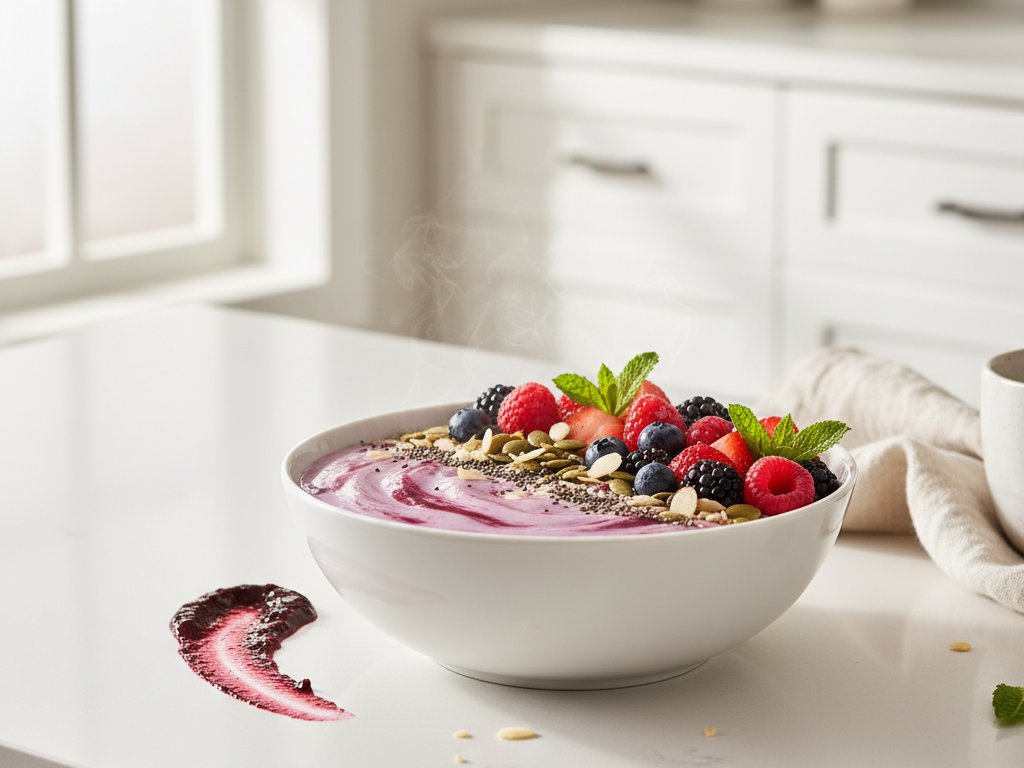
1. Greek Yogurt Berry Smoothie Bowl
Thick, spoonable berry smoothie bowl bursting with frozen fruit and creamy Greek yogurt. 53g protein, 536 cal in just 5 minutes flat.
View Recipe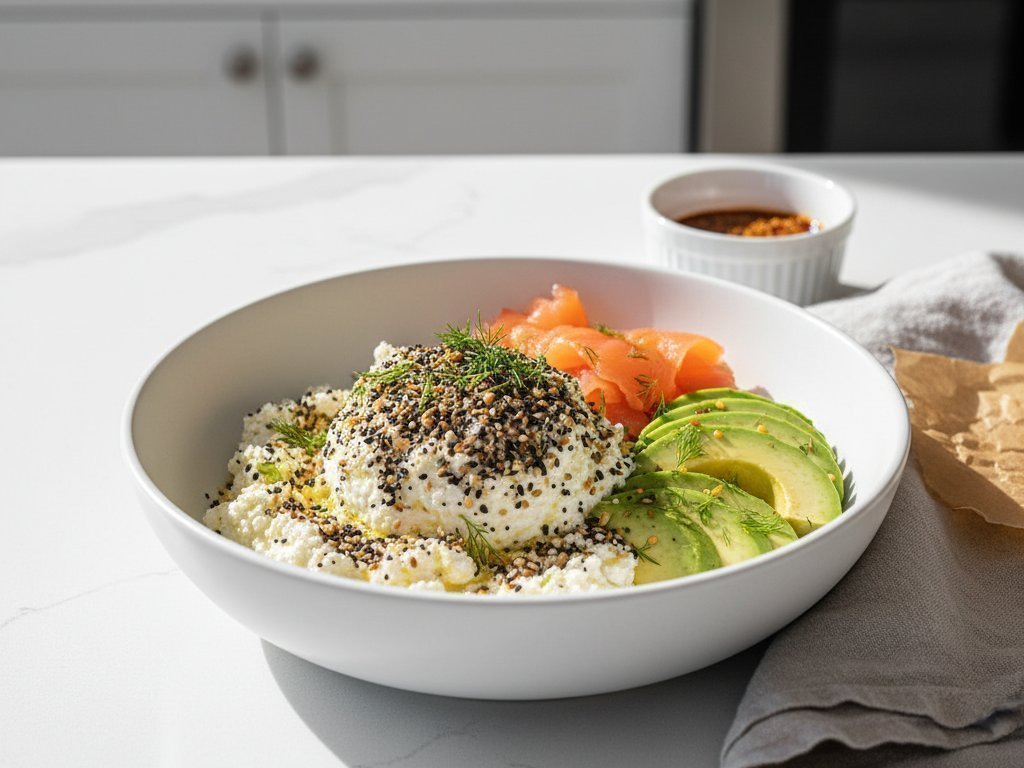
2. Cottage Cheese Everything-Bagel Bowl
Creamy cottage cheese loaded with crunchy everything seasoning and crisp vegetables. 39g protein, 372 cal, 40 min. Savory and satisfying.
View Recipe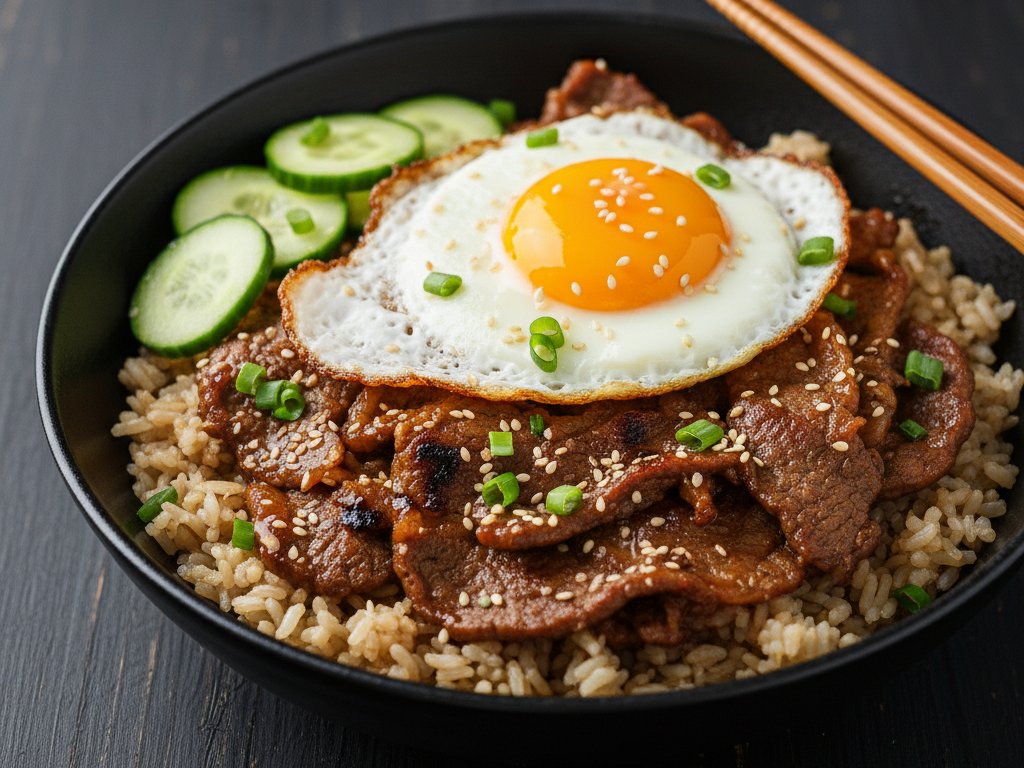
3. Korean Beef Bulgogi Bowl
Beef bulgogi bowl with thin-sliced Korean marinated beef over quinoa. 55g protein, 739 cal per serving — gochujang-sesame marinade, ready in 35 minutes.
View Recipe